
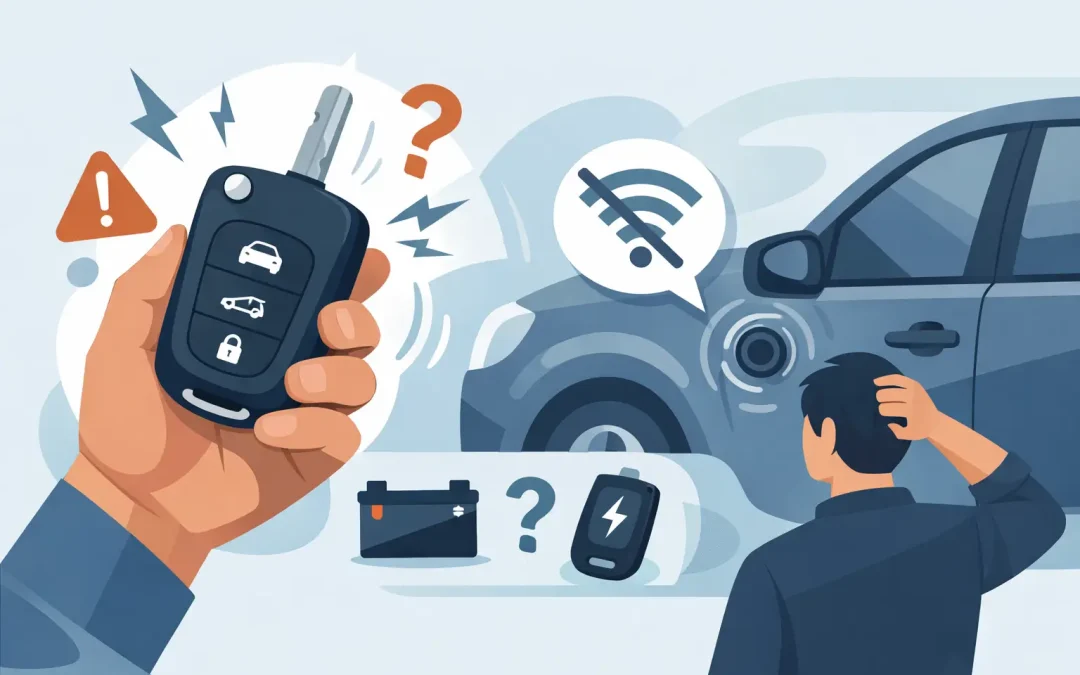
You turn the key, press the button, or try to unlock the door, and nothing happens. If you’re asking, why is my car key not working, the problem is usually one of a few common issues – a dead battery, a damaged key, a programming fault, or a problem with the vehicle itself. The good news is that not every key failure means an expensive dealer visit.
Modern car keys do more than just turn in a lock. Many contain a remote, a transponder chip, or built-in security coding that has to match the vehicle exactly. That means a key can look fine on the outside and still fail to start the car, unlock the doors, or operate the remote functions.
Why is my car key not working? Start with what it is not doing
Before assuming the key is completely dead, look at the exact symptom. If the remote buttons do not respond but the car still starts, that usually points to a remote battery or button issue. If the key turns in the ignition but the engine will not start, the transponder may not be recognized. If the key will not turn at all, the issue may be wear in the key blade, the ignition, or the steering lock.
This matters because the fix depends on the failure. A flat coin battery is very different from a damaged ignition barrel, and replacing the wrong part wastes time and money.
The remote stopped locking or unlocking the car
This is one of the most common faults. In many cases, the battery inside the remote has gone flat. Remote batteries do not always fail gradually. Sometimes the range gets shorter first, but sometimes the remote just stops working from one day to the next.
There are other possibilities. The buttons may be worn through, the circuit board may be damaged from drops or moisture, or the key may have lost synchronization with the vehicle. If you have a spare key and it works normally, that tells you a lot. It strongly suggests the vehicle is fine and the problem is with the faulty remote.
The car unlocks, but it will not start
This usually points to the transponder chip. Many people do not realize that the remote and the immobilizer are separate functions. You can have a key that opens the doors but still will not start the engine because the coded chip is missing, damaged, or no longer programmed correctly.
This can happen after a key case swap, water damage, a hard impact, or an internal fault. It can also happen if someone has had a cheap replacement shell fitted and the chip was not transferred properly.
The key will not turn in the ignition
If the key goes in but refuses to turn, do not force it. Sometimes the steering lock is under pressure, especially if the wheels are turned against a curb. A gentle movement of the steering wheel while trying the key may release it.
If that does not help, the key blade may be worn, bent, or cracked. Ignition locks also wear over time, especially on vehicles used heavily for work. Tradespeople and van drivers often see this sooner simply because the key is used more often every day.
Common reasons your car key stops working
Wear and tear is one of the biggest causes. Keys are handled constantly, dropped on hard surfaces, squeezed into pockets, and exposed to heat, cold, and moisture. Even a small amount of damage can stop a modern key from working properly.
A dead battery is the simplest explanation for a remote failure. It is also the easiest to overlook, especially if the key has been working fine until now. If the buttons feel normal but there is no response from the car, the battery is an obvious place to start.
Physical damage is another common issue. A cracked casing may not seem serious, but it can let moisture reach the electronics. Worn buttons can stop making contact. Internal solder joints can fail after repeated drops. In flip keys, the blade mechanism itself can loosen or snap.
Programming loss or immobilizer faults are less common than battery problems, but they do happen. Some vehicles are more sensitive than others. If the key has recently been replaced, repaired, or copied, poor programming may be the cause.
Sometimes the problem is not the key at all. A weak car battery, a faulty receiver, a damaged ignition, or a door lock problem can all create symptoms that look like key failure. That is why proper diagnosis matters.
What you can safely check yourself
If you are dealing with a non-working key, a few basic checks can help narrow it down without risking more damage. First, try the spare key if you have one. This is often the quickest way to tell whether the issue is with the key or the vehicle.
Next, look closely at the key itself. Check for a cracked shell, loose blade, missing buttons, or signs of water damage. If it is a flip key, make sure the blade locks firmly into place. If the key feels unusually loose or the case is separating, internal damage is possible.
If the remote has stopped working, replacing the battery may help. Just be careful. Opening the case roughly can damage the circuit board or dislodge the transponder chip. On some keys, that tiny chip is easy to miss, and if it is lost, the car may no longer start.
If the key will not turn in the ignition, try easing the steering wheel left and right while turning the key gently. If there is resistance, stop. Forcing a worn key into a worn ignition can turn a manageable key problem into a lock replacement.
When a car key problem needs a specialist
If the battery change does not fix it, the spare key also fails, or the car shows immobilizer warnings, it is time for specialist help. The same applies if the key is snapped, badly worn, water damaged, or stuck in the ignition.
Modern keys are not just pieces of cut metal. Many require specialist programming equipment, diagnostic tools, and model-specific knowledge. A proper automotive locksmith can test whether the remote is transmitting, whether the transponder chip is present and readable, and whether the vehicle is accepting the key code.
That is often faster and more cost-effective than going straight to a dealership, especially if you need help at home, at work, or roadside. A mobile specialist can usually diagnose the issue on-site, cut a replacement if needed, and program it to the vehicle while you wait.
Why quick action can save money
A key that works intermittently is often a warning sign, not a random glitch. Maybe you have to press the buttons several times. Maybe the ignition only works if you jiggle the key. Those small problems tend to get worse, not better.
Leaving it too long can turn a simple repair or spare key job into a full lost-key situation. If your only working key fails completely, the job usually becomes more involved because the vehicle may need new keys programmed from scratch. That takes more time and usually costs more.
This is especially true for drivers who rely on their vehicle every day. If you use your car for commuting or your van for work, one failed key can stop everything. Having the issue checked early is usually the cheaper option.
Why is my car key not working if I just replaced the battery?
If a new battery has made no difference, the fault may be elsewhere. The battery may have been fitted incorrectly, the contacts inside the key may be bent or corroded, or the remote may have deeper electronic damage. In some cases, the key needs to be resynchronized after the battery is changed.
It also depends on what you mean by not working. If the remote still does not lock the doors but the engine starts, that points to a remote issue. If the engine will not start either, the transponder chip or programming may be the real problem, and changing the battery would not affect that.
A spare key is not just a backup
Many drivers wait until they have lost their last key before getting help. That is understandable, but it is rarely the best value. A spare key gives you a way to test faults, avoid lockouts, and keep moving if your main key suddenly fails.
For families, company vehicles, and working vans, it is even more useful. Shared vehicles go through keys quickly, and daily use exposes them to more wear. Getting a spare cut and programmed before there is an emergency is usually simpler and less disruptive.
If you are in the West Midlands and need help with a faulty, damaged, or non-working vehicle key, Remote Key Man provides mobile support that comes to you. That means less waiting around, no towing, and no need to arrange a trip to the dealer.
A car key problem always feels urgent because it affects the one thing you need to get on with your day. Most of the time, though, there is a clear cause and a fix that can be handled quickly once the fault is identified.

Recent Comments