
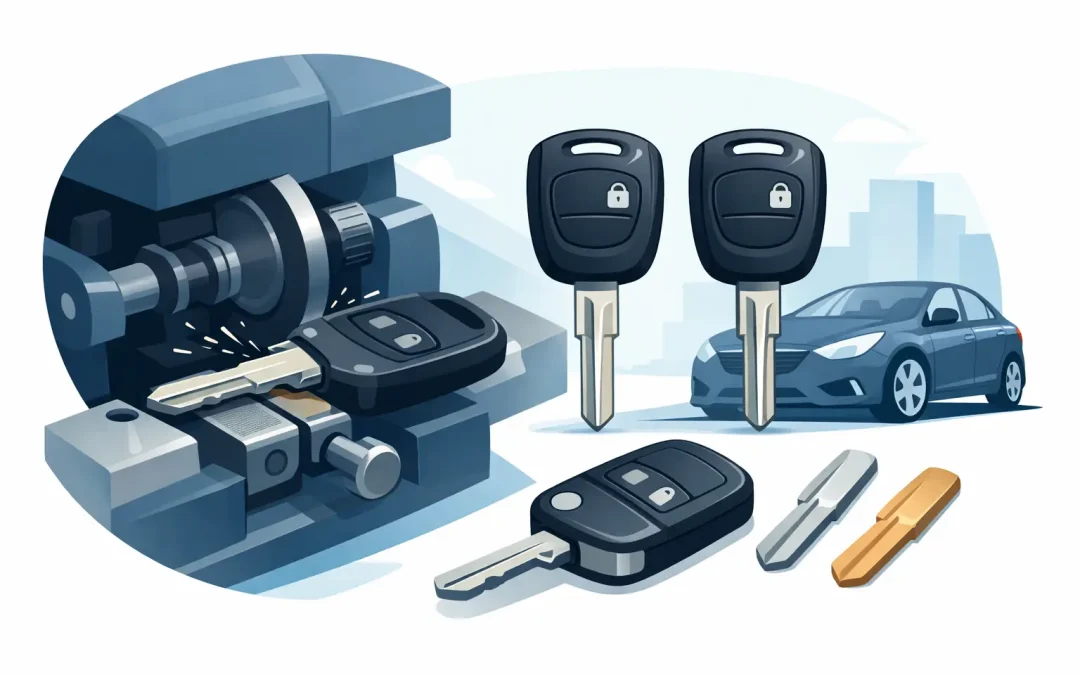
You usually do not think about your car key until one stops working, goes missing, or snaps in the wrong moment. That is when the question becomes very real: what is key cutting, and does it mean you can get back on the road quickly or not?
For vehicle owners, key cutting is the process of shaping a new key so it matches the lock and ignition of your car or van. In simple terms, the blade of the key is cut to the exact pattern needed to turn your locks. On older vehicles, that may be the whole job. On many modern vehicles, though, key cutting is only one part of the process. The new key often also needs programming so the immobilizer recognizes it and allows the engine to start.
That difference matters because many drivers assume a copied key is just a copied key. With modern car security, it often is not that simple.
What is key cutting in practical terms?
When people ask what is key cutting, they usually picture a machine copying one metal key onto another. That still happens, but automotive key cutting has become much more specialized.
At its core, key cutting means creating the physical shape of a key so it matches your vehicle’s lock profile. The machine cuts grooves, depths, and edges into a blank key using either an existing working key, the lock itself, or key code data. If the pattern is even slightly off, the key may stick, fail to turn smoothly, or not work at all.
For a house key, that process is often straightforward. For a vehicle key, the job can involve laser-cut sidewinder keys, high-security blades, worn original keys, damaged locks, and electronic chips hidden inside the head of the key or remote. So while the basic idea is the same, the standard for accuracy is much higher.
Car key cutting is not always the same as key programming
This is where many people get caught out. A key can be cut correctly and still not start the vehicle.
That is because many car keys contain a transponder chip. The blade opens the door and turns the ignition, but the chip must also communicate with the vehicle’s immobilizer. If the vehicle does not recognize that chip, the engine may crank and stop, or it may not start at all.
So if you need a replacement car key, there are usually two separate questions. First, does the key need to be physically cut? Second, does it also need to be programmed? On older models, the answer may be cut only. On newer cars and vans, it is often both.
This is one reason dealership quotes can surprise people. The key is no longer just a piece of metal. It is part mechanical, part electronic.
How key cutting works for vehicles
The actual cutting method depends on the type of key and the information available.
If you still have a working key, that key can often be duplicated directly. A specialist machine reads the original pattern and cuts the new key to match it. This is usually the quickest route for a spare key.
If all keys are lost, the process changes. In that case, the new key may need to be cut using the vehicle’s lock data, key code, or by decoding the lock itself. That takes more skill and better equipment than a simple copy. It also explains why lost-all-keys jobs are usually more involved than duplicating a spare.
There is also the issue of wear. A badly worn key can copy badly. If a worn key is duplicated exactly, the new key may inherit the same problems. A proper automotive locksmith will often identify that and cut the key to the correct code rather than blindly copying damage and wear from the original.
Types of car keys that may need cutting
Not every vehicle key looks the same, and the type of key affects the work involved.
Traditional metal keys are the simplest. These are common on older vehicles and may not require any programming at all. Remote head keys combine a cut blade with buttons for locking and unlocking. Flip keys fold into the remote casing but still rely on a precisely cut blade. High-security laser-cut keys use a more complex groove pattern and need specialist machinery. Smart keys and proximity fobs may still include an emergency insert key that also needs cutting, even when the main system is keyless.
The more advanced the key, the less likely it is that a basic key kiosk or general hardware store can handle the full job.
When you might need key cutting
The obvious reason is needing a spare. That is often the cheapest and least stressful time to do it. If you still have one working key, making a duplicate is normally faster, easier, and less expensive than waiting until every key is gone.
Lost keys are another common reason. If your only key has disappeared, key cutting becomes part of a full replacement process. The same applies if your key has snapped, bent, worn down, or stopped turning properly in the door or ignition.
Sometimes the issue is not complete loss but reliability. If you have to jiggle the key, force it, or try several times before it turns, the blade may be worn or damaged. Leaving that too long can create bigger problems, including damage to the lock or ignition.
Why accuracy matters more than people think
A poorly cut key is not just inconvenient. It can cause unnecessary wear inside the lock and ignition barrel. In some cases, customers assume the lock is failing when the real problem is the shape of the key.
A correctly cut key should insert smoothly and turn without force. If it feels rough, catches, or needs pressure to work, something is off. That could be poor cutting, copied wear, the wrong blank, or a lock issue that needs diagnosing.
For vans and working vehicles, that matters even more. If your vehicle is part of your workday, a bad key can cost time fast. Reliable access is not a small issue when missed jobs, deliveries, or callouts depend on getting moving.
Why mobile automotive key cutting makes sense
For many drivers, the biggest problem is not just the key itself. It is the disruption. If your car will not start or all keys are missing, getting the vehicle to a dealership is a job in itself.
That is why mobile automotive key cutting is so useful. The equipment comes to the vehicle, whether it is at home, at work, or stranded elsewhere. In many cases, the key can be cut and programmed on site while you wait. That saves the cost, delay, and hassle of recovery and dealership scheduling.
For local drivers in a hurry, that practical difference matters more than technical details. You want the problem handled safely, correctly, and without turning one bad morning into a two-day disruption.
What key cutting does not fix on its own
Key cutting solves the physical side of the key, but it does not automatically fix every key-related fault.
If the remote buttons have failed, the casing is broken, the transponder chip is damaged, or the vehicle has an ignition or lock fault, more work may be needed. Sometimes customers ask for a new key when the real issue is a damaged ignition barrel or a faulty remote circuit board. Other times, the key is fine but has lost programming.
That is why proper diagnosis matters. Cutting a fresh key is the right answer only when the blade pattern is actually part of the problem.
Should you get a spare before you need one?
In most cases, yes. It is one of those jobs people put off because the current key still works. Then that one key gets lost, stolen, or damaged, and the replacement process becomes more expensive.
A spare key gives you a backup and usually keeps the job simpler. It also helps avoid the pressure of making urgent decisions when you are locked out, late for work, or stuck away from home. For many vehicle owners, a spare is not an extra. It is basic insurance against disruption.
If you drive for work, rely on a van, or share a vehicle with family, that becomes even more sensible.
Choosing the right specialist for key cutting
The key question is not just who can cut metal. It is who can deal with modern vehicle security properly.
You want someone who understands vehicle-specific key types, immobilizer systems, remote replacement, and non-destructive entry if needed. You also want the reassurance that the person handling access to your vehicle is insured, vetted, and used to working on real-world lost-key and lockout jobs, not just routine copies.
That is where a dedicated automotive specialist has an advantage over a general key service. Businesses like Remote Key Man are set up for the whole job, not just the first step.
If you have been wondering what is key cutting, the short answer is that it is the precise shaping of a key so it works with your vehicle’s locks and ignition. The more useful answer is this: for modern cars and vans, getting a key made properly often means cutting, programming, and diagnosing the problem as one complete service. If your current key is your last one, now is a good time to sort a spare before it turns into an emergency.

Recent Comments