
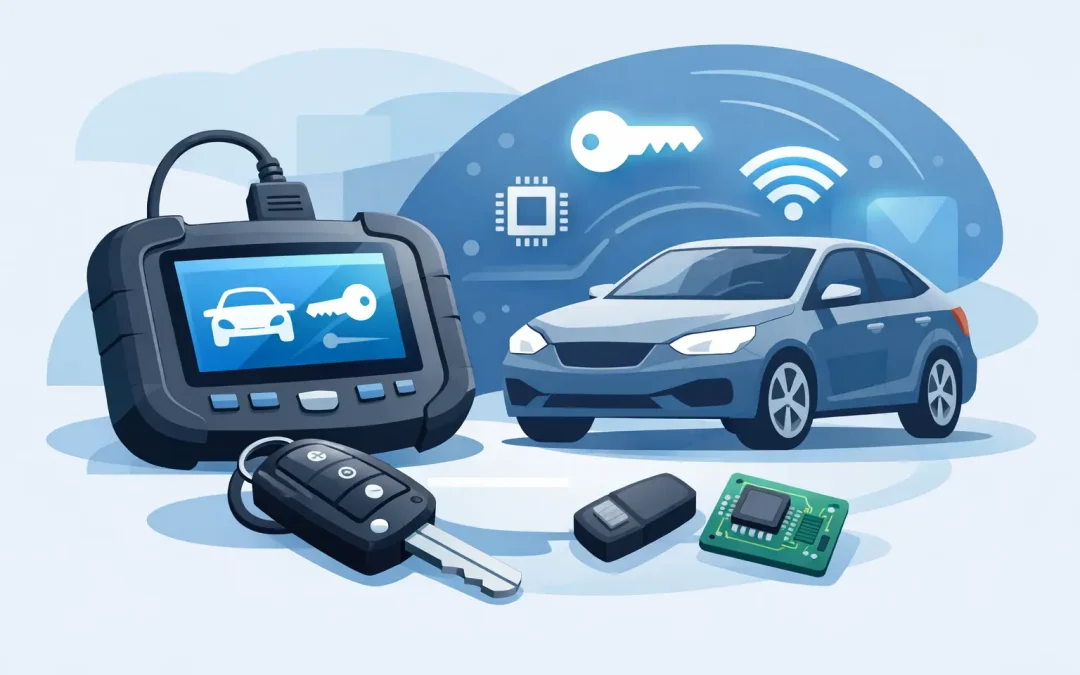
A lot of people start searching for the best car key programming tool right after a key stops working, goes missing, or leaves them stranded outside the vehicle. That usually happens at the worst possible time – before work, during the school run, or when a van needs to get back on the road. The problem is that “best” is not a simple answer in modern vehicle security. The right tool depends on the vehicle, the type of key, the immobilizer system, and whether you are cutting a spare or replacing all lost keys.
What the best car key programming tool really means
If you are a vehicle owner, the best car key programming tool is usually not something you need to buy yourself. It is the tool your locksmith uses to program a replacement key safely, correctly, and without wasting your day. Modern keys are not just bits of metal. Many contain transponder chips, remote functions, proximity features, and encrypted security data that must match the car exactly.
That is why one tool may work well on an older domestic sedan but be the wrong choice for a newer van with higher security. A good programmer has to communicate with the vehicle, read the system properly, and complete the job without causing new faults. Cheap universal gadgets often promise too much and then fail when the job gets more complicated.
For trade professionals, “best” usually means broad coverage, stable software, regular updates, and reliable support. For everyday drivers, it means getting a key that works first time, starts the vehicle, and gives you confidence that the problem is properly fixed.
Why there is no single best car key programming tool for every vehicle
This is where many online comparisons go wrong. They try to name one machine as the best car key programming tool for every make and model. In practice, that is not how the work goes.
Some vehicles are straightforward. If the customer has a working key and only wants a spare, programming can be relatively simple. Other jobs are much more involved. All-keys-lost situations, smart keys, damaged immobilizer data, locked modules, and certain commercial vans can require more advanced equipment and more experience.
Vehicle brands also handle security differently. What works well on one manufacturer may offer limited functions on another. Some tools are strong on EEPROM work. Others are better for OBD programming. Some are designed for mainstream jobs, while others are built for deeper diagnostic and immobilizer functions. A serious locksmith may need more than one machine because relying on a single device can limit coverage and slow the job down.
That matters to customers because the tool is only part of the answer. The technician using it still has to know when a vehicle needs onboard programming, when a key needs pre-coding, and when the fault is not the key at all but a damaged ignition, antenna issue, or body control module problem.
What professionals look for in a key programming tool
The best equipment is not judged by marketing claims. It is judged by results on real vehicles.
Coverage comes first. A tool needs to handle a wide range of makes, models, and key systems, especially if the job involves both cars and vans. Speed matters too, but not in the way people think. A fast machine is useful, yet accuracy matters more. A quick attempt that corrupts data or leaves the vehicle immobilized is not a bargain.
A strong programming tool also needs current software. Vehicle security changes constantly. Without updates, even a good machine can become less useful over time. Reliability matters just as much. On-site work leaves no room for guesswork, especially when the customer is waiting at home, at work, or on a job.
Then there is support for advanced jobs. Reading PIN codes, matching transponders, programming remotes, and handling smart key systems all require different strengths. Better tools give the technician options instead of dead ends.
The difference between DIY tools and professional equipment
This is where many drivers can save themselves money and frustration by being realistic from the start.
DIY key programmers are often sold as quick fixes. Some can help in very limited situations, usually on older vehicles with simpler systems. If you already have a working key and your model allows basic onboard programming, a budget tool may sometimes do the job. But that is the exception, not the rule.
Most newer vehicles are less forgiving. Security systems are tighter, key data is more complex, and one wrong step can leave you with a non-working key and no vehicle access. Some tools also advertise compatibility far beyond what they reliably support. The result is often a customer who has bought the wrong blank, the wrong programmer, or both.
For that reason, the best car key programming tool for a driver is often access to a professional with the right equipment already in the van. You are not paying for a button press. You are paying for tested equipment, correct key data, specialist knowledge, and a job done where the vehicle is parked.
When the tool matters most
Not every key job is equally demanding. If you need a spare key while your original still works, the process is often simpler and less expensive. That is why getting a second key before you lose the last one is usually the smart move.
If all keys are lost, the job can become much more involved. The technician may need to gain entry without damage, cut a new blade, program a transponder from scratch, pair the remote, and sometimes work around higher security features. In those cases, the quality of the programming tool matters a great deal because there is less margin for error.
The same goes for commercial vehicles. Van owners often rely on their vehicle for work, so downtime costs more than the key itself. A tool that supports advanced van systems, including higher-security lock and ignition work when needed, can make the difference between a same-day fix and a drawn-out dealership process.
Why advanced tools still need an experienced locksmith
There is a common assumption that better equipment makes the job automatic. It does not. Good tools improve capability, but they do not replace skill.
A trained automotive locksmith has to identify the correct chip, select the right programming route, check whether the remote frequency is correct, confirm the vehicle accepts the new key, and make sure central locking and starting functions both work. If a fault remains, they need to know whether the issue is with the key, the programmer, the vehicle module, or a separate electrical problem.
That hands-on judgment is what protects the customer from wasted parts and repeat visits. It is also what makes mobile service so useful. Instead of towing the car or waiting for a dealer slot, the job can often be completed while you wait.
So, what is the best choice for most vehicle owners?
For most people, the best car key programming tool is not a brand name on a shopping site. It is professional-grade equipment in the hands of a local specialist who deals with vehicle keys every day. That gives you a better chance of correct programming, proper testing, and a working key without the trial and error.
If your key still works, now is the time to get a spare made. That is almost always cheaper, simpler, and less stressful than dealing with a complete loss later. If your only key is gone, damaged, or locked in the vehicle, speed matters – but so does using someone who can handle the job cleanly and safely.
At that point, the real question is not which gadget tops an online list. It is whether the person coming to your vehicle has the right tools, the right experience, and the right approach to get you moving again without adding to the problem.
A good key programmer matters, but the best result comes from matching the right tool to the right vehicle at the right time – and that is exactly why choosing a specialist usually pays off.

Recent Comments