
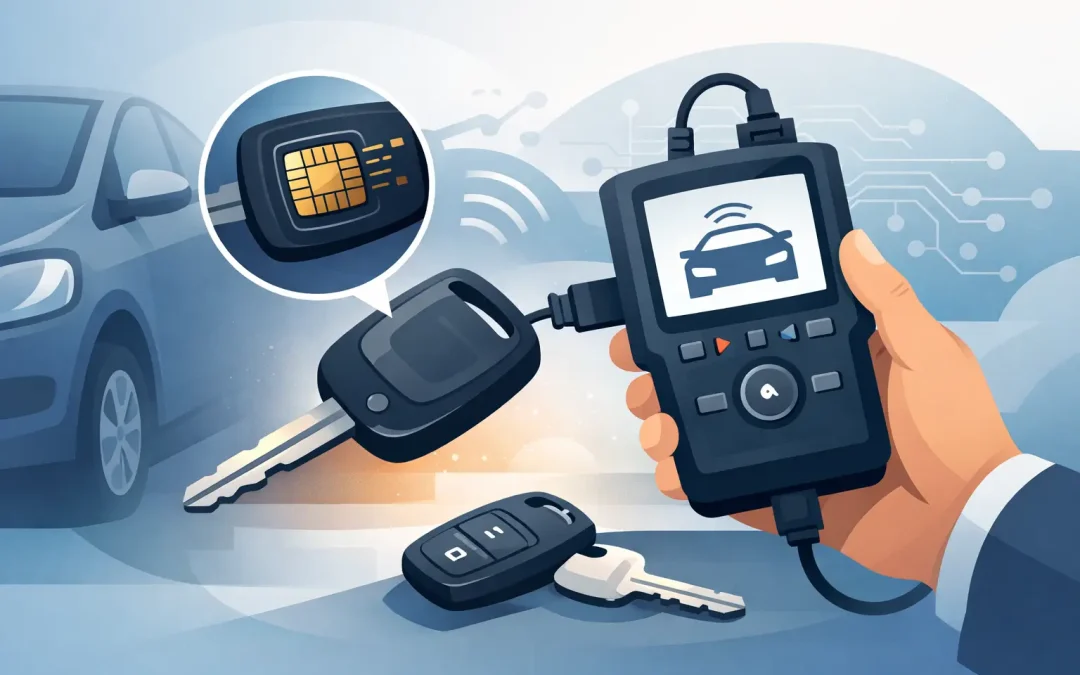
You can have a freshly cut car key in your hand, slide it into the ignition, and still get nowhere. The blade may turn, the dash may light up, and the engine may still refuse to start. That is usually the moment people ask, what is transponder key programming, and why does a key that looks right not actually work?
The short answer is this: many vehicle keys do more than fit the lock. They also contain a small chip that has to be recognized by the vehicle’s security system. If that chip is not correctly programmed, the car treats the key like a stranger and blocks the start.
What is transponder key programming and how does it work?
Transponder key programming is the process of matching a key’s internal chip to your vehicle’s immobilizer system so the engine will start. The word transponder refers to the chip inside the key. When you turn the key or bring a smart key into range, the vehicle sends out a signal. The chip responds with a coded message. If the code matches what the vehicle is expecting, the immobilizer allows the engine to run.
If the code does not match, the car may crank and die, may not crank at all, or may flash a security light on the dashboard. That is why key cutting alone is only part of the job on many modern vehicles. The metal blade handles the physical lock, while the programmed chip handles authorization.
This security feature became common because it makes theft harder. A copied blade without the right chip code is far less useful. For drivers, that is generally a good thing. The trade-off is that replacing a lost or damaged key now takes more than cutting metal.
Why a new key often needs programming
A lot of people assume a replacement key works the same way as a house key. If it is cut correctly, it should open and start the vehicle. With older cars, that was often true. With many newer cars and vans, it is not.
A replacement transponder key usually needs two jobs done. First, the key blade has to be cut to match your locks. Second, the chip has to be programmed to the vehicle. Miss either step and the result is incomplete.
This matters in a few common situations. You may have lost your only key, your spare may have stopped working, the remote shell may be damaged, or you may simply want an extra key before an emergency turns into a bigger expense. In all of those cases, programming is often the difference between having a key that opens the door and having a key that actually gets you back on the road.
What happens during transponder key programming?
The process depends on the make, model, and year of the vehicle. Some cars allow limited onboard programming steps. Many do not. In a lot of cases, a locksmith uses specialist diagnostic and programming equipment to communicate directly with the vehicle.
That equipment can read security information, add a new key to the system, and in some cases remove lost or stolen keys so they no longer start the vehicle. That last part is worth knowing. If your keys have gone missing rather than simply been misplaced at home, deleting the old key data can add peace of mind.
Programming is not always a one-size-fits-all task. Some vehicles are straightforward. Others have encrypted systems, pin codes, or manufacturer-specific procedures that require more advanced tools and experience. That is one reason prices and job times can vary.
Signs your key may have a programming problem
Not every key issue is a transponder issue. A dead remote battery, worn blade, damaged ignition, or faulty key shell can create similar frustration. Still, a few signs often point toward programming or chip recognition problems.
If the key turns but the engine will not stay running, if a security or immobilizer light stays on, or if a replacement key opens the doors but will not start the car, programming is a likely suspect. In some cases, the chip inside the key has been damaged by impact or water. In others, the vehicle has simply never been taught to accept that key.
This is where proper testing matters. Guessing can get expensive. Replacing parts that are not actually faulty wastes time and money, especially if you rely on the vehicle for work or school runs.
Can any locksmith program a transponder key?
Not always. Basic key duplication and transponder programming are different services. Some locksmiths cut keys but do not handle vehicle programming. Some general garages can help with certain models but not others. Dealerships can often do the job, but that may mean towing the vehicle, booking ahead, and paying more for the convenience you are not actually getting.
A specialist automotive locksmith is usually the practical option when speed matters. A properly equipped mobile service can cut and program keys on site, whether the vehicle is at home, at work, or parked somewhere inconvenient. That is especially useful if all keys are lost, because the vehicle cannot simply be driven to a workshop.
Is transponder key programming the same as remote programming?
No, and this is where people often get caught out. The transponder chip and the remote locking functions may be linked in one key, but they do different jobs.
The transponder chip allows the vehicle to start. The remote controls locking, unlocking, and sometimes trunk release or panic functions. A key can be programmed to start the vehicle while the remote buttons still do not work if the remote section has not been set up correctly or has a hardware fault. The reverse can also happen on some vehicles, though it is less common.
If you are replacing a key, it is best to make sure both sides of the job are checked. Otherwise, you can end up with a part-working key that still leaves you inconvenienced.
Why getting a spare key early saves money
Waiting until you have no working keys left is usually the most expensive route. With one working key available, programming an extra key is often simpler and quicker. Once all keys are lost, the job can involve more advanced procedures, extra security steps, and a longer visit.
That matters even more for van owners, tradespeople, and anyone who depends on their vehicle daily. Losing the only key does not just create a locksmith bill. It can mean missed jobs, missed deliveries, and a day that falls apart fast.
A spare key is not glamorous, but it is one of the cheaper forms of insurance you can buy for your vehicle.
DIY kits versus professional programming
You will see online sellers offering uncut keys, remote shells, and programming instructions. Sometimes those options work for older, simpler vehicles. Sometimes they do not. The risk is not only that the key fails. It is that you buy the wrong chip type, the wrong frequency, or a key that cannot be added to your vehicle’s system at all.
There is also the quality issue. Some aftermarket keys are perfectly serviceable. Others are poorly made, unreliable, or short-lived. For a driver who just wants the car to start every morning, the cheapest option on paper is not always the cheapest in real life.
Professional programming gives you a better chance of getting the right key, the right setup, and proper testing before the job is finished. That saves the usual cycle of ordering parts, waiting, trying them, and still needing help afterward.
When to call a specialist
If you have lost your keys, if your replacement key will not start the vehicle, if the immobilizer light is showing, or if you want a spare key cut and programmed while you still have one working key, it makes sense to speak to an automotive locksmith who handles transponder systems every day.
A service-led specialist should be able to tell you what is likely involved, whether your vehicle uses a transponder key, and what the next step looks like without burying you in technical language. For drivers who need fast, local help, that practical approach matters more than jargon.
Remote Key Man deals with exactly these situations – cutting, programming, replacing, and getting people moving again without the extra hassle of dealership delays.
If there is one thing worth doing before a key problem becomes urgent, it is this: get a working spare while your situation is still simple.

Recent Comments