
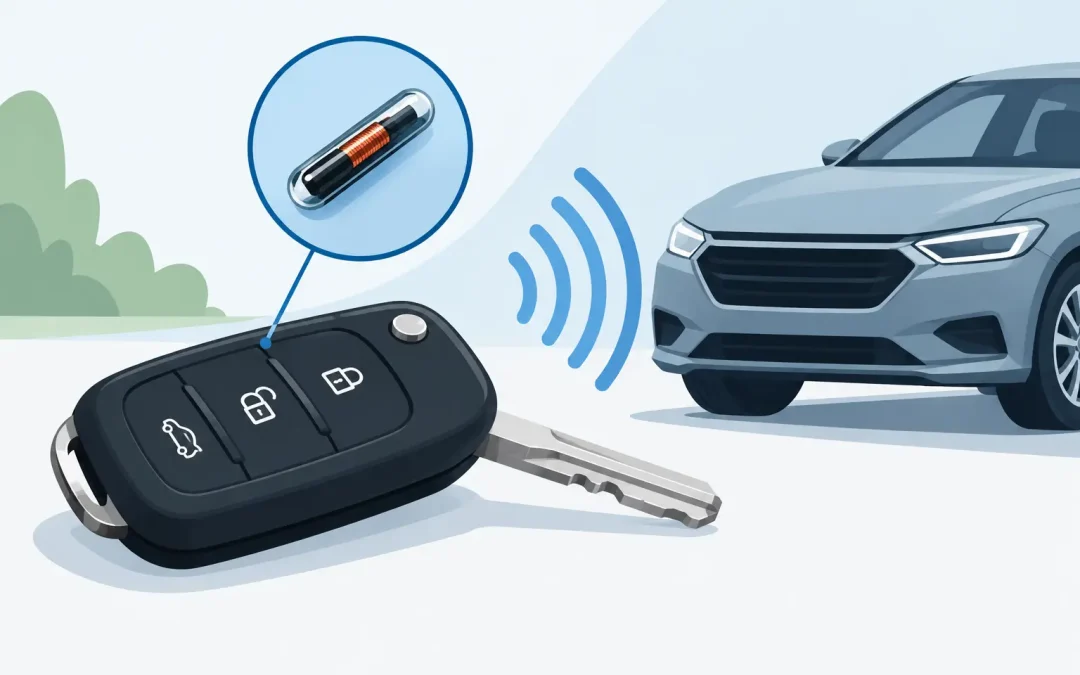
A replacement key that turns in the ignition but will not start the engine is a frustrating surprise, especially when you need to get to work or keep a van on the road. Knowing how to identify transponder keys before you order a copy can prevent that problem. A standard metal key can be cut from the same pattern, but it cannot communicate with an immobilizer system if your vehicle requires a programmed chip.
The good news is that you do not need to be a vehicle security expert to get a reliable answer. The shape of the key, the behavior of the dashboard security light, your vehicle’s age, and its exact make and model can all point in the right direction. For certainty, a vehicle key specialist can check the key and vehicle details before cutting or programming anything.
What Is a Transponder Key?
A transponder key has a small electronic chip inside its plastic head. When the key is placed in the ignition and turned, the vehicle reads the chip’s unique code. If that code matches one stored in the vehicle’s immobilizer, the engine is allowed to start.
The word “transponder” comes from transmitter and responder. The chip does not usually need a battery. It is energized by a signal from a reader around the ignition barrel, then sends its identification code back to the vehicle.
This is separate from the remote-control buttons used to lock and unlock the doors. A key can have remote buttons and no transponder chip, or it can contain a transponder chip with no buttons at all. Many modern car keys have both functions, but they are not the same system.
How to Identify Transponder Keys by Looking at Them
Start with the key itself. A basic older vehicle key is often metal from end to end, with no bulky plastic section. A transponder key commonly has a molded plastic head that is larger than needed simply to hold the key. That extra space may contain the chip.
However, appearance alone is not proof. Some plastic-headed keys are plain copies with no chip inside, while some electronic chips are fitted into slim or unusual key designs. A previous owner may also have had a non-transponder copy made for opening the doors only.
Look for clues such as a thick black or colored key head, a manufacturer logo molded into the head, or a separate plastic capsule attached near the blade. Flip keys, remote fobs with fold-out blades, and many proximity fobs also use transponder technology, although their programming process can be more involved.
Avoid taking the key head apart just to look for a chip. Small glass chips and carbon-style chips can be damaged, lost, or difficult to refit correctly. If it is your only working key, the risk is not worth it.
A Remote Button Does Not Confirm a Chip
If the remote buttons lock and unlock the vehicle, that only proves the remote function works. It does not confirm that the immobilizer chip is present or correctly programmed.
Likewise, a remote can have a flat battery and still start the engine because the transponder chip is passive. If your buttons have stopped working but the vehicle still starts normally, a remote battery issue is more likely than a transponder problem.
Check the Dashboard Immobilizer Light
Most vehicles with a factory immobilizer display a security symbol on the dashboard. Depending on the manufacturer, it may look like a key, padlock, car with a lock symbol, or a flashing security light.
When you switch the ignition on with a recognized key, the light often illuminates briefly and then goes out. If it keeps flashing, stays on, or appears with a warning message, the vehicle may not be recognizing the transponder chip.
A common symptom is that the engine cranks and fires for a second or two, then immediately stops. The vehicle has detected the mechanical key turning but has not accepted the electronic authorization to keep the engine running.
That said, warning lights are a clue, not a full diagnosis. Battery faults, ignition issues, antenna ring faults, and engine problems can create similar symptoms. Do not assume the key is at fault just because the engine will not start.
Use the Vehicle’s Year, Make, and Model as a Guide
Many manufacturers began fitting factory immobilizers widely from the mid-1990s onward, although the exact changeover varies greatly. Two versions of the same model can have different security systems depending on the production year, engine type, trim, and market.
As a practical rule, if your car or van was built in the late 1990s or later and has an original-style plastic-headed ignition key, it may well need a transponder. Older vehicles can have them too, and some newer specialist or commercial vehicles use different systems. This is why guessing based on age alone can become expensive.
Your owner’s manual may mention an engine immobilizer, coded keys, electronic theft deterrent, or key registration. The original key code tag or service paperwork can also provide useful information. If you have the vehicle identification number, a specialist can often use it alongside the make, model, and year to confirm the correct key type.
Try a Properly Cut Spare Key Carefully
If you have a spare key that opens the doors and turns the ignition but does not start the engine, it is likely a mechanical-only copy or an unprogrammed transponder key. It may be useful for access in an emergency, but it is not a true spare for driving.
If both keys start the vehicle, both may contain working transponders. Still, modern systems sometimes require separate remote programming if you want the replacement key to operate central locking as well.
Never leave an unprogrammed key in the ignition and force it repeatedly. Repeated failed start attempts will not normally program a key, and some vehicles have security waiting periods after unsuccessful programming or start attempts.
Do Not Rely on Internet Myths
People often suggest wrapping a key in foil, holding it near a phone, or using a magnet to find out whether it has a chip. These methods are unreliable and can lead to the wrong conclusion.
Another common mistake is assuming a key is non-transponder because it looks simple. Plenty of chip keys look almost identical to ordinary keys from the outside. The only dependable ways to confirm the answer are checking the vehicle specification, using appropriate key-testing equipment, or having the vehicle and key assessed by a qualified automotive locksmith.
What Happens When You Need a Replacement?
Once it is confirmed that your vehicle uses a transponder key, the replacement needs two separate jobs. First, the blade must be cut accurately so it operates the doors and ignition. Second, the transponder chip must be programmed or matched to the vehicle’s immobilizer.
For a remote key or flip key, the locking buttons may need to be programmed as well. On some vehicles, this is straightforward. On others, especially newer vehicles, all keys may need to be present, security codes may be required, or the vehicle may need specialist diagnostic equipment.
The cheapest online blank is not always the cheapest solution. It may use the wrong chip type, have poor blade quality, or be incompatible with your vehicle. A key that looks right but cannot be programmed is still not a usable key.
For lost keys, the process can be more involved because the missing key should usually be removed from the vehicle’s memory where possible. This prevents someone who finds it from starting the vehicle later. It is one reason to deal with a specialist rather than simply buying a cut key online.
When to Call a Vehicle Key Specialist
Call for professional help if you have lost all keys, your key starts the vehicle intermittently, the immobilizer light is staying on, or you need a spare key that will genuinely drive the vehicle. This is particularly worthwhile for work vans, where downtime can cost far more than arranging a correctly programmed spare.
A mobile automotive locksmith can normally identify the correct key type, cut the blade, test the transponder, and program a replacement at your home or workplace. Remote Key Man provides this kind of on-site service for drivers and van owners in Oldbury and the wider West Midlands, including situations where the only key has been lost or damaged.
A working spare key is far less stressful than a lost-key emergency. If your current key is worn, cracked, temperamental, or simply your only one, checking whether it uses a transponder now gives you time to arrange the right replacement before you are stranded.

Recent Comments