
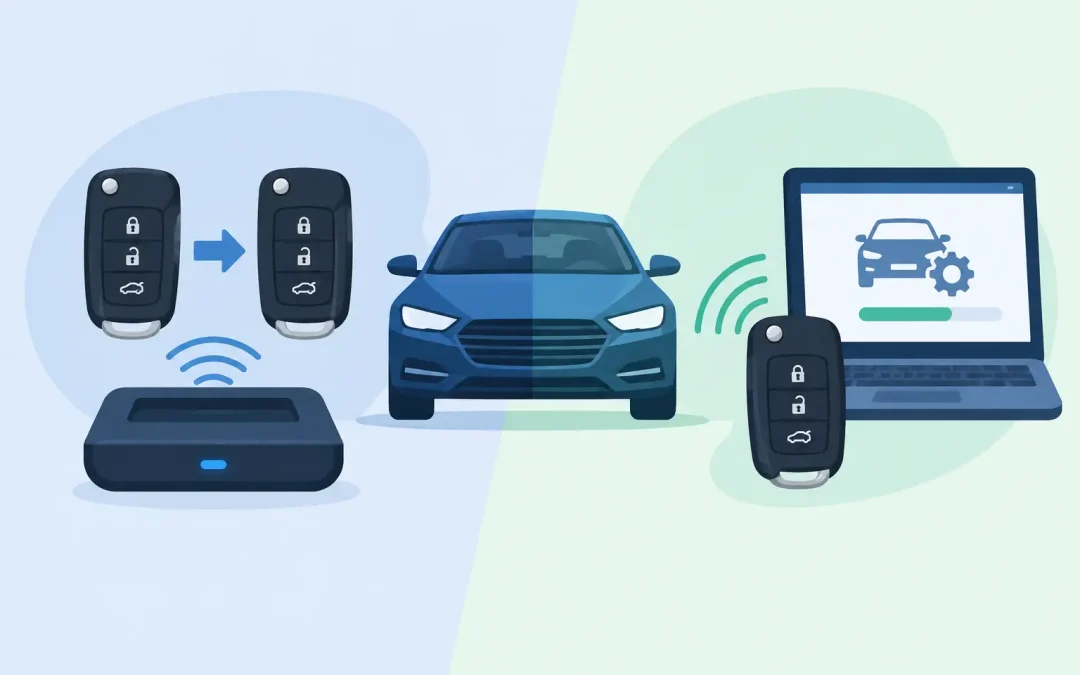
A spare key can feel like a simple purchase until you discover that modern vehicles do not accept just any cut piece of metal. The question of car key cloning versus programming comes down to how your vehicle checks that a key is authorized to start it. The right answer depends on the vehicle, the key type, and whether you still have a working key.
For most drivers, the practical goal is straightforward: get a dependable key that starts the car, operates the remote functions where required, and does not leave you stranded. A specialist should identify the correct method before cutting or coding anything, rather than applying a one-size-fits-all solution.
What Car Key Cloning Means
Key cloning copies the electronic identity of an existing working transponder key onto a compatible new transponder chip. The transponder is the small electronic component inside many car keys. When you turn the key in the ignition or place it near the start system, the vehicle reads that chip before allowing the engine to start.
With cloning, the new key effectively presents the same approved identity as the original. It does not usually require access to the vehicle’s diagnostic port or changes to the vehicle’s stored key records. Once the blade is accurately cut and the chip has been copied, both keys should start the vehicle.
This can be a quick, sensible option for an additional basic key on vehicles with compatible, older-style transponder systems. It is particularly useful when the original key works properly and the customer simply wants a spare before an emergency happens.
Cloning is not the same as copying a house key. The key blade must still be cut precisely, and the transponder must be suitable for the vehicle. A key that turns in the ignition but has the wrong or poorly copied chip will not start the engine.
The advantages of cloning
The main benefit is convenience. Because the vehicle may not need to be connected to programming equipment, cloning can sometimes be completed efficiently while you wait. It can also avoid changing the vehicle’s existing key data, which is useful where a straightforward duplicate is all that is needed.
For a working driver, tradesperson, or family with one shared vehicle, a cloned spare can prevent a small mishap from becoming a missed day of work or an expensive recovery situation.
The limits of cloning
A clone is a duplicate identity, not a separately registered key. If the original key is lost, the cloned key can still work because the vehicle recognizes the copied identity. That means cloning is not normally the best security choice after a key has gone missing or may have been stolen.
Cloning also cannot be used on every make, model, or year. Newer transponder systems, proximity keys, smart keys, and certain encrypted systems often need a different process. Remote buttons are another separate issue. A cloned transponder may start a vehicle, but remote locking functions may need programming independently or may require a specific replacement remote.
What Car Key Programming Means
Programming adds a key directly to the vehicle’s immobilizer or security system. The locksmith communicates with the vehicle using specialist equipment and authorizes the new key in the car’s own memory. Each programmed key can have its own unique electronic identity.
This is commonly required for modern remote keys, keyless entry fobs, push-button start systems, and many vehicles that use higher-security transponders. It is also the preferred route when all keys have been lost, when a remote has failed, or when security needs to be restored after a key is missing.
During programming, the vehicle can be set to recognize the new key and, where the system permits, remove lost or unwanted keys from its memory. That matters if you do not know who may have access to a lost key.
Why programming can be the better security option
If your only key has disappeared, a duplicate of that key is not enough to solve the bigger concern. You want a replacement key that works and, where possible, the lost key removed from the vehicle’s authorized list.
Programming is also often necessary when there is no working original key to copy. A capable mobile automotive locksmith can retrieve the information needed, cut the correct key, and program it to the vehicle on site in many cases. This is the point at which the right equipment and experience make a real difference.
Programming may take longer than a simple clone because the procedure varies by vehicle. Some cars require security access, PIN retrieval, module communication, or a stable power supply throughout the process. That is not a reason for concern. It is the correct care required to make sure the key works properly and the vehicle’s systems are protected.
Car Key Cloning Versus Programming: Which Do You Need?
If you have one fully working key and need a basic spare for a compatible vehicle, cloning may be the quickest and most cost-effective choice. If you need a replacement remote, a keyless fob, or a key for a newer vehicle, programming is more likely to be required.
The decision changes when a key is lost. For a missing key, programming is usually the safer route because the vehicle can potentially be updated so the missing key no longer starts it. This is especially relevant for vans carrying tools, stock, or business equipment.
A damaged key can go either way. If the blade is worn, the remote case is broken, or the transponder has failed, the technician first needs to determine what still works. Sometimes a new shell and blade solve the problem. Other times, a complete replacement key with programming is the reliable answer.
The vehicle itself ultimately decides the method. Make, model, year, key type, and immobilizer system all matter. A professional will check compatibility first and explain what is possible, rather than promising cloning when the vehicle requires programming.
Remote Functions and Starting the Vehicle Are Different Jobs
Many people call every vehicle key a remote, but there can be several separate functions inside one unit. The mechanical blade unlocks or turns the ignition. The transponder allows the engine to start. The remote buttons lock, unlock, or open the trunk. A smart key may also communicate with the vehicle without being inserted.
Because these functions are separate, one part can fail while another still works. For example, your remote buttons may stop working because of a flat battery, damaged circuit board, or worn buttons, while the transponder still starts the car. Equally, a replacement blade may open the door but will not start the engine until the transponder is correctly cloned or programmed.
This is why a proper assessment saves time and money. Replacing only the part that has failed is ideal when possible. Replacing the full key is the better option when reliability is already compromised.
Why Mobile Service Matters
A dealership may be able to supply and program many keys, but the process can involve booking delays, transporting a vehicle that cannot be driven, and higher replacement costs. A fully equipped mobile locksmith can often carry out key cutting and programming at your home, workplace, or roadside location.
For drivers in Oldbury and across the West Midlands, Remote Key Man provides this practical on-site approach for car and van keys. The work is carried out with specialist equipment, with attention to correct key operation rather than a quick fix that creates another problem later.
Mobile help is particularly valuable when all keys are lost, a van is off the road, or a faulty remote has become an access issue. In those situations, non-destructive entry, accurate key cutting, and correct programming should work together. There is no benefit in gaining access if the vehicle still cannot be started afterward.
Get a Spare Before You Need an Emergency Replacement
The least expensive, least stressful time to sort out a key is while you still have one that works. A spare gives you options: cloning may be available, details can be checked against the original, and there is no need to recover or transport an immobilized vehicle.
Keep the spare somewhere safe away from the vehicle, not in the glove box or hidden inside the van. If your only key is becoming unreliable, has a cracked case, needs several button presses, or feels worn in the ignition, deal with it before it fails completely. A working spare is not just convenient – it is a practical safeguard against a much more disruptive day.

Recent Comments