
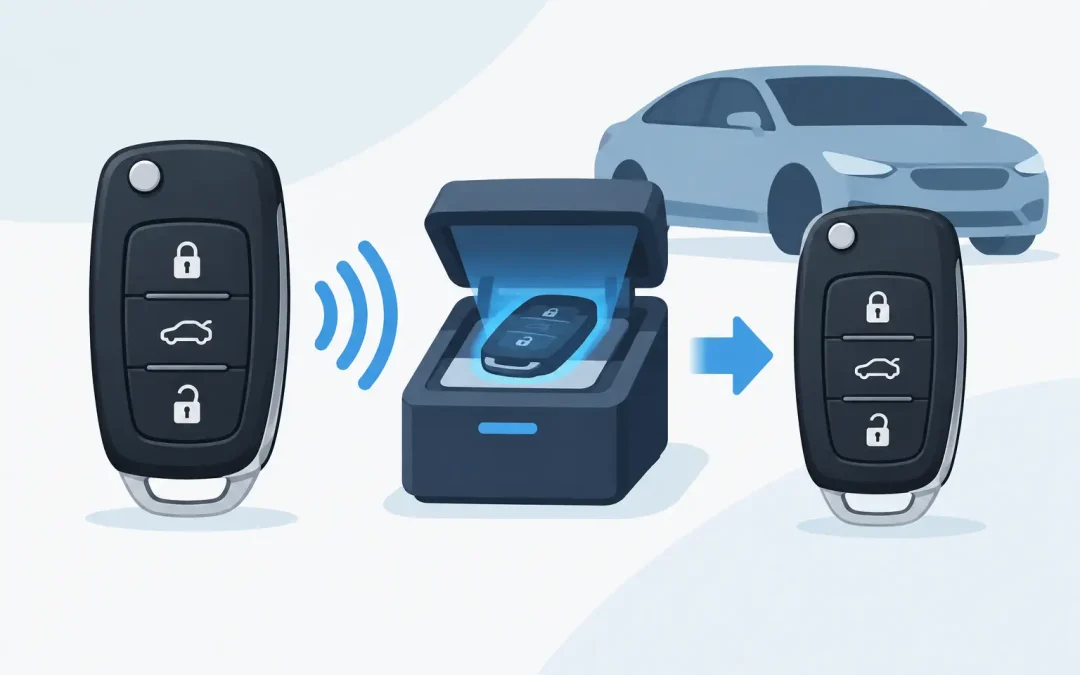
A spare metal key that turns in the ignition is not always enough to start a modern vehicle. So, can transponder keys be copied? In many cases, yes. But copying the blade is only one part of the job. The new key also needs the correct electronic chip information so your vehicle recognizes it and allows the engine to start.
For drivers who rely on a car or van every day, that distinction matters. A key may look perfect, fit the lock, and still leave you stranded if it has not been programmed correctly. A qualified automotive locksmith can cut and program many replacement transponder keys at your home, workplace, or roadside, often while you wait.
What a Transponder Key Actually Does
A transponder key contains a small chip, usually housed in the plastic head of the key. When you turn the key in the ignition or place it near the vehicle’s start system, the vehicle reads that chip and checks whether it is authorized.
If the chip matches the vehicle’s security system, the engine can start. If it does not, the engine immobilizer remains active. This is why an ordinary hardware-store copy may unlock a door but fail to start the vehicle.
Transponder systems have been common for years because they make theft more difficult. A thief cannot simply force the ignition or cut a matching metal blade. They would also need a key with the correct electronic authorization.
Can Transponder Keys Be Copied for Every Vehicle?
Not every transponder key can be copied in exactly the same way. The answer depends on the make, model, year, and type of security system fitted to the vehicle.
Some older vehicles use a fixed-code transponder chip. These keys can often be cloned, meaning a specialist reads the chip data from a working key and writes it to a compatible blank chip. Once the new blade is cut, the duplicate can work much like the original.
Many newer vehicles use encrypted or rolling-code systems. With these, copying the chip information alone may not work. The replacement key needs to be programmed directly to the vehicle through diagnostic equipment. This securely adds the key to the vehicle’s list of recognized keys.
Smart keys, proximity fobs, push-button start systems, and keys with integrated remote controls may need additional programming steps. The remote locking functions and the engine-start authorization are related, but they are not always programmed in the same way.
That is why the best first step is to have the key and vehicle checked rather than assuming a standard duplicate will do the job. The right equipment and key blank save time, avoid failed copies, and keep the vehicle’s security system working as intended.
Copying a Key vs. Programming a Key
These terms are often used interchangeably, but they mean different things.
Key cutting refers to shaping the metal blade so it operates the door lock and ignition. Chip cloning copies data from a working transponder chip onto another compatible chip. Key programming communicates with the vehicle itself to register a new key, remote, or smart fob.
A proper spare may require all three. For example, a van key with remote buttons may need its blade cut, its transponder chip programmed for starting, and its remote functions synchronized for locking and unlocking.
The work should be tailored to the vehicle rather than treated as a one-size-fits-all job. A correctly programmed spare is there for the moment you need it, not just for the moment it is tested at the counter.
When You Need a Working Original Key
Having one working key generally makes the process quicker and more straightforward. It gives the locksmith a starting point for cutting the blade and, on suitable systems, reading the transponder information.
However, a working original is not always required. If every key has been lost, a specialist can often create and program a replacement from the vehicle. This may involve gaining non-destructive entry, identifying the correct key profile, cutting a new key, and programming it to the immobilizer.
All-keys-lost situations are usually more involved than making a spare. The vehicle may need extra security procedures, and the cost can be higher because there is no existing key to copy. That is one good reason to arrange a spare before the last working key is damaged, misplaced, or locked inside the vehicle.
Why a Cheap Copy Can Become an Expensive Problem
A low-cost key can be tempting, especially if the original still works. But the cheapest option is not always a usable option.
The wrong transponder chip may not communicate with the vehicle. A poorly cut blade can stick in the lock or ignition. A low-quality remote shell may fail quickly, while an incorrectly programmed key can create confusion when the vehicle will not start.
There is also a security issue. Vehicle keys should only be copied for the registered owner or someone with clear authority to arrange the work. A professional automotive locksmith will normally ask for identification and proof that you are entitled to have a key made. That protects you, your vehicle, and the people carrying out the work.
If your existing key is cracked, intermittently working, water-damaged, or held together with tape, do not wait until it fails completely. A technician can assess whether the problem is the blade, battery, remote board, transponder chip, or ignition itself. In some cases, repairing or replacing the key early prevents a more disruptive no-start situation later.
The Mobile Locksmith Advantage
Dealership key replacement can involve arranging transport, waiting for an appointment, and taking time away from work. A mobile automotive locksmith brings the cutting and programming equipment to the vehicle instead.
That is particularly useful for van owners, tradespeople, and families with busy schedules. The key can be cut and tested where the vehicle is parked, and the technician can confirm that it starts the engine, operates the locks, and works with the remote functions where applicable.
Remote Key Man provides this type of on-site service for drivers who need a spare, a replacement after lost keys, or help with a faulty vehicle key. The aim is simple: get you back into your vehicle and back on the road without unnecessary damage or disruption.
What to Have Ready for a Replacement Key
When arranging a transponder key copy or replacement, have the vehicle’s make, model, year, and registration details available. If you have a working key, keep it with the vehicle. It is also helpful to mention whether the key has buttons, a flip-out blade, a smart-key function, or a push-button start system.
You should also be ready to show identification and proof of ownership or legitimate use. A professional will use this information to identify the correct key type and follow the proper security process.
Do not be surprised if the locksmith asks whether all keys are lost or whether you still have one that starts the vehicle. That answer can change the programming method, time required, and overall cost.
Common Questions About Transponder Key Copies
Will a copied transponder key work in the doors and ignition?
It should, provided the blade is cut accurately and the electronic chip is cloned or programmed correctly. A key that works only in the doors has not completed the job if it cannot start the engine.
Can I buy a blank key online and have it programmed?
Sometimes, but compatibility is not guaranteed. The blank must match the vehicle’s blade profile, chip type, remote frequency, and electronics. Supplying the wrong key can delay the work, so it is often safer to let the locksmith source the correct replacement.
Does a dead key-fob battery stop a transponder key from starting the car?
Not always. On many vehicles, the transponder chip is separate from the remote battery and can still be recognized. However, smart-key systems vary, and a weak battery can cause access or start issues. A proper test identifies whether the battery is the problem or whether the key needs repair or replacement.
A spare transponder key is one of those small preparations that can save a major headache. If you still have a working key, having it copied and programmed now is usually far easier than dealing with a lost-key emergency later.

Recent Comments