
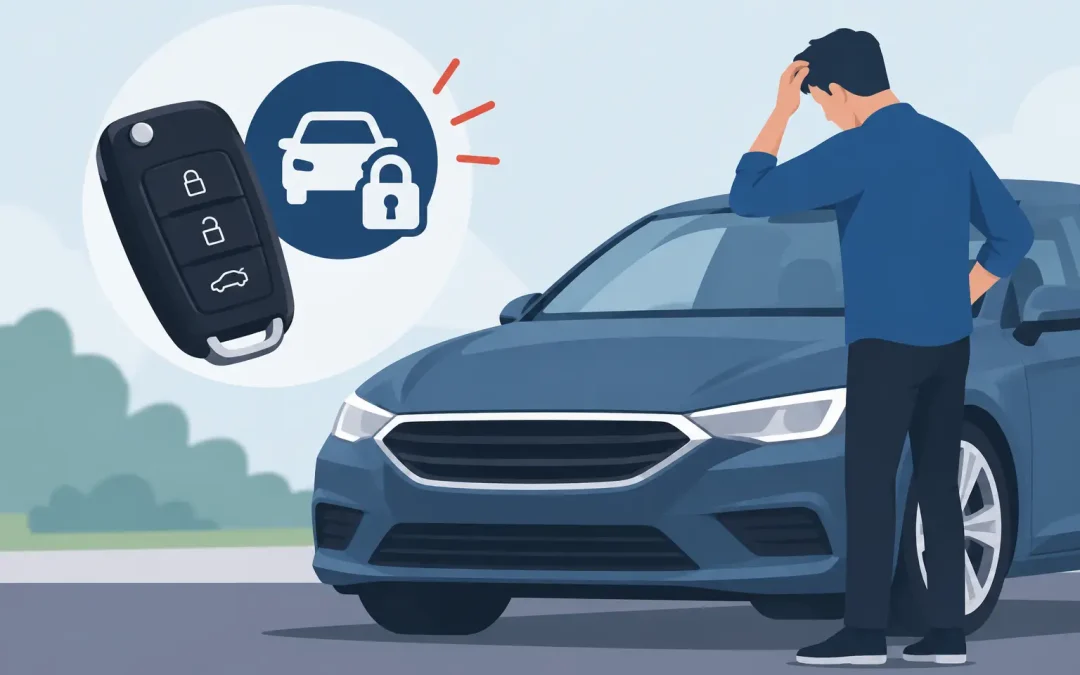
A car that unlocks normally but refuses to start can quickly turn a routine journey into a stressful problem. Often, the cause is not the battery, starter motor, or fuel supply. It can be the vehicle security system failing to recognize the key. Immobiliser repair identifies whether the fault is in the key, remote, ignition, wiring, or the vehicle’s security control system, then deals with the right part of the problem without unnecessary guesswork.
For drivers, families, and tradespeople around Oldbury and the West Midlands, the practical issue is simple: you need your car or van back on the road without towing it to a dealer or waiting days for an appointment. A properly equipped mobile vehicle locksmith can often test and program keys at your home, workplace, or roadside location.
What an Immobiliser Does
An immobilizer is an anti-theft system fitted to most modern vehicles. When you put the key in the ignition, press the start button, or bring a proximity key into the vehicle, the car checks for the correct electronic code. If that code is accepted, the vehicle allows the engine to start. If it is not, the engine may crank without firing, start and immediately cut out, or do nothing at all.
The electronic chip that carries this information is called a transponder. On older keys, it is usually a small chip inside the plastic key head. On newer remote and smart keys, it is integrated into the remote electronics. The remote buttons and the transponder are related, but they are not the same thing. A key can unlock the doors while still failing the immobilizer check.
That distinction matters because replacing a remote battery may restore the lock and unlock buttons but will not necessarily solve a no-start fault. Likewise, a worn mechanical key blade can turn the ignition while the programmed transponder is not being detected.
Signs You May Need Immobiliser Repair
The most familiar warning sign is an immobilizer or key symbol flashing on the dashboard when you try to start the vehicle. However, not every fault presents itself in the same way. Some vehicles display a message such as “key not detected” or “immobilizer active.” Others simply crank but will not start.
A key-related immobilizer issue is more likely if the problem began after the key was dropped, got wet, was damaged in a washing machine, or had a weak or leaking battery. It is also common when a vehicle has only one aging key that is used every day. Internal components can fail over time, particularly on remote keys that have been repaired with poor-quality cases or have loose circuit boards.
Try your spare key if you have one. If the spare starts the vehicle, the issue is likely with the main key rather than the car itself. That is useful information, but do not keep using the only working key and hope for the best. Arrange a replacement or spare promptly. A lost-key situation is usually more expensive and disruptive than making an additional working key while the vehicle is accessible.
If neither key works, the fault may be in the vehicle rather than the keys. A flat vehicle battery, poor battery connections, water damage, a faulty ignition reader, damaged wiring, or a control-module issue can all prevent a valid key from being recognized.
Why a Car May Not Recognize Its Key
There is no single fix for every no-start problem. Good immobiliser repair starts with diagnosis, because programming another key will not cure a broken ignition antenna or a vehicle with an electrical fault.
The ignition reader, sometimes called an antenna ring, sits around the ignition barrel on many vehicles. Its job is to read the transponder chip when the key is inserted. If it fails, the vehicle cannot receive the code even when the key itself is good. Push-button-start vehicles use different antennas and modules, but the principle is similar: the car must reliably detect and verify the authorized key.
Battery voltage is another frequent factor. Modern vehicles rely on multiple control modules communicating correctly. When the battery is very low, warning lights, remote functions, and immobilizer behavior can become unpredictable. A battery check is a sensible first step, especially if the vehicle has been parked for a while or has recently struggled to crank.
A previous electrical repair can also matter. Damaged wiring near the ignition, poorly fitted aftermarket alarms, water ingress, or a replacement engine control unit may affect the immobilizer system. In these cases, the repair may require more than key programming and may need an auto electrician or specialist diagnostic work. A trustworthy locksmith should explain that clearly rather than claiming every no-start fault is a key problem.
What a Mobile Key Specialist Can Check
A vehicle locksmith with the right equipment can assess the key’s transponder function, test the remote where relevant, read fault information on many makes and models, and determine whether a new key can be programmed. If the original key is faulty, a replacement can often be cut and programmed on site while you wait.
This is particularly useful when the vehicle is parked at home, at work, or on a job site. There is no need to arrange a tow simply to find out whether the key is at fault. Remote Key Man uses mobile key-cutting and programming equipment to deal with many car and van key problems where the vehicle is located.
The exact work depends on the vehicle. Some cars accept a replacement transponder key quickly. Others use encrypted systems that require more advanced programming, security access, or retrieval of vehicle information. High-security van locks and keys, including certain Ford applications, need specialist knowledge and the correct tools. The right approach is careful and vehicle-specific, not a universal reset procedure.
Avoid the Common Expensive Mistakes
Do not repeatedly force a key in the ignition if it is sticking or damaged. You can turn a manageable key problem into a damaged ignition lock. Similarly, avoid cheap online keys advertised as suitable for every version of a vehicle. They may have the wrong chip type, incorrect frequency, poor electronics, or an uncut blade that cannot be used without proper programming and cutting.
Be cautious with online advice that suggests bypassing or disabling the immobilizer. The system is there to protect the vehicle, and attempts to interfere with it can create insurance, security, and reliability issues. They can also make a later professional diagnosis more difficult.
If your key has been lost or stolen, do not assume that making one replacement key is enough. Depending on the vehicle, it may be possible to erase missing keys from the system and program the keys that remain in your possession. That reduces the risk of the missing key being used to access or start the vehicle.
When to Call for Help
Call a specialist when the immobilizer light is flashing, the car says it cannot detect the key, the engine starts then dies, or you have a damaged, wet, lost, or intermittent key. It is also worth calling before the problem becomes urgent if your only key is cracked, held together with tape, or works only after several attempts.
Have the vehicle make, model, year, and registration details available, along with your location and a clear description of what happens when you try to start it. If you have a spare key, say whether it works. This helps establish whether the likely issue is key programming, key cutting, an ignition fault, or a wider vehicle electrical problem.
A no-start fault is frustrating, but it does not automatically mean an expensive dealer visit or a major mechanical failure. Start with a proper diagnosis, protect the one working key you have, and deal with small key problems before they leave you stranded.

Recent Comments