
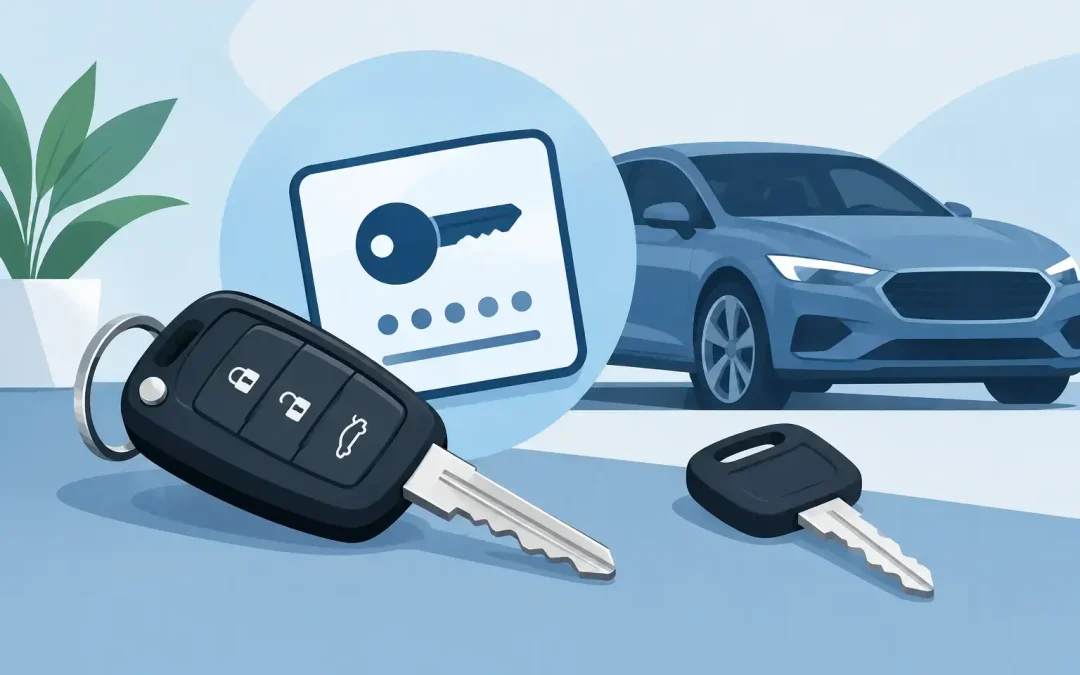
A vehicle key code guide is useful when you have lost every key, need a spare, or are dealing with a worn ignition key that no longer turns properly. The code can give a qualified automotive locksmith the information needed to cut the mechanical part of a replacement key accurately. But it is only one part of the job. On most modern vehicles, the new key must also be programmed to the vehicle before it will start the engine.
What Is a Vehicle Key Code?
A vehicle key code is a series of numbers and letters linked to the cuts on a vehicle key. Those cuts are the precise heights and positions that allow the key blade to operate the door lock, ignition, or both. Think of it as the specification for cutting a key, rather than a spare key itself.
Different manufacturers use different systems. Some codes are direct codes that can be used to cut a key straight away. Others are indirect and must be converted through specialist software or verified against a vehicle database. The code may relate only to the mechanical blade, while the transponder chip and remote-control functions require separate programming.
This distinction matters. A key that opens the door but will not start the car may have been cut correctly but not programmed. A programmed key with the wrong blade cuts may start a push-button vehicle but still fail to open the door manually in an emergency. A proper replacement should be checked for all the functions your vehicle uses.
Where You May Find the Key Code
Some owners receive a small plastic tag, card, or metal label with the vehicle when it is new. This may show a key number or code. It is worth keeping, but it should not be left in the glove box, attached to the vehicle paperwork, or stored with the spare key. Anyone who has the vehicle and the code may have a useful starting point for making a key.
The code can also appear in manufacturer records, dealership systems, or approved locksmith databases. Access is usually restricted for good reason. A reputable locksmith should ask for proof that you own or are authorized to use the vehicle before retrieving security information or making a replacement key.
Sometimes the number found on a lock, key, or old paperwork is not the code needed to produce a new key. It could be a part number, a remote frequency reference, or an internal manufacturer number. This is why guessing from a photograph or ordering a blank online is often a false economy.
Your VIN Is Not the Same as a Key Code
Your vehicle identification number, or VIN, identifies the vehicle. It does not normally provide the key cuts by itself. However, with the right authorization and access to manufacturer information, it can help a locksmith or dealer identify the correct key type and retrieve relevant records.
Do not post a VIN, key code, clear photo of a key blade, or remote serial number on social media or public marketplaces. Those details may seem harmless, but together they can reveal more about your vehicle security than you intend.
When a Code Helps and When It Does Not
A verified code can save time when all keys are lost. Rather than dismantling a lock to read it, a locksmith may be able to cut the blade from the code and then move on to programming. That can reduce disruption, especially if the vehicle is parked at home, at work, or on a job site.
It is not always the quickest route. Older vehicles may have incomplete records. A previous owner may have changed the ignition barrel, meaning the original code no longer matches the lock. On some models, decoding an existing door or ignition lock is more reliable than relying on historical information. If the lock is worn or damaged, replacement may be the safer answer.
A key code also does not bypass vehicle security. Modern transponder systems, proximity keys, smart remotes, and immobilizers are designed to prevent an unprogrammed key from starting the vehicle. Advanced diagnostic equipment is needed to add, replace, or erase keys correctly. In an all-keys-lost situation, the process can take longer because the vehicle must be placed into programming mode before a new key can be accepted.
Lost All Keys? Expect Two Separate Jobs
When your only key has gone missing, there are usually two jobs: making a key that physically operates the vehicle and programming it so the immobilizer recognizes it. Depending on the vehicle, the remote buttons may also need synchronizing.
A mobile automotive locksmith can often complete this work where the vehicle is parked. That avoids arranging recovery to a dealership and waiting for a replacement to arrive. The exact process depends on the make, model, year, key style, and whether the vehicle has had locks or modules replaced in the past.
For security, the technician should verify ownership before work begins. Have your photo ID and registration or other proof of entitlement available. If your documents are locked inside the vehicle, explain that before the appointment. A professional can advise on the right verification process and, where appropriate, gain entry without causing damage.
Why a Spare Key Is Cheaper Than an Emergency Callout
The most affordable time to arrange a replacement is while you still have one working key. An existing key gives the locksmith a clear pattern to copy, allows the new transponder to be programmed more easily on many vehicles, and confirms exactly which remote functions are needed.
A spare is particularly valuable for vans. A lost working key can stop a tradesperson from reaching tools, deliveries, or a full day of appointments. It can also become more complicated when a van uses high-security locks, a separate loading-area lock, or a key that has been worn down by constant use.
If a key blade is cracked, the remote shell is loose, buttons have stopped responding, or the key only works after several attempts, do not wait for complete failure. Early replacement is usually simpler than dealing with a snapped key in the ignition or a lockout away from home.
Choosing the Right Help for Vehicle Key Codes
A vehicle key code should be handled as security information, not as a general reference number. The right provider will explain what can be done from a code, what needs to be checked on the vehicle, and what proof of ownership is required. They should also be clear about whether the quote includes cutting, transponder programming, remote programming, emergency entry, or lock repair.
Dealer service can be appropriate for some vehicles, particularly where a manufacturer-only procedure is required. The trade-off is often time and inconvenience, since the vehicle may need to be transported or booked in. A specialist mobile locksmith may be able to provide a faster option for common lost-key, spare-key, remote, and ignition problems, often while you wait.
Remote Key Man works with the practical reality of these situations: a vehicle that needs to move, a driver who needs answers, and security checks that must not be skipped. The aim is not simply to produce a key, but to restore safe, dependable access without unnecessary damage or delay.
Keep Your Code and Spare Key Secure
If you have a key code card, store it separately from the vehicle and separately from the spare key. Keep a note of the vehicle make, model, year, and VIN in a secure place, as this helps identify the correct replacement if needed. Do not label a spare key with the vehicle registration or home address.
Most importantly, test a spare key before you need it. Make sure it unlocks the doors, starts the vehicle, and operates the remote functions it is supposed to control. A verified spare kept safely at home can turn a stressful lost-key situation into a short inconvenience.

Recent Comments