
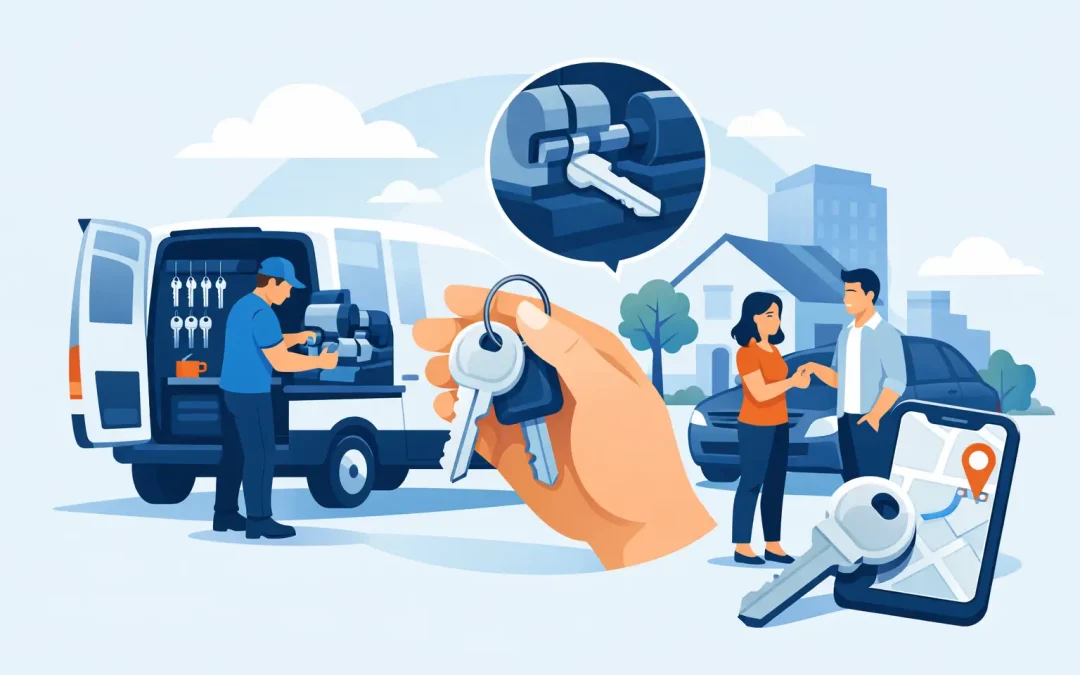
A lost car key can stop a normal day fast. You may be outside your home with no way to get to work, parked at a job site with a van full of tools, or stuck after a remote has failed. Understanding how mobile key cutting works helps explain why a trained vehicle locksmith can often make and program a replacement where the vehicle is parked, without sending you to a dealership.
A properly equipped mobile locksmith brings the key-cutting machine, diagnostic equipment, blank keys, remotes, and programming tools to the vehicle. The process is not simply copying a piece of metal. On most modern cars and vans, the new key must be cut accurately, recognized by the vehicle’s immobilizer, and sometimes paired to the remote locking system as well.
How mobile key cutting works step by step
The job starts with confirming the vehicle details and your authorization to have a key made. A responsible locksmith will need the make, model, year, registration details, and proof that you own or are authorized to use the vehicle. This protects you, your vehicle, and everyone else.
Next, the locksmith identifies the type of key system fitted to the vehicle. An older vehicle may use a basic mechanical key. A newer car might have a transponder chip inside the key head, remote buttons, a flip key, or a proximity fob that allows push-button starting. Each system needs a different approach.
Once the correct key blank or remote has been selected, the locksmith obtains the cutting information. Depending on the vehicle and the situation, this may be done by reading an existing working key, decoding a door or ignition lock, or securely accessing manufacturer key data through specialist equipment. The aim is to establish the exact pattern needed for your vehicle’s locks.
That information is sent to a computerized key-cutting machine in the mobile workshop. The machine cuts the blade to the required depth and spacing, producing a key that should turn smoothly in the door and ignition or operate the emergency blade section of a smart key. The locksmith then checks the cut rather than forcing it into a lock. A key that is not right should be corrected, not pushed until it causes damage.
For many vehicles, cutting the blade is only half the job. The transponder chip or smart fob must then be programmed to communicate with the vehicle. The locksmith connects approved diagnostic equipment to the car or van and adds the new key to the immobilizer system. Finally, the key is tested for starting, locking, unlocking, and any other relevant functions before the job is complete.
Cutting a key and programming a key are different jobs
This distinction matters because a metal blade can open a door but still fail to start the engine. Most vehicles built over the last couple of decades use an immobilizer. The vehicle looks for a coded signal from the chip in the key or from the smart fob before it allows the engine to start.
If the key blade is cut correctly but the chip has not been programmed, the ignition may turn but the vehicle may not start. If the remote is not paired, the key may start the engine but the lock and unlock buttons may not work. A mobile automotive locksmith deals with these separate functions during the same visit whenever the vehicle system allows it.
This is also why a cheap online replacement key is not always a cheap solution. The shell may look right, but the blade profile, chip type, circuit board frequency, and programming method all need to match the vehicle. In some cases, an existing circuit board can be moved into a new shell. In others, a complete programmed replacement is the safer option.
What happens when all keys are lost?
When there is no working key to copy, the process takes more skill, but it is still often possible on-site. The locksmith may decode a lock or retrieve the cutting data, cut a new blade, and program a new transponder or remote directly to the vehicle.
The time and cost can be higher than making a spare from a working key. Some vehicles require additional security procedures, security codes, or access to specific modules. This is one reason a spare key is worth arranging before the only working key goes missing. A planned spare-key appointment is usually simpler than an all-keys-lost emergency.
The mobile workshop makes the difference
Mobile key cutting is not a van with a basic duplicator in the back. For modern vehicles, it requires purpose-built machines, vehicle diagnostic tools, key stock, remote testing equipment, and the experience to use them correctly. The equipment allows the locksmith to respond at your home, workplace, parking lot, or roadside rather than requiring the vehicle to be recovered to a dealer.
That convenience is especially useful for van owners and tradespeople. A missing key can mean missed appointments, inaccessible tools, and a vehicle sitting idle. A specialist can cut and program many replacement keys on location, allowing you to get moving again with less disruption.
It does depend on the vehicle. Certain makes, models, and very new security systems can require extra time or parts. A damaged lock may also need repair or replacement before a newly cut key can work as it should. A good locksmith explains these limits clearly before work begins rather than promising a one-size-fits-all fix.
Mobile key cutting for damaged keys and faulty locks
Not every call involves a completely lost key. A key blade can wear down over time, a flip-key hinge can break, buttons can fail, or the transponder chip can become unreliable after damage. If the key is becoming difficult to turn, do not keep forcing it in the ignition. That can turn a key problem into a damaged ignition lock problem.
Where possible, a locksmith can use the existing key or lock information to make a fresh replacement before the old key fails completely. If an ignition lock is damaged, it may need specialist attention so the new key and the lock work together properly. This is particularly relevant for vehicles that have had a lock changed in the past, since the door and ignition may not always use the same key pattern.
For Ford van owners, high-security lock systems deserve particular care. These locks and keys are designed to resist unauthorized access, so accurate decoding, correct parts, and specialist knowledge matter. Trying to force a lock or using an incorrectly cut key can create unnecessary damage and downtime.
Can a mobile locksmith get you into a locked vehicle?
Yes, vehicle entry is often part of the service, but it should be handled without damage whenever possible. If your keys are locked inside, a trained locksmith uses professional entry methods suited to the vehicle rather than breaking glass, bending doors, or damaging weather seals.
After gaining entry, the best next step depends on the situation. If the keys are visible and working, you may simply need safe access to retrieve them. If they are lost, stolen, or broken, a new key can often be cut and programmed while the locksmith is already on-site. If a lost key creates a security concern, the vehicle may be able to have the missing key removed from its memory so it can no longer start the engine.
What to have ready before the locksmith arrives
Providing the right details helps the job move faster. Have the vehicle make, model, year, registration, and location ready. If possible, send clear photos of any remaining key, remote, damaged blade, or lock issue. Let the locksmith know whether the vehicle has a standard ignition key, a remote key, or push-button start.
You should also explain whether you have a working spare. A working key can make duplication quicker, while an all-keys-lost job needs a different plan. If the vehicle is in a difficult location, such as a multi-story garage or a site with restricted access, mention that in advance so the mobile workshop can be positioned safely.
For drivers in Oldbury and the wider West Midlands, Remote Key Man provides this kind of on-site service with specialist vehicle key equipment, insured work, and no-damage entry where appropriate. The focus is simple: get the correct key working and get you back to your day.
A spare key is easiest to arrange when nothing is urgent. If your only key is worn, intermittent, or already held together with tape, replacing it now can save a far more stressful call later.

Recent Comments