
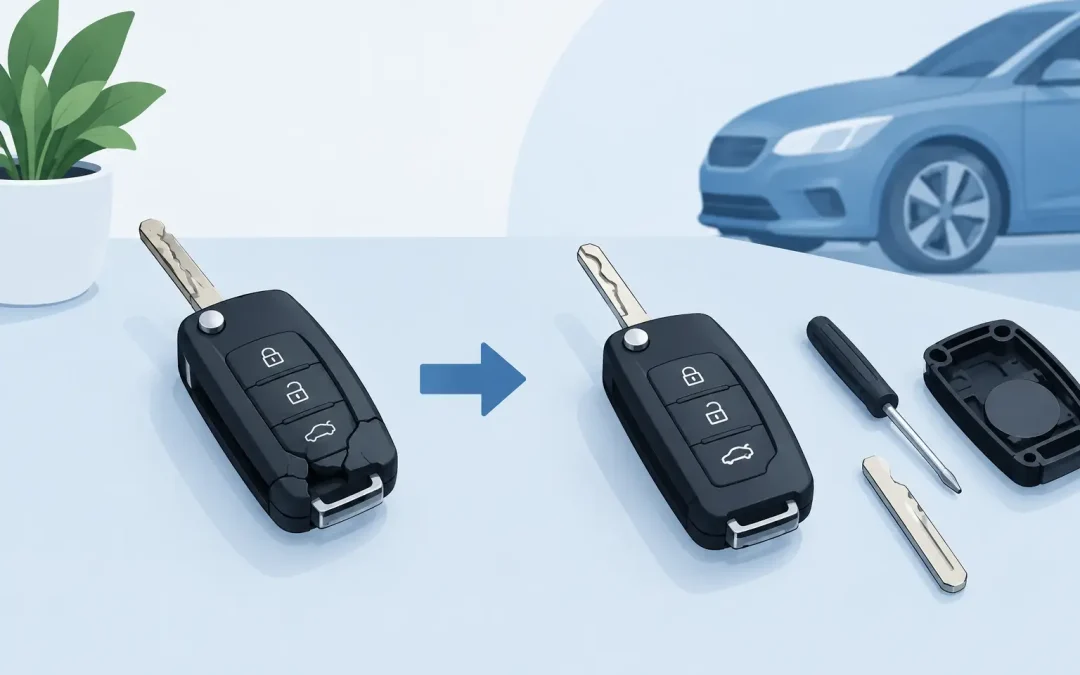
A flip key can fail at the worst possible moment: the blade will not swing out, the remote case splits in your hand, or the key turns in the ignition but the car will not start. The search for “replace damaged flip car key” is usually not about appearances. It is about getting to work, collecting the kids, or keeping a van on the road without an expensive, avoidable delay.
The good news is that a damaged flip key does not always mean a dealership visit or a new lock. In many cases, a vehicle key specialist can identify whether the shell, blade, remote electronics, or transponder chip has failed and provide the right repair or replacement at your location.
What Actually Fails on a Flip Car Key?
A flip car key has more working parts than a traditional metal key. The folding blade is held by a spring-loaded hinge inside the remote case. The remote buttons communicate with the vehicle’s central locking system, while a separate transponder chip allows the immobilizer to recognize the key and start the engine.
That means one damaged part may not affect the others. A cracked key case may look serious but still contain a perfectly good chip and circuit board. On the other hand, a key that looks fine may have a broken solder joint, a worn blade, or a failed transponder that stops the vehicle from starting.
The most common problems include:
- A broken hinge or weak spring that leaves the blade loose or unable to flip out
- Cracked plastic casing, often around the key ring or button area
- Worn or snapped buttons that no longer lock or unlock the vehicle
- A blade that is bent, worn down, or broken in the ignition or door lock
- Water damage, impact damage, or a failed circuit board
- A missing or damaged transponder chip that causes an immobilizer warning or no-start condition
Trying to force the blade open, tape the case together, or repeatedly turn a badly worn key can create a second problem. A damaged key can break inside an ignition, and a poorly fitted replacement shell can allow the chip to fall out unnoticed.
Repair or Replace a Damaged Flip Car Key?
Whether a repair makes sense depends on what is damaged and whether the existing electronics still work. If the remote locks and unlocks the vehicle, the engine starts normally, and only the outer casing or flip mechanism is broken, a replacement key shell may be enough. The original blade, transponder, and circuit board can sometimes be transferred into a new housing.
This is often the most cost-effective option for a key with a cracked case or failed hinge. It also avoids programming a new remote when the original electronics remain healthy. However, the shell must be the correct type for the vehicle, and the internal parts must be transferred carefully. Small transponder chips can be separate from the circuit board and are easy to lose or damage during a DIY repair.
A full replacement is usually the safer choice when the circuit board has water or impact damage, the buttons have stopped working, the blade is badly worn, or the car no longer recognizes the key. A specialist can cut a new blade and program the new remote and transponder to the vehicle, then test every function before leaving.
Do Not Ignore a Worn Blade
A key blade does more than open the door. On many vehicles, it still operates the ignition or serves as the emergency entry key if the remote battery dies. If it is rounded, bent, or cracked near the hinge, continuing to use it risks damaging the lock barrel.
Ignition repairs are more involved than cutting a replacement key. Replacing a worn blade early is normally quicker and less disruptive than dealing with a blade that snaps off inside the ignition on a busy morning.
Signs You Need a New Key, Not Just a New Battery
A flat remote battery is common, but it is not the answer to every problem. Replacing the battery may restore remote locking if the key was working normally before it went flat. It will not fix a broken flip mechanism, a damaged board, or an immobilizer fault.
You are more likely to need professional help if the remote works only intermittently after a fresh battery, the buttons feel loose or do not click, the key must be held in a certain position to start the vehicle, or the dashboard displays a key or immobilizer warning. A key that has been through the washing machine, dropped hard, or run over should also be checked rather than trusted as your only key.
If you still have one working key, arrange a spare before it fails. Programming an additional key while the vehicle can still be started is generally simpler than creating a key after every working key has been lost or damaged.
Why Programming Matters
Modern car keys are security devices, not just pieces of cut metal. Even if a replacement blade fits the ignition, the vehicle may not start unless its transponder is programmed to the immobilizer. Likewise, a remote can have the right buttons and casing but still fail to operate the central locking if it is not matched to the vehicle.
The exact process varies by make, model, and year. Some vehicles allow certain functions to be programmed through the diagnostic port; others need specialist equipment, security codes, or additional procedures. Vans and newer vehicles may have higher-security systems that need more advanced programming capability.
This is why an inexpensive online key can become a false saving. It may be the wrong frequency, use an incompatible circuit board, have a poorly cut blade, or arrive without programming. A professional replacement includes checking compatibility first, cutting the key accurately, programming the required functions, and confirming that the remote, emergency blade, and engine start all work.
What to Expect From a Mobile Key Replacement
A mobile automotive locksmith can usually handle the job where the vehicle is parked, whether that is at home, work, or a roadside location. This is particularly useful when the key will not start the car, the vehicle is locked, or a work van cannot be taken out of service for a dealer appointment.
The process starts with confirming ownership and identifying the correct key type. The technician then assesses the existing key if you have it, cuts a replacement blade where needed, and programs the transponder and remote functions using vehicle-specific equipment. Before the job is finished, the key should be tested for locking, unlocking, blade operation, and starting the vehicle.
For drivers in Oldbury and the West Midlands, Remote Key Man provides mobile vehicle key work with fully equipped workshops, so there is no need to arrange transport to a dealership for many common key problems. This approach is also useful when a damaged key has left you locked out, as non-destructive entry can protect the vehicle from unnecessary damage.
Protecting Your Replacement Flip Key
Once the key is working again, a few simple habits can help it last. Avoid using the key ring as a heavy tool belt. Excess weight pulls on the flip hinge and can wear the ignition over time. Keep the key dry, replace the remote battery before it leaks or becomes completely flat, and do not force a blade that feels stiff.
A protective cover can reduce cosmetic damage, but it should not interfere with the buttons or prevent the blade from folding correctly. More importantly, keep a working spare in a safe place. Do not store it inside the vehicle, and do not wait until the only key is cracked, intermittent, or lost.
A damaged flip key rarely improves with use. Having it assessed while the vehicle is still accessible gives you more options, protects the ignition and locks, and helps keep a small key fault from becoming a day without your car or van.

Recent Comments