
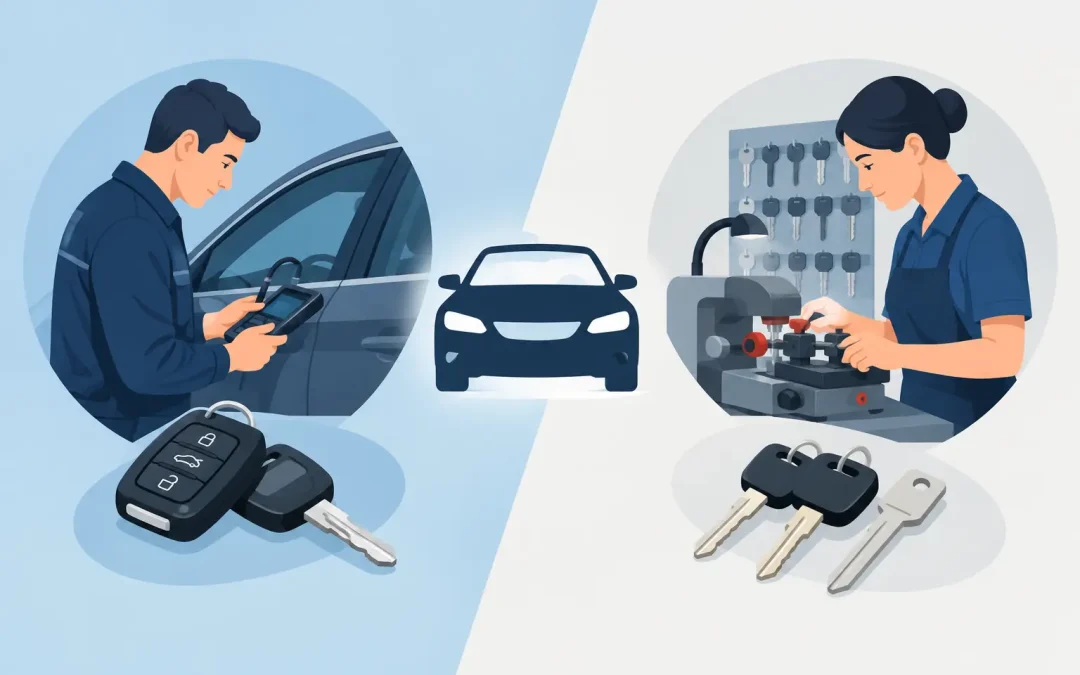
Your only car key has snapped, the remote has stopped working, or you are standing beside a locked van with the keys on the seat. In a car locksmith versus key cutter situation, the right choice depends on more than whether someone can make a metal key. Modern vehicle keys often need cutting, programming, remote setup, and sometimes safe vehicle entry.
A key cutter can be useful for a straightforward duplicate. A specialist automotive locksmith is usually the better choice when the vehicle will not start, the key is lost, the remote has failed, or you need help where the vehicle is parked. Knowing the difference can save time, avoid a wasted trip, and prevent an inexpensive problem from becoming a costly one.
What a key cutter can usually do
A key cutter typically copies the physical blade of an existing key. If you have a working traditional key with no electronic chip or remote function, that may be all you need. The new key is cut to match the original, tested in the door or ignition, and you leave with a spare.
This works well for older vehicles and certain basic keys. It can also be a sensible option when you want an extra mechanical key for a door, roof rack, or simple vehicle lock. If the original key is present, undamaged, and the vehicle has no immobilizer system to consider, key cutting may be quick and affordable.
The limitation is that a correctly cut blade does not automatically make a working modern car key. Many cars, vans, and trucks use a transponder chip inside the key. The vehicle must recognize that chip before it will allow the engine to start. A remote fob also needs to communicate correctly with the vehicle to lock and unlock it.
A key cutter may be able to supply a blank or cut the blade, but may not have the equipment or specialist knowledge needed to program it. That can leave you with a key that turns in the lock but does not start the vehicle.
What a car locksmith does differently
An automotive locksmith deals with the full vehicle key and lock system, not only the metal blade. This includes cutting keys, reading vehicle security information, programming transponders, pairing replacement remotes, gaining entry without damage, and repairing or replacing faulty ignition locks.
For many drivers, the biggest advantage is mobile service. Instead of arranging recovery or finding a way to get the vehicle to a dealer or shop, a fully equipped locksmith can often come to your home, workplace, roadside location, or job site. Most replacement and programming work can then be completed while you wait.
A professional locksmith should also assess the actual fault before recommending a solution. A remote that has stopped working may need a battery, a replacement case, a new fob, or programming. A key that will not turn may point to a worn key blade, a damaged ignition barrel, or a lock issue. Replacing parts without identifying the cause can cost more and still fail to solve the problem.
For lockouts, the difference matters even more. An automotive locksmith uses non-destructive entry methods designed for vehicle locks. Breaking glass, forcing a door, or using improvised tools can damage weather seals, wiring, locks, paint, and side airbags. Professional entry protects the vehicle and gets you moving again without adding a repair bill.
Car locksmith versus key cutter: common situations
The easiest way to choose is to look at the problem in front of you.
If you have a working non-electronic key and simply want a duplicate, a key cutter may be enough. Bring the original key, and check that the duplicate operates both the door and ignition before you leave.
If you need a spare key for a vehicle with a chip, push-button start, remote locking, or keyless entry, use an automotive locksmith. The physical key may need cutting, but the electronic side must also be programmed to your specific vehicle.
If all keys are lost, a locksmith is the practical choice. There is no original key to copy, so the job may involve decoding the lock, cutting a key to the vehicle’s specification, and programming it so the immobilizer accepts it. A dealership can sometimes handle this, but it often requires the vehicle to be transported in and may take longer.
If you are locked out, call a vehicle locksmith rather than a key cutter. The priority is safe entry, not making a duplicate. Once access is restored, the locksmith can also check whether a spare key should be made to stop the same situation happening again.
If the ignition is damaged, sticking, or refusing to turn, key cutting alone will not fix it. An automotive locksmith can inspect the key and ignition lock, then advise whether repair or replacement is needed. This is particularly valuable for vans that see heavy daily use, where a failed ignition can stop a workday immediately.
Why modern keys need more than a cut blade
Vehicle security has changed significantly. A metal key once performed every function: it opened the door and turned the ignition. Most modern keys combine mechanical, electronic, and remote features in one unit.
The transponder chip is a small electronic component that communicates with the vehicle’s immobilizer. If the code does not match, the engine may crank but not start, or it may not crank at all. A copied blade without a programmed chip is therefore only part of a solution.
Remote and smart keys add another layer. Buttons must be configured for central locking, while proximity keys need to be recognized by the vehicle for keyless access and push-button starting. Compatibility matters as well. A remote can look identical to your old one but use different electronics, frequency, or chip type.
This is why the cheapest blank key is not always the cheapest finished job. A poor-quality or incompatible replacement can mean paying twice. A specialist checks the vehicle details, supplies the right key type, cuts it accurately, programs it correctly, and tests every function before the job is complete.
The trade-off: price, speed, and capability
A basic key cutter can be less expensive for a basic key because the job is limited. That is a fair choice when the key has no electronics and there is no fault to diagnose. There is no benefit in paying for programming services you do not need.
But price should be compared against the full job, not just the price of a blank. If you need a programmed key, a replacement remote, a lost-key solution, or entry to a locked vehicle, a car locksmith can often complete the work in one visit. That may avoid towing, dealership appointments, time off work, and the risk of being left with a key that does not start the vehicle.
Experience also matters with commercial vehicles. Ford vans and other work vehicles can have high-security locks and key systems that require specialist tools and procedures. A rushed or incorrect approach can damage a lock or create further downtime. For tradespeople, that lost time can cost far more than getting the right service first.
Questions to ask before booking
Before arranging help, explain exactly what happened. Say whether you have any working keys, whether the vehicle starts, whether the remote works, and whether you are locked out. Have the make, model, year, and registration available if possible.
Ask whether the provider can cut and program the key for your vehicle on site. If it is a lockout, confirm that entry is non-destructive. For a lost key, ask whether old keys can be removed from the vehicle’s memory, which helps protect the vehicle if the missing key is found by someone else.
Choose a service that is insured, properly registered, and willing to verify ownership before making or programming a key. Those checks protect you and are a sign that the work is being handled responsibly. At Remote Key Man, the focus is on practical mobile assistance, from spare keys to advanced vehicle access and programming needs.
Make the spare key before you need it
The best time to arrange a spare is when you still have a working key. It is usually simpler to duplicate and program an existing key than to create one after every key has been lost. A spare kept safely at home can turn a stressful emergency into a short inconvenience.
If your key is cracked, the buttons are failing, or the ignition is beginning to stick, do not wait for a complete failure. Getting the right advice early gives you more options, keeps costs more predictable, and helps ensure your car or van is ready when you need it.

Recent Comments