
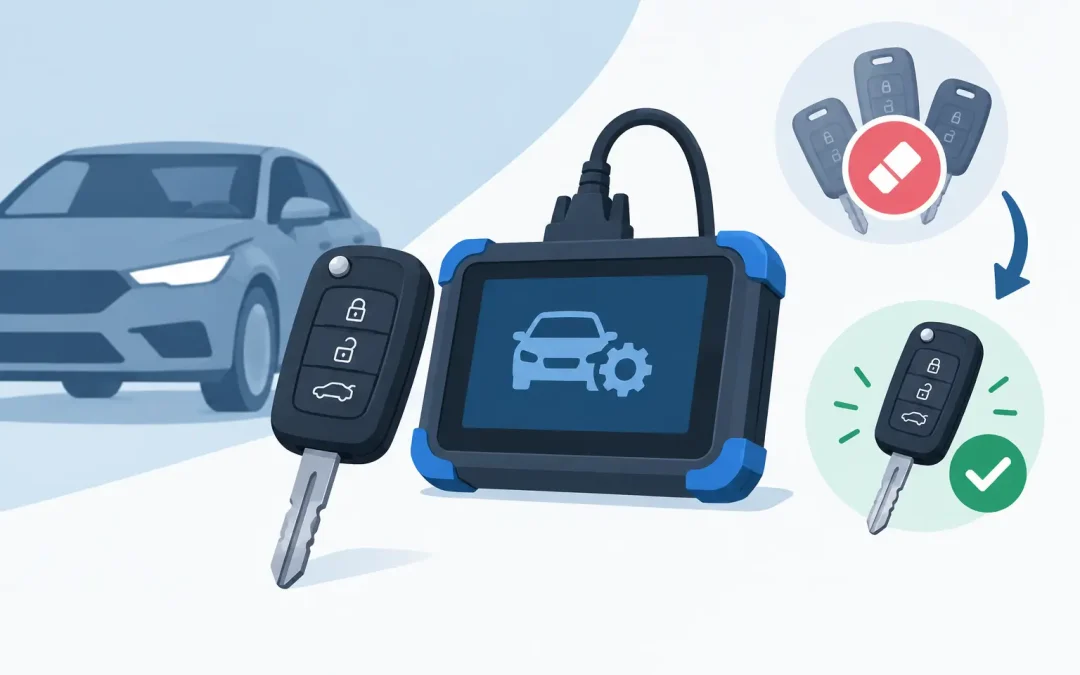
A replacement key should solve a problem, not create a new one. So, does key programming erase keys already working for your vehicle? Usually, no. Programming an additional key commonly adds that key to the vehicle’s memory while the existing keys remain usable. But there are important exceptions, especially after a key has been lost or stolen.
The right approach depends on why you need a key, the make and year of the vehicle, and the security procedure required by its immobilizer system. A qualified automotive locksmith can explain this before any work begins, so you know exactly which keys will work when the job is finished.
Does Key Programming Erase Keys Already in Use?
For a straightforward spare key, existing keys normally stay active. The locksmith cuts the new blade, programs its transponder chip or remote, checks that it starts the vehicle, and tests the buttons where applicable. Your original key and the newly programmed spare should both work.
This is the usual outcome when you still have at least one working key and simply want a backup. It is also common when a remote button has failed but the original key is still present and needs replacing.
The confusion comes from the fact that some vehicles use programming processes that rewrite the whole authorized-key list. On those vehicles, every key you want to keep must be present during programming. If a working key is not included in that process, it may no longer start the vehicle afterward.
That does not mean the locksmith has made a mistake. It is a security feature built into certain vehicle systems. Before starting, a professional should ask how many keys you have and make clear whether all working keys need to be available.
When Existing Keys May Be Deleted
Keys are most likely to be removed from the vehicle’s memory after a lost or stolen key. In that situation, keeping every old key active can leave your vehicle exposed. Someone who finds the missing key may still be able to unlock or start the car or van.
A proper lost-key service can erase the missing key from the immobilizer memory, then program the keys you still have and any replacements. Once the old key has been removed, it may still physically turn a lock in some cases, but it should no longer start the engine.
There are several other situations where key deletion may be necessary:
- The vehicle has reached its maximum number of programmed keys.
- The vehicle requires a full system reset after all keys have been lost.
- A previously programmed key is being removed for security after a sale, staff change, or disputed access.
- The manufacturer procedure requires all authorized keys to be re-enrolled.
For most drivers, the first situation is unusual. The security concern after a lost key is the one that matters most. If you are not sure where a key went, do not assume it will be harmless because it has a flat remote battery or looks damaged. The transponder chip inside may still be recognized by the vehicle.
Adding a Spare Key Is Different From Replacing a Lost Key
These are often treated as the same job, but they call for different decisions.
Adding a spare is about convenience and prevention. You have a working key, you want another one, and there is no reason to remove the original. The goal is to leave you with two tested keys and less chance of an expensive emergency later.
Replacing a lost key is about access and security. You may need a new key to get moving again, but you also need to decide whether the missing key should be disabled. If the key was lost at home and you found it behind the couch a day later, deleting it may not be necessary. If it disappeared outside a store, was stolen with personal documents, or was taken from a work van, removing it from the system is the safer choice.
For tradespeople and van owners, this distinction can be especially important. A vehicle may carry tools, stock, customer information, or equipment needed for the next job. Deleting a missing key can be a sensible layer of protection, not an optional extra.
What “Programming” Actually Means
Modern vehicle keys do more than operate a lock. Many contain a transponder chip that communicates with the car’s immobilizer. When you turn the key or press the start button, the vehicle checks for an authorized electronic identity. If the identity is not accepted, the engine will not start.
Remote fobs add another layer. The lock, unlock, trunk, panic, and sometimes remote-start functions may need to be synchronized with the vehicle separately from the transponder. On proximity or smart-key systems, the car may also need to recognize the fob while it is inside the cabin.
Because systems differ, there is no honest one-size-fits-all answer. A basic older transponder key may be added without affecting anything else. A newer smart key, luxury model, or commercial van can require more involved diagnostic equipment and a different security procedure.
That is why programming should never be treated as simply copying a key. The metal blade can be cut accurately and still fail to start the vehicle if the electronic programming is not completed correctly. Equally, a programmed chip cannot help if the key blade does not turn a damaged ignition lock.
Ask These Questions Before the Work Starts
You do not need to know the technical details of your vehicle’s immobilizer system. You do need clear answers about the result. Ask whether the service is adding a key or rewriting the authorized-key list, whether your current keys must be present, and whether a lost key can be deleted.
It is also worth asking how many keys will be tested when the work is complete. A good job is not finished when the new key is recognized once. The key should start the vehicle reliably, operate the locks where relevant, and be checked alongside your remaining keys.
If you have only one working key, say so from the outset. That lets the locksmith choose the safest method and helps prevent a small issue becoming a no-start situation. Keep every working key together for the appointment unless you have been advised otherwise.
Why Dealer Advice and Locksmith Advice Can Sound Different
A dealership may recommend replacing all keys or bringing the vehicle into the service department. In some cases, that is based on the manufacturer’s standard process rather than the only possible solution. A specialist automotive locksmith may have diagnostic tools and key-programming equipment that allow the work to be completed at your home, workplace, or roadside.
Neither route should rely on guesswork. The best option is the one that matches your vehicle, your security needs, and the condition of the locks and ignition. If a key is lost, deletion may be worth the extra step. If you are ordering a spare before there is a problem, adding it without disturbing the keys you use every day is normally the practical choice.
Remote Key Man approaches key replacement this way: identify the vehicle system, establish what has happened to the existing keys, and program only what is needed. That means no-damage entry when keys are locked inside, properly cut replacement keys, and a clear explanation of whether old keys will remain active.
A Spare Key Is Cheaper Than a Crisis
The easiest time to program a key is when you still have one that works. You can arrange the job around your schedule, test both keys calmly, and avoid the added cost and disruption of an all-keys-lost situation.
If a key has gone missing, act based on where and how it disappeared. A key misplaced in a secure place may simply need replacing. A key lost in public or stolen should prompt a conversation about erasing it from the vehicle memory. The right programming service should leave you with working keys, clear security, and one less thing to worry about when you need to get on the road.

Recent Comments