
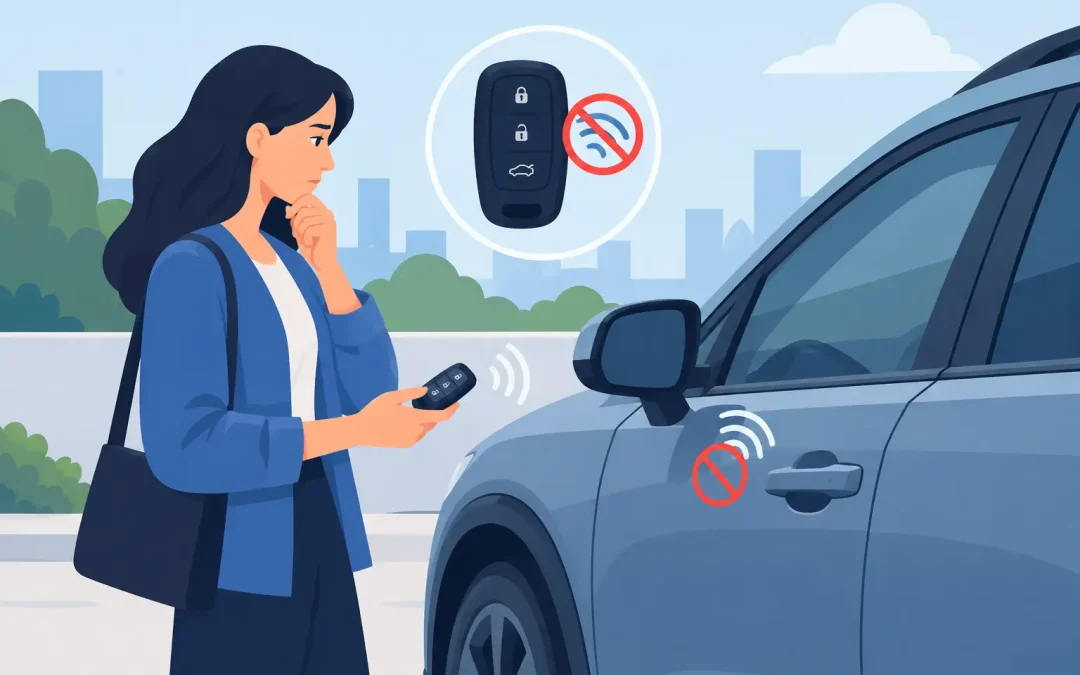
A keyless entry system is convenient right up to the moment your vehicle does not recognize the remote in your hand. You press the button, nothing happens, and a quick trip to work, a school pickup, or a job call suddenly becomes a vehicle access problem.
For most drivers, the cause is not a major fault. A flat fob battery, worn buttons, water damage, or a remote that has lost programming can all stop keyless entry from working. The right response depends on what the vehicle is doing, what spare key you have available, and whether you need to get moving straight away.
What keyless entry actually controls
Keyless entry usually refers to the remote function that locks and unlocks your vehicle without putting a key into the door. On many newer cars and vans, the same fob may also operate a push-button start system. Some vehicles use buttons on the remote, while others use proximity sensors that detect the fob when it is nearby.
These systems are separate from the mechanical door lock, even though both are built into the same vehicle. That matters when a remote stops working. Your fob may fail to unlock the doors electronically, but the emergency key blade inside it may still open the vehicle. In other cases, the remote may unlock the car but not start it because the transponder chip is not being detected.
A vehicle key is not just a piece of cut metal anymore. It can contain a remote circuit board, a battery, a transponder chip, and a mechanical blade. A fault in any one of these parts can leave you locked out or unable to start the engine.
The most common keyless entry problems
A weak battery is the first thing to suspect when the remote range becomes shorter or the buttons work only after several presses. Most fobs use a small coin-cell battery. Replacing it can solve the problem, but it must be fitted correctly and without damaging the circuit board or losing small internal parts.
Button wear is also common. Keys spend a hard life in pockets, bags, toolboxes, and cup holders. The outer case may look fine while the small switches underneath have worn down or the contacts have come loose. If one button works but another does not, such as unlock working while lock does not, a worn switch is more likely than a flat battery.
Water damage can cause more unpredictable faults. A fob that has been through the wash, dropped in a puddle, or exposed to heavy rain may work intermittently before failing completely. Drying it out may not be enough if corrosion has started on the board. Avoid repeatedly pressing the buttons or fitting a new battery before the fob has been checked, as this can make a short circuit worse.
Physical damage is another frequent issue. A cracked case can expose the electronics, while a broken key blade or damaged flip-key hinge can make the fob difficult to use. It is often possible to transfer working electronics into a new case, but that is only suitable when the circuit board and transponder are undamaged.
Finally, the vehicle itself may be the source of the fault. A weak vehicle battery, a blown fuse, a receiver issue, or a central locking problem can make a healthy remote appear faulty. If neither of your keys operates the locks, the issue may be with the vehicle rather than both fobs.
What to do when your keyless entry stops working
Start with the simplest checks. Try the spare remote if you have one. Stand close to the vehicle and try each button once rather than repeatedly pressing them. Check whether the lights flash, the mirrors move, or any door responds. Those details help identify whether the problem is the fob, the central locking, or a single faulty door lock.
If your remote has an emergency blade, locate it before you are stuck outside in bad weather or late at night. It is often released by a small catch on the fob. The blade may be used in a hidden lock cylinder behind a door-handle cover, depending on the vehicle. Your owner’s manual can show the intended emergency entry method.
Be aware that unlocking the vehicle mechanically can set off the alarm on some models. Usually, placing the fob in its backup recognition position or starting the vehicle will silence it. That position varies by make and model. It may be near the steering column, inside the center console, or against a marked area in the cabin.
Do not force the key blade in the door lock. Many drivers rarely use the mechanical lock, so it can become stiff over time. Forcing it can snap the blade or damage the lock barrel, turning a remote problem into a more expensive repair.
Keyless entry and push-button start are not the same fault
It is possible for the doors to unlock normally while the car displays “key not detected” or refuses to start. This usually points to the transponder or proximity side of the fob rather than the remote buttons.
First, try the manufacturer’s backup starting procedure. Some vehicles will start if the fob is held against the start button. Others require the fob to be placed in a specific slot or storage area. A low fob battery can affect proximity detection even when the remote buttons still work.
If the vehicle still will not recognize the key, it may need diagnostic testing and programming. A replacement remote cannot simply be cut to match the old blade and expected to start a modern vehicle. It needs the correct transponder or smart-key specification, then it must be programmed to the vehicle’s immobilizer system.
This is where specialist equipment matters. The wrong remote, an incorrectly programmed key, or a poor-quality copy can leave you with a fob that opens the doors but will not start the vehicle. For drivers who depend on a van for work, that distinction is more than an inconvenience.
Lost keyless entry remotes need more than a replacement shell
If a keyless fob is lost, the priority is getting you back into the vehicle and back on the road. But there is also a security issue. The missing fob may still be programmed to the vehicle, meaning it could potentially unlock or start it if found.
A proper lost-key service should allow the missing key to be removed from the vehicle’s memory while replacement keys are programmed. The exact process depends on the make, model, and year, but the aim is the same: any fob you still have and any new fob should work, while the lost one should no longer be recognized.
This is particularly worthwhile if the key was lost near your home, workplace, or van storage location. It is a sensible security step, not an unnecessary extra.
Why a spare keyless entry remote is worth having
A working spare key is usually far less stressful and less costly to arrange before an emergency. When all keys are lost, a technician may need to gain entry without damage, identify the correct key data, cut a new blade, and program the replacement from scratch. Depending on the vehicle, that can be more involved than duplicating an existing working key.
For a household with two drivers, a spare prevents one person being stranded when the other has the only fob. For tradespeople and van owners, it can prevent a lost remote from stopping a full day’s work. Keep the spare somewhere safe at home rather than inside the vehicle or on the same keyring as the main key.
It is also wise to test the spare occasionally. A key that has sat in a drawer for years can still have a flat battery or a damaged case when you finally need it.
When to call a vehicle key specialist
Call for professional help if you are locked out, the key has been lost, the fob is damaged, the vehicle will not recognize the key, or the mechanical key will not turn in the lock. Avoid improvised entry tools, wire hangers, or forcing a door frame. Modern vehicles have side-impact components, wiring, weather seals, and locking mechanisms that can be damaged easily.
A mobile automotive locksmith can often come to your home, workplace, or roadside location, gain entry without damage where possible, cut a replacement key, and program the remote while you wait. Remote Key Man provides this type of on-site service for drivers and van owners in Oldbury and the wider West Midlands, including replacement remotes, spare keys, transponder programming, and non-destructive vehicle entry.
If your keyless entry has started working only sometimes, do not wait for it to fail completely. Arrange a spare or have the faulty fob checked while you still have a working way to access and start your vehicle.

Recent Comments