
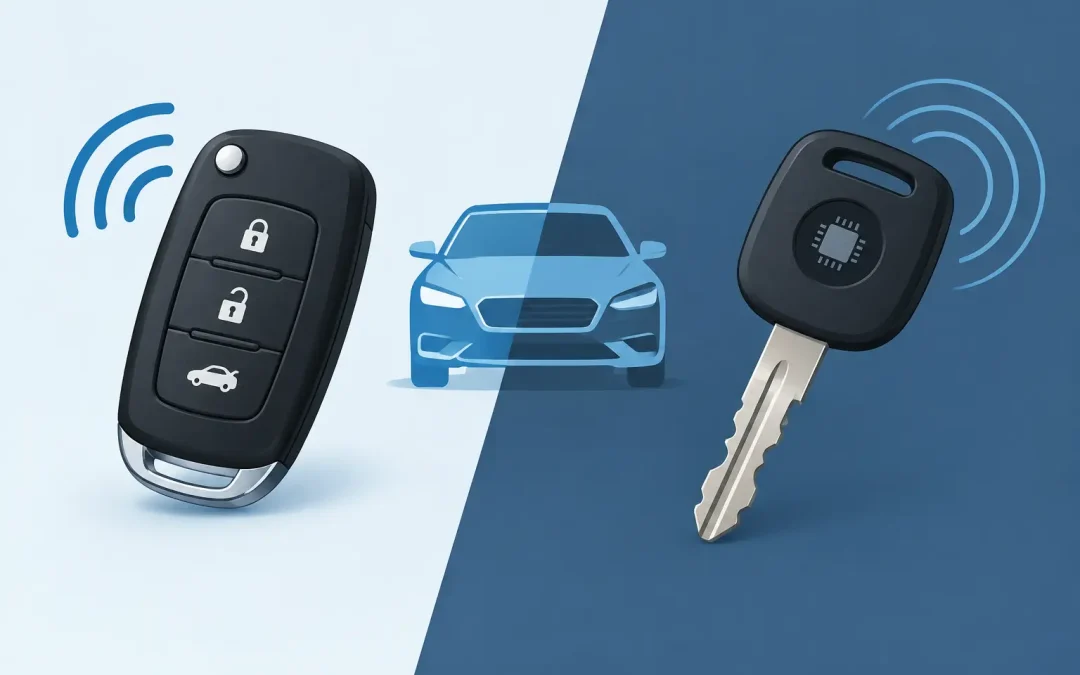
A key that will not unlock the doors and a key that will not start the engine can look like the same problem. They are often two different faults. Understanding the remote fob versus transponder key difference can save time, prevent an unnecessary replacement, and help you explain exactly what your vehicle is doing when you call for help.
Modern vehicle keys do more than turn a lock. Depending on the make, model, and year, one key may contain a cut metal blade, a transponder chip, remote-locking buttons, and proximity technology. Some parts can fail independently. That is why a vehicle may unlock normally but refuse to start, or start perfectly while the remote buttons have stopped working.
What Is a Transponder Key?
A transponder key has a small electronic chip inside the key head. When the key is placed in the ignition, or brought close enough to the vehicle on certain systems, the vehicle reads a unique security code from that chip.
If the code matches what is stored in the vehicle’s immobilizer system, the engine is allowed to start. If it does not match, the vehicle may crank but not start, start briefly and cut out, or display a security or key warning light.
The metal blade and the transponder chip perform separate jobs. The blade operates the physical lock and, on traditional ignition vehicles, turns the ignition cylinder. The chip proves to the vehicle that an authorized key is present. A correctly cut blade without a programmed chip may open the door and turn the ignition, but it usually will not start the engine.
This is particularly relevant after a lost-key situation. A plain copy of the metal key is not normally enough for a vehicle with an immobilizer. The replacement must be cut correctly and programmed to the vehicle.
Signs the Transponder System May Be the Problem
A transponder fault is likely when the vehicle’s remote locking still works but the engine will not start. You may also notice an immobilizer light flashing on the dashboard, a message such as “key not detected,” or an engine that starts for a second before shutting off.
Damage to the key casing can cause trouble even when the blade looks fine. A dropped key, water exposure, cracked plastic head, or worn internal chip can stop the vehicle from reading it. In other cases, the key is fine and the fault lies with the ignition antenna ring, immobilizer system, or vehicle battery. Proper diagnosis matters before replacing parts.
What Is a Remote Fob?
A remote fob is the part of the key that controls convenience functions from outside the vehicle. Its buttons may lock and unlock the doors, release the trunk, operate a sliding van door, sound the panic alarm, or activate remote start where fitted.
Many drivers call the entire key a “fob,” but the remote portion does not always control whether the engine will start. On a traditional remote key, the radio remote and transponder chip may be housed in the same plastic casing, yet they use different systems. The remote sends a radio signal to the central locking system. The transponder communicates at close range with the vehicle’s immobilizer.
A remote fob can also be separate from the ignition key. Some vehicles use a small remote for locking and a standard transponder key for starting. Others use a smart fob with no conventional ignition blade, allowing push-button start and keyless entry.
Signs the Remote Fob May Be the Problem
If the buttons do nothing but the vehicle starts once you use the key in the ignition or hold the fob in its backup starting position, the remote side is the more likely issue. The first possibility is often a weak or dead fob battery.
A replacement battery can solve a simple power problem, but it will not fix a broken button, damaged circuit board, water corrosion, or a fob that has lost synchronization. The vehicle’s main battery can also cause misleading symptoms. When the vehicle battery is weak, central locking and keyless entry may act erratically even though the remote is working correctly.
Do not force the buttons or pry open a fob with unsuitable tools. It is easy to crack the case, dislodge a battery contact, or damage the circuit board. If the casing is split or the buttons have become unreliable, replacing the shell or remote may be a better long-term answer.
Remote Fob Versus Transponder Key: The Simple Difference
The simplest way to separate the two is this: the remote fob helps you get into the vehicle, while the transponder key system gives the vehicle permission to run.
That distinction is useful, but not absolute. One modern key can contain both technologies, and a smart key can add another layer by detecting the fob’s presence for passive entry and push-button starting. The correct replacement therefore depends on what your vehicle actually has, not just what the key looks like.
For example, if your spare key starts the engine but does not lock the doors remotely, the transponder programming is likely still correct and the remote function needs attention. If your spare locks the doors but your daily key will not start the car, the issue is more likely with the transponder chip or its programming. If neither key works, the vehicle itself may need testing.
Why Programming Is Often Required
Cutting a key blade is only one part of replacing many modern keys. A new transponder chip must be programmed into the vehicle so the immobilizer recognizes it. A replacement remote may also need to be synchronized so its buttons communicate with the central locking system.
These are not always the same procedure. Some vehicles allow the remote buttons to be paired separately from the engine-start chip. Others require diagnostic equipment and security access to add a new key properly. Smart keys and certain van systems can involve additional security steps.
This is why buying the cheapest key-shaped item online can become frustrating. It may have the wrong chip type, incorrect frequency, incompatible circuit board, or no provision for programming. Even a visually identical fob is not guaranteed to work with a specific vehicle.
A vehicle key specialist can identify the correct key type, cut the blade, test the existing key where possible, and program a compatible replacement. For many drivers, this can be completed where the vehicle is parked rather than arranging transport to a dealer or leaving the vehicle off the road for days.
When You Need a New Key and When You May Not
You may not need a full replacement if the only issue is a flat remote battery, a worn key shell, or a loose blade. If the chip and circuit board are undamaged, the original electronics can sometimes be transferred into a new casing.
A full replacement is usually the sensible choice when the key is lost, the transponder no longer reads, the remote circuit board is damaged, or the key has been through water or a washing machine. Lost keys can also raise a security concern. On supported vehicles, removing missing keys from the vehicle’s memory means the lost key can no longer start the engine.
If you have only one working key, arranging a spare before anything goes wrong is usually the lower-stress and lower-cost option. A working original gives the technician a useful reference and avoids the extra work involved in creating a key when all keys are missing.
What to Do When Your Key Stops Working
Start with the symptoms. Try your spare key if you have one. If the remote buttons have failed, check whether the vehicle still starts. If the vehicle will not start, look for an immobilizer warning light or a key-not-detected message. Avoid repeated forced turns in the ignition, especially if the blade feels stiff or damaged.
Have the vehicle make, model, year, and a clear description of the fault ready. Mention whether you have a working spare, whether the key was lost or damaged, and whether the issue affects unlocking, starting, or both. That information helps a mobile locksmith arrive with the right key stock and programming equipment.
Remote Key Man deals with both sides of the problem: replacement remotes for access and properly programmed transponder keys for starting. The aim is to get you back into your car or van without damage and without turning a key problem into a longer interruption.
A key that is becoming unreliable rarely improves on its own. If your remote works only at close range, the casing is cracked, or the engine occasionally fails to recognize the key, deal with it while you still have a working backup and the vehicle is safely at home or work.

Recent Comments