
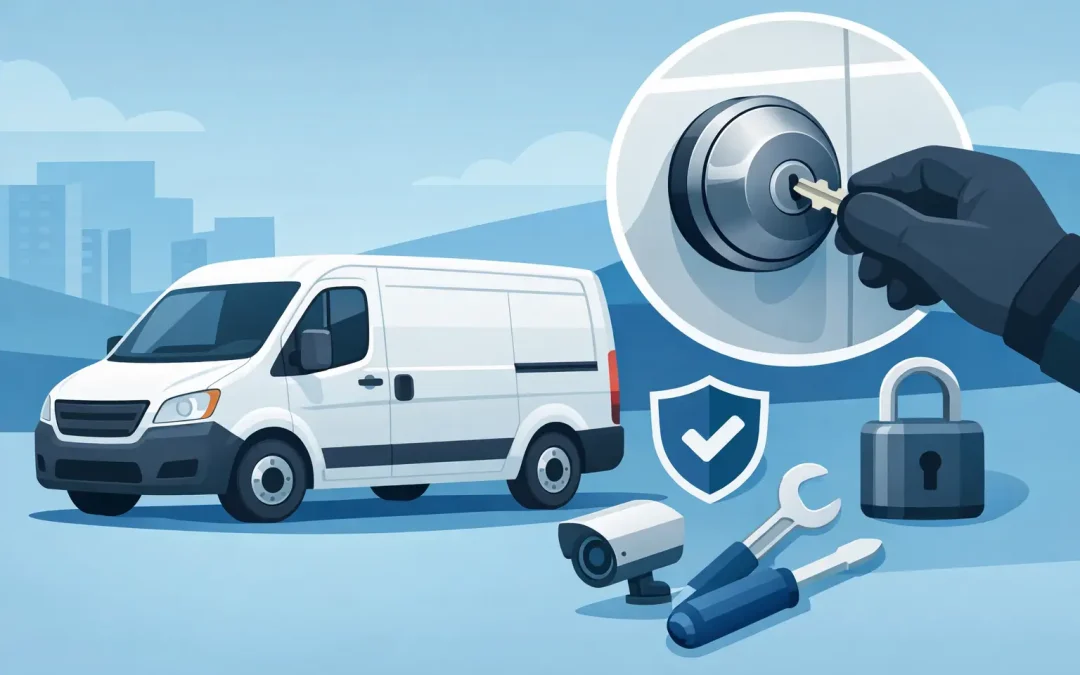
A smashed window is frustrating. A van door peeled open and a full set of tools gone can stop your income for days. This van security lock upgrade guide explains the practical steps that make a working van harder to attack, without making daily access a nuisance.
Factory central locking is useful, but it was designed mainly for convenience. It may not be enough to deter a thief who knows the weak points of common van doors, handles, and locks. A good upgrade adds visible deterrence, physical resistance, and sensible key control.
Start with the risks your van actually faces
The right security setup depends on what you carry, where the van is parked, and how often the doors are opened. A plumber with expensive diagnostic equipment left overnight has a different risk profile from a courier making frequent daytime drops. Adding every available product is not always the answer. The goal is to slow down and discourage an attack without creating delays for you.
Think about where your van spends the most time. Street parking overnight, isolated job sites, station lots, and poorly lit industrial areas increase the value of a stronger mechanical lock upgrade. Also consider the vehicle itself. Some models have known vulnerabilities around the factory lock barrel, door handle, or rear-door seam, and these weaknesses should shape the work you have done.
Before choosing locks, inspect all doors, not just the driver door. Rear cargo doors and sliding side doors are common targets because they offer direct access to tools. A security plan that protects only the cab can still leave the expensive part of the van exposed.
Choose the right type of van security lock upgrade
Mechanical locks remain one of the most effective upgrades because they cannot be defeated by interfering with a remote signal alone. They also show a potential thief that the van will take time and make noise to enter. The best choice comes down to how you use the vehicle.
Deadlocks for strong overnight protection
A deadlock is an additional lock that works separately from the factory central locking system. It is normally operated with its own external key, moving a solid bolt into the door frame. Because it is independent, a thief cannot simply manipulate the original lock or central locking to release it.
Deadlocks are a strong option for vans carrying valuable equipment, especially when parked overnight. The trade-off is simple: you must lock and unlock them manually. For a van that makes twenty deliveries a day, that can become inconvenient. For a tradesperson who locks up at the end of the day and unloads at a job, it is often well worth it.
Slamlocks for frequent stops
A slamlock locks automatically when the door closes. This is particularly useful for delivery drivers, engineers, and tradespeople moving between short jobs. You do not need to remember to press the remote or turn a key every time you step away.
The benefit is speed and consistency, but it requires a new habit. Never leave the key in the cargo area or cab before closing the door. A properly planned installation should also make sure you have a reliable spare key, because an automatic lock is less forgiving when keys are lost or shut inside.
Hook locks for added resistance
A hook lock is an independent mechanical lock that uses a hook-shaped bolt to engage with a bracket on the body of the van. That hook action can offer more resistance against doors being forced or pulled apart than a straight bolt in some situations.
These locks are often fitted to rear and sliding doors, where forced entry attacks are common. They are a sensible choice for vans that carry tools and are left unattended for extended periods. As with deadlocks, the downside is manual operation, so placement and key access need to suit your routine.
Shielding and handle protection
Not every upgrade is a new lock. Protective shields around factory lock barrels, handles, and vulnerable panels can help defend against drilling, punching, or twisting attacks. On certain vans, especially models known for lock-related attacks, shielding can be as important as the secondary lock itself.
This type of protection works best as part of a layered setup. A visible shield may persuade an opportunist to move on, while a deadlock or hook lock provides another barrier if they continue.
Do not overlook your keys and factory locks
A security lock upgrade is only as useful as the keys controlling it. Keep a record of who has copies, particularly if employees, former contractors, or previous owners have had access. If a key has gone missing, treat it as a security issue rather than waiting to see if it turns up.
Modern van keys often contain a transponder chip that communicates with the vehicle immobilizer. Replacing a damaged remote shell does not necessarily solve a faulty key, and cutting a metal blade alone will not always start the van. Where a key is lost or stolen, it may be possible to program replacement keys and remove missing keys from the vehicle’s memory, depending on the make and model.
The factory ignition and door locks matter too. If a lock barrel feels loose, sticks, or has visible damage, get it checked before it fails completely. A compromised original lock can give a thief an easier route into the vehicle, even if other parts of the van are protected.
Installation quality matters as much as the lock
A poor installation can create problems that are more expensive than the lock itself. Incorrect alignment may make a door difficult to close, weaken the fixing point, or leave a lock exposed to water and dirt. Drilling into the wrong area can also interfere with door mechanisms, wiring, or corrosion protection.
Choose locks designed for your exact make, model, and door configuration. A sliding door does not behave like a rear barn door, and a lock that is excellent on one vehicle may be awkward or ineffective on another. Ask how the lock will be positioned, whether it needs routine lubrication, and what happens if a key is lost.
A specialist should fit the hardware cleanly, check that all doors operate correctly, and explain the locking routine before leaving. If your van has a known weak point, such as a high-security Ford lock concern, the recommendation should address that point rather than offering a generic package.
Remote Key Man can assist van owners with specialist vehicle keys, replacement remotes, faulty locks, and non-destructive entry, helping keep access problems from turning into lost work time.
Build security in layers, not around one product
Locks are the core physical defense, but they work better alongside a few practical habits. Keep high-value items out of sight, remove tools overnight where possible, and park with cargo doors close to a wall or obstacle when the location allows it. Good lighting and a visible alarm warning can also influence an opportunist’s decision.
Consider the order in which you invest. If your factory lock is damaged, repair that first. If your cargo doors are vulnerable, fit protection there before spending on cosmetic upgrades. If keys are unreliable or only one key remains, arrange a spare before an emergency forces a more expensive solution.
It is also worth reviewing your insurance requirements. Some policies set conditions for overnight tool cover or require specific security measures. Confirming this before fitting locks can prevent spending money on an upgrade that does not meet the policy’s terms.
A practical locking routine for busy days
The strongest hardware cannot compensate for a rushed routine. Before leaving the van, close every door fully, engage any manual security locks, and check that the key is with you. At the end of the day, remove high-value tools when practical and avoid leaving paperwork, access cards, or spare keys in the cab.
Keep at least one spare vehicle key in a secure location away from the van. Do not hide it under the vehicle, inside a wheel arch, or in a magnetic box. Those spots are well known. A properly cut and programmed spare held at home or by a trusted person can save a working day if the main key is lost, damaged, or locked inside.
The best upgrade is the one you will use every time. Choose locks that match your daily workflow, have them fitted properly, and deal with worn keys or faulty factory locks before they become the weak point that costs you a day’s work.

Recent Comments