
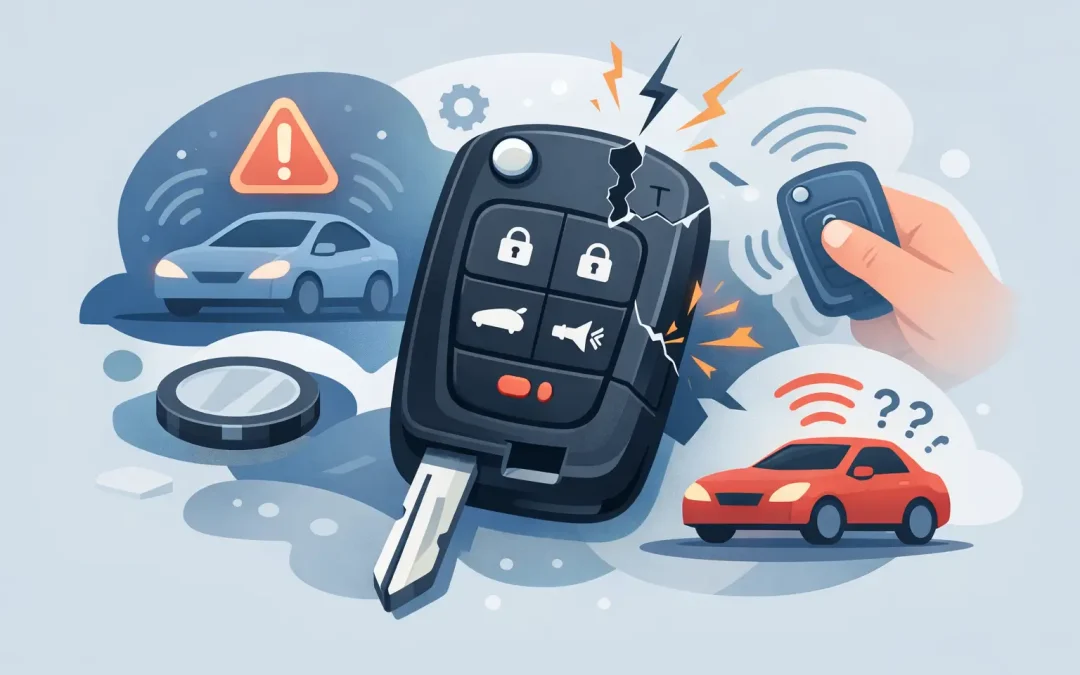
Your car is parked outside, you are late for work, and the unlock button suddenly does nothing. It may be a flat battery, but it can also be one of the best signs your key fob is failing. Acting before it stops working completely can save you from a lockout, a missed appointment, or the expense of recovering a vehicle that will not start.
Modern vehicle keys do much more than open doors. Many contain a remote, a transponder chip, or a proximity system that allows the vehicle to recognize the key and start. When any part begins to fail, the problem can be intermittent at first. That is exactly why it is worth paying attention to small changes rather than waiting for a total failure.
Best Signs Your Key Fob Is Failing
The remote only works at very close range
A healthy key fob should normally lock and unlock your vehicle from a reasonable distance. If you now need to stand beside the driver’s door, hold the fob up to a window, or press the button several times, the signal may be getting weaker.
The simplest cause is often a low battery. However, a weak signal can also point to damaged internal contacts, a worn circuit board, or water damage. If a new battery does not restore the range, the fob itself may need repair or replacement.
Do not assume every range problem is the key. Radio interference, a weak vehicle battery, or a fault with the vehicle’s receiver can occasionally be responsible. A specialist can test the key and help narrow down the cause before you spend money on the wrong fix.
You have to press buttons repeatedly
One missed button press is not always a concern. Repeatedly pressing lock, unlock, trunk release, or panic before the vehicle responds is different. It often means the button switches inside the fob are worn, loose, or contaminated.
This is common with older remotes that have lived in pockets, tool bags, cup holders, and work vans for years. The outside case may look fine while the small switch underneath the rubber button has begun to fail. Sometimes replacing a damaged case helps, but a case alone will not fix a failed electronic button.
One function works but another does not
Perhaps the unlock button works, but the lock button does not. Or the vehicle starts normally, yet the trunk release has stopped responding. These are useful clues because they usually suggest a fault within the remote rather than a complete vehicle-side problem.
A single failed button can often be diagnosed quickly. Still, it is wise not to rely on the remaining buttons for too long. If the fob is deteriorating, another button may fail when you need it most.
The key works sometimes and then stops
Intermittent operation is one of the most frustrating symptoms. The fob opens the car perfectly in the morning, then refuses to work after you finish shopping or arrive at a job site. This can happen when a loose battery connection briefly loses contact as the fob is moved.
It can also be caused by a cracked solder joint or internal damage after the fob has been dropped. Heat, cold, and pressure can make an existing fault show up more often. A key that works only when squeezed, tapped, or held at a certain angle is not reliable enough to trust.
Your vehicle shows a key or immobilizer warning
If a warning light or dashboard message says the key is not detected, the remote battery may not be the issue. Many vehicles use a separate transponder chip or smart-key system to authorize the engine start.
With a traditional key, the doors may still open with the metal blade while the vehicle will not start. With a push-button start vehicle, you may see a “key not detected” message even though the fob is inside the cabin. A dead remote battery can affect some smart keys, but internal chip failure, programming issues, or a vehicle fault are also possible.
This is a situation where guessing can become expensive. Avoid repeatedly trying to start the vehicle until the battery is drained. Have the key tested and, if needed, have a correctly programmed replacement made for your vehicle.
The metal key blade is loose, bent, or difficult to use
Many remote keys have a flip-out blade or an emergency blade hidden inside the fob. If it is loose, bent, cracked at the base, or difficult to release, deal with it early. The blade is often your backup if the remote battery dies or the vehicle’s central locking fails.
Forcing a damaged blade into the door or ignition can damage the lock. That can turn a straightforward replacement key job into a lock repair. If the key feels wrong in the ignition, sticks, or needs jiggling, stop forcing it and have both the key and ignition checked.
The fob has been dropped, washed, or gotten wet
A key fob can survive an occasional drop, but the damage may not appear immediately. Circuit boards can crack, battery clips can shift, and buttons can loosen internally. Water is especially troublesome because corrosion may continue after the fob appears to dry out.
If a fob goes through the wash, remove the battery as soon as practical and do not keep pressing the buttons. Drying the outside does not guarantee the electronics are safe. A professional inspection may prevent the loss of your only working key.
The replacement battery made no difference
Changing the battery is a sensible first check, especially if the fob has become weak or inconsistent. Use the correct battery type, check its orientation, and make sure the contacts are clean and seated firmly.
If the fob still does not work after a fresh battery, do not keep buying batteries or assume the vehicle needs a dealer visit. The problem may be the remote electronics, the transponder chip, the key programming, or the vehicle’s receiver. The correct next step depends on the vehicle and the symptom.
What to Check Before Calling for Help
Start with the spare key if you have one. If the spare works normally, that strongly suggests the original fob is the issue. If neither key works, the fault may be with the vehicle battery, central locking system, receiver, or immobilizer.
Next, inspect the fob for obvious cracks, missing buttons, water exposure, and a loose key blade. Try the mechanical key in the driver’s door only if it fits and turns smoothly. Do not force it. On some vehicles, an unused door lock may feel stiff, but forcing it can cause damage.
For push-button start vehicles, check the owner’s manual for the emergency starting position. Some models can detect a weak fob when it is held against a designated area or placed in a specific compartment. This can get you moving once, but it is not a permanent fix.
When Replacement Is Better Than Repair
A new shell can be worthwhile when the electronics are sound but the case, blade holder, or buttons are worn. A battery replacement is enough when low power is the only problem. Repair can make sense for certain button or contact faults.
Replacement is usually the better option when the fob has water damage, severe impact damage, an unreliable transponder, or repeated intermittent failures. A replacement key must be cut correctly and programmed to the vehicle. For many newer cars and vans, programming is not a simple button sequence. It requires the right diagnostic equipment and security access.
A mobile automotive locksmith can often cut and program a replacement while you wait at home or work, including when your only key has failed. This is particularly useful for van owners and tradespeople, where losing access to the vehicle can interrupt an entire workday.
Do Not Wait Until You Have No Working Key
The most expensive key problem is often the one that starts as a minor warning and is ignored. If your only fob is weak, damaged, or unreliable, arrange a spare before it fails completely. A working spare gives you a way to drive, confirms whether the original key is at fault, and reduces the pressure of an emergency callout.
Treat a struggling key fob like a warning light, not an inconvenience to work around. A quick check now can keep your car or van accessible when you need it tomorrow.

Recent Comments