
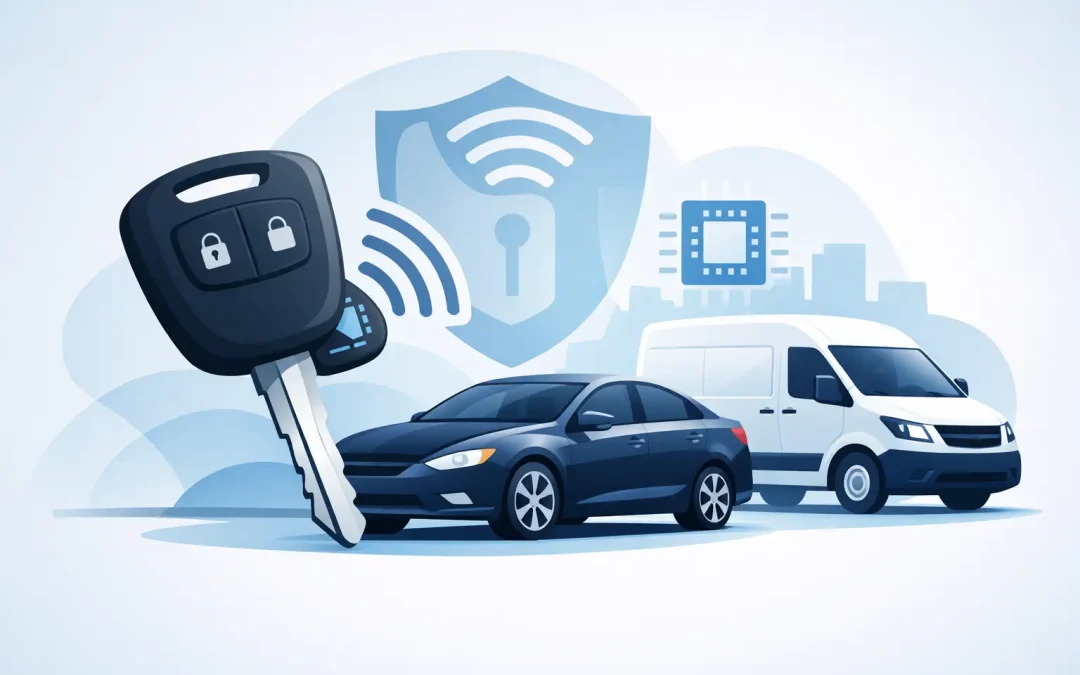
A key can look perfectly normal, turn in the ignition, and still leave you stranded. That is because many vehicle keys contain a small security chip that must be recognized before the engine will start. This transponder key guide explains what that chip does, why replacement keys need more than cutting, and what to do before a missing or damaged key becomes a bigger problem.
What Is a Transponder Key?
A transponder key has a tiny electronic chip inside its plastic head. When you put the key into the ignition or bring it close to the vehicle’s start system, the car reads a unique code from that chip. If the code matches one stored in the vehicle’s immobilizer system, the engine is allowed to start.
The metal blade still matters. It has to be cut correctly to operate the door lock and ignition. But on a transponder-equipped vehicle, a correctly cut blade alone is not enough. Without the right chip or programming, the key may turn but the engine may crank without starting, or start briefly and then stop.
This security system makes vehicles harder to steal with copied metal keys. The trade-off is that replacing a lost key is more involved than it was on older cars and vans.
How to Tell Whether Your Key Has a Chip
Most vehicles made from the late 1990s onward use some form of immobilizer technology, although the exact system varies by make, model, and year. A traditional-looking key can still be a transponder key, so appearances are not always reliable.
A few signs point to a chip-based key. Your dashboard may show a flashing key, padlock, or security light when the vehicle does not recognize the key. The engine may crank but fail to start. You may also have been told that a replacement key needs coding, pairing, or programming.
A remote fob and a transponder are related but separate functions. The remote buttons lock and unlock the vehicle. The transponder chip authorizes the engine to start. This is why a remote can stop operating while the car still starts, or why a newly working remote may still not start the vehicle until its chip is programmed.
Why Cutting a Key Is Only Part of the Job
When a transponder key is replaced, there are usually two jobs: cutting the blade and programming the chip. A specialist first identifies the correct key type, then cuts it to match the vehicle’s locks. The transponder must then be introduced to the immobilizer system using the right diagnostic equipment and procedure.
Some vehicles allow an additional key to be programmed when a working key is present. Others require security access, vehicle data, or more advanced programming equipment. All-keys-lost situations are often more complex because there is no working key available to copy or use during setup.
This is also why an inexpensive blank key purchased online can be a false saving. It may have the wrong chip type, be poor quality, not accept programming, or have a blade that cannot be cut accurately for your vehicle. The right key is the one that works reliably in both the locks and the immobilizer, not simply one that looks similar.
Common Problems With Transponder Keys
A transponder chip is usually passive, meaning it does not rely on the battery in your remote fob to communicate with the car. If the key will not start the vehicle, changing the remote battery may restore the buttons but may not solve the starting fault.
Physical damage is a common cause of failure. Dropping a key, getting it wet, crushing it in a van door, or repeatedly twisting it in a worn ignition can damage the chip or its housing. A worn blade can also stop the key from turning smoothly, even if the transponder itself is fine.
Sometimes the fault is not in the key. A failing ignition lock, damaged antenna ring around the ignition, wiring issue, or immobilizer fault can produce similar symptoms. A proper diagnosis matters before paying for a replacement key. If the vehicle has an ignition problem, repeatedly forcing the key can turn a manageable repair into a lock replacement.
Lost Keys: Why Acting Quickly Helps
Losing your only transponder key is stressful because you lose access and the ability to start the vehicle at the same time. It can also create a security concern if the key was lost near your home, workplace, or vehicle.
A vehicle key specialist can make and program a replacement key at the vehicle in many cases. When appropriate, old lost keys can be removed from the vehicle’s memory so they no longer start it. This is particularly useful if you are unsure whether the key was misplaced or taken.
The make, model, year, and vehicle identification number help identify the correct key system. You should also be prepared to show proof that you own or are authorized to access the vehicle. That protects you and ensures key work is carried out responsibly.
Avoid trying to force entry or start the vehicle with improvised tools. Modern door locks, ignition systems, and alarm components are expensive to damage. Non-destructive entry and professional programming are usually the safer route.
A Spare Key Is the Cheapest Emergency Plan
The best time to arrange a spare transponder key is while your original still works. With a working key available, the process is often simpler, faster, and less costly than replacing every key after one is lost.
For a family car, keep the spare in a secure place away from the vehicle. For a work van, consider who genuinely needs access and where a spare can be stored safely. Leaving a key hidden inside or underneath the vehicle defeats much of the security the transponder system provides.
A spare is not only for lost-key emergencies. It can save a working day if a key is damaged, the remote stops functioning, or a driver accidentally locks the key inside. For tradespeople and delivery drivers, that can mean less disruption and fewer missed jobs.
When the Remote Buttons Stop Working
If the car starts but the lock and unlock buttons do not work, begin with the remote battery. A weak battery is common and simple to resolve. Check for loose buttons, a cracked case, moisture damage, or corrosion around the battery contacts as well.
If a new battery does not help, the remote may need repair, replacement, or synchronization. The key’s starting function may still be completely sound, so do not assume you need a full replacement until the fault has been checked.
The opposite situation also occurs: a replacement remote may lock and unlock the doors but not start the engine. That normally points to a transponder chip that has not been programmed or is not compatible with the vehicle.
Choosing the Right Help for a Transponder Key
Dealerships can supply keys, but they may require the vehicle to be brought to them and may not be the fastest option when the vehicle cannot start. A mobile automotive locksmith can often cut and program a replacement where the car or van is parked, whether that is at home, at work, or at the roadside.
Ask whether the provider can handle both key cutting and immobilizer programming for your exact vehicle. It is also sensible to ask about proof of ownership, whether the work is insured, and whether lost keys can be erased from the vehicle’s memory. Those details separate a proper key service from a quick but incomplete fix.
For drivers in Oldbury and the wider West Midlands, Remote Key Man provides mobile key cutting, programming, replacement remotes, and non-destructive vehicle entry for common car and van key problems.
Simple Ways to Protect Your Key
Do not use a heavy key ring that puts extra strain on the ignition, especially on older vehicles. Keep keys away from water and avoid leaving them where they can be crushed, overheated, or accidentally thrown out with work gear.
If your key starts sticking in the ignition or needs to be wiggled before the vehicle recognizes it, get it checked early. A small warning sign is far easier to deal with when you still have a working key and are not late for work.
A transponder key is a small piece of technology, but it controls access to the vehicle you depend on. Keep a properly programmed spare, treat early faults seriously, and you are far less likely to face a costly lost-key emergency at the worst possible time.

Recent Comments