
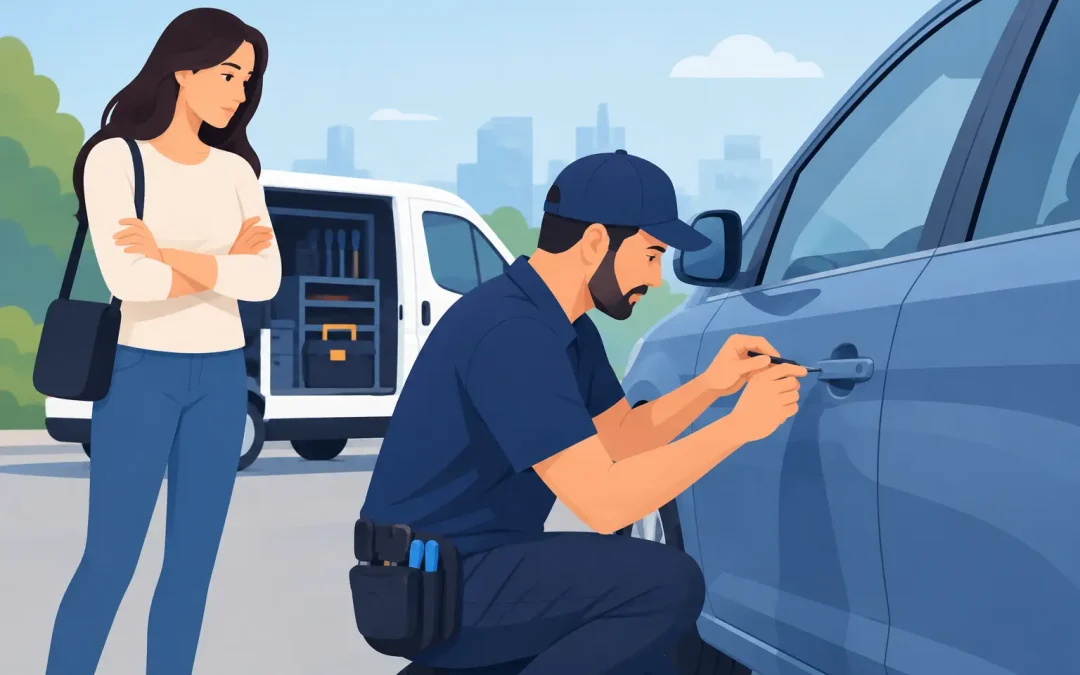
A car door that will not open is rarely just an inconvenience. It can leave you late for work, stranded outside your home, or unable to get tools and stock from a work van. Car locks are designed to protect your vehicle, but wear, damage, weather, and key problems can all stop them working when you need them most.
The right response depends on what has failed. A key locked inside the vehicle needs a different solution from a stiff door lock, a broken remote, or an ignition that will not turn. Trying to force any of these problems can turn a straightforward callout into a more expensive repair.
When car locks need professional attention
Most locks give warning signs before they fail completely. You may notice that the key needs wiggling before it turns, the remote only works at close range, or one door refuses to lock while the others respond normally. These small faults are worth dealing with early, especially if the vehicle is essential for commuting or work.
A physical door lock can become worn after years of use. Dirt and moisture enter the keyway, internal components wear down, and a bent or heavily worn key may no longer align correctly. On older vehicles, this often appears as a key that turns only after several attempts. On newer vehicles, the mechanical lock may be used less often but can seize when it is finally needed after a remote battery failure.
If the key will not turn, do not force it. A snapped key blade inside the lock creates a more complicated job, and forcing the door can damage handles, linkages, weather seals, or trim. A vehicle locksmith can assess whether the problem is the key, the lock barrel, the central locking system, or the ignition itself.
A lockout is not a reason to break in
Keys locked in the car can make people consider risky shortcuts. Coat hangers, improvised wedges, and online tricks often damage modern vehicles. Side airbags, wiring, sensitive door frames, and electronic locking systems make do-it-yourself entry a poor gamble.
Professional non-destructive entry is the safer option. The aim is to regain access without breaking glass, damaging paint, bending the door frame, or creating a future water leak. Once access has been restored, it is also worth checking why the lockout happened. A failing remote, weak key battery, worn button, or faulty central locking system can leave you in the same position again.
The key is often part of the problem
Many drivers assume a faulty lock is the issue when the real problem is the key. Modern vehicle keys do far more than open a door. They may contain a transponder chip that communicates with the immobilizer, a remote circuit board, a battery, and a mechanical blade. If any one part fails, the vehicle may not lock, unlock, or start as expected.
For example, a remote may stop operating the central locking while the blade still opens the door. In another situation, the blade may turn the lock but the car will not start because the transponder is damaged or missing. These are different faults and require different repairs.
A replacement remote must be compatible with the vehicle and programmed correctly. Simply buying a cheap remote shell may improve the appearance of a damaged key, but it will not repair a faulty circuit board or program a new transponder. A mobile automotive locksmith can test the key, identify the fault, cut a replacement blade where needed, and program the correct remote or key while you wait.
Lost keys require more than cutting a new blade
Losing your only key is stressful because you lose both access to the vehicle and the ability to drive it. With many modern cars and vans, a new key needs programming before the engine will start. The lost key may also need removing from the vehicle’s memory, depending on the make, model, and security requirements.
This is especially relevant if the key was lost in a public place or stolen. A working key in the wrong hands is a security concern, not merely an inconvenience. A specialist can advise on the appropriate next step and produce a replacement key on site in many cases.
The process varies by vehicle. Some makes are straightforward to program, while others use advanced security systems and require specialist equipment. Ford vans, for example, may also benefit from high-security lock upgrades where the vehicle carries valuable tools or stock. The best solution depends on how the vehicle is used, where it is parked, and the level of risk involved.
Ignition locks should not be ignored
A key that sticks in the ignition, turns loosely, or refuses to rotate can bring a vehicle to a complete stop. Drivers sometimes blame the immobilizer or battery, but the ignition lock itself may be worn or damaged. Problems can also occur when a heavy key ring puts extra strain on the ignition over time.
Avoid repeatedly twisting the key with force. If it breaks in the ignition, extracting it without further damage takes more time and may require lock replacement. A trained automotive locksmith can diagnose the cause, remove broken key pieces where possible, and replace or repair a faulty ignition lock.
If the steering wheel is locked, gentle movement of the wheel while turning the key can sometimes release normal steering lock tension. If that does not work, stop there. Continued force is more likely to damage the key or ignition components than solve the problem.
Why a spare key is usually the cheapest answer
A spare key is easy to put off until the original is lost, damaged, or locked inside the vehicle. At that point, the cost and disruption are usually greater. A properly cut and programmed spare gives you a practical backup at home, with a family member, or in a secure work location.
For van owners and tradespeople, a spare can prevent a missed job or a full day off the road. For families, it can prevent a school run or commute from becoming an emergency. The spare should be tested before it is needed, including the remote buttons and the ability to start the vehicle.
There is a trade-off between a basic spare and a fully functional remote key. A basic programmed key may be suitable as an emergency backup, while a remote key offers daily convenience. The best choice depends on the vehicle and how the spare will be used.
Choosing safe help for a vehicle lock problem
Vehicle access and key programming involve security-sensitive work. Look for an automotive locksmith who can explain the issue clearly, uses proper equipment, and prioritizes no-damage entry. Insurance, registration, and background checks also matter when someone is working on your vehicle and security system.
A mobile service saves the extra step of arranging recovery or taking the vehicle to a dealer. For many common issues, including lockouts, replacement remotes, spare keys, transponder programming, and damaged ignition locks, the work can be completed at your home, workplace, or roadside. Remote Key Man provides this type of on-site support for drivers and van owners across Oldbury and the West Midlands.
If your key is becoming difficult to use, your remote is unreliable, or a lock has started sticking, arrange help before it fails completely. A small warning today is often the chance to avoid a much bigger disruption tomorrow.

Recent Comments