
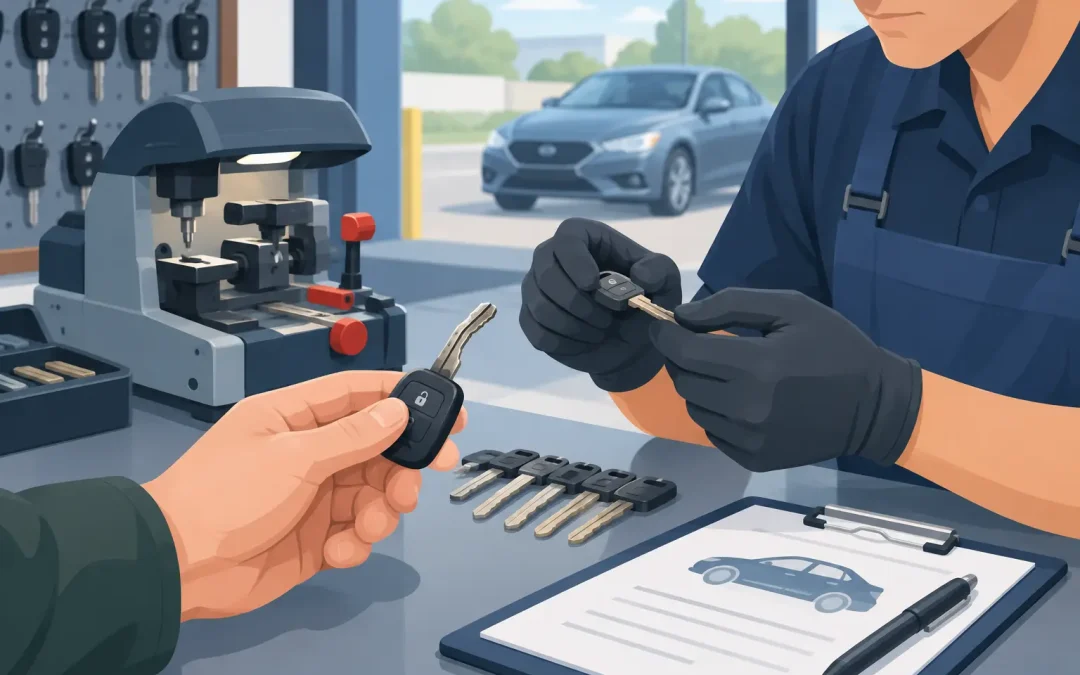
A key that has cracked, bent, lost its buttons, or snapped in half can turn a normal trip into a stressful problem. So, can broken keys be copied? Often, yes. But whether a copy will work depends on what is damaged, whether enough of the original key remains, and the type of security system fitted to your vehicle.
For a basic metal car key, a locksmith may be able to cut a working duplicate from the damaged key. For a modern remote, transponder, or smart key, cutting the blade is only part of the job. The new key may also need a working chip, remote board, and programming to start the vehicle.
Can Broken Keys Be Copied if They Are Snapped?
If both pieces of a snapped key are available, there is a good chance a specialist can read the cuts and produce a replacement. The cleanest breaks are usually the most straightforward. Even when the key is broken through the blade, the original shape can often provide enough information to cut a new one accurately.
A key does not need to be in one piece to be useful. The bow is the plastic or remote section you hold, while the blade is the metal part that enters the ignition or door lock. If the blade has snapped but the remote and transponder chip still work, it may be possible to reuse or copy the electronic information while supplying a new blade and key shell.
The situation is less certain when part of the key is missing, the blade is heavily worn, or the break has distorted the cuts. A locksmith can sometimes make a key from the vehicle’s lock, key code, or security data instead. This is why it is worth keeping every piece of the broken key, including the plastic case, loose chip, battery cover, and metal fragments.
A Copy Must Do More Than Turn the Lock
Older vehicles may use a plain mechanical key. Once it has been cut correctly, it should turn the locks and start the engine. Many vehicles now use an immobilizer system. The key contains a transponder chip that communicates with the vehicle before the engine is allowed to start.
This means a freshly cut metal blade can open the door and turn the ignition, yet still fail to start the vehicle. It is not necessarily a bad cut. It may simply need the correct transponder chip programmed to the car.
Remote keys add another layer. If the buttons have stopped working because of a cracked case, worn button contacts, water damage, or a failed circuit board, copying the blade alone will not restore remote locking. Depending on the fault, the right answer may be a replacement remote, a new key shell, battery replacement, repair of the existing remote, or a fully programmed key.
Smart keys and proximity fobs are more complex again. They are designed to communicate with the vehicle without entering a conventional ignition. A replacement normally needs specialist diagnostic equipment and security programming, as well as proof that you are entitled to have a key made for the vehicle.
When a Damaged Key Can Be Repaired Instead
Not every broken key needs to be copied from scratch. A cracked remote casing is a common example. If the circuit board and transponder chip are intact, moving them into a new shell can be a practical and cost-effective fix. The key may look worn out, but the important electronics can still be sound.
Likewise, a loose blade on a flip key may be repairable if the hinge mechanism has failed and the blade itself is not worn or bent. Replacing the housing can prevent the blade from snapping completely later.
Repair is not always the best value, though. If the key has been wet, crushed, repeatedly taped together, or has unreliable buttons, a replacement can offer more dependable long-term use. A key that works only some of the time is risky, particularly if you rely on a van for work or need to make school runs and daily commutes without interruption.
Do Not Force a Damaged Key in the Ignition
A bent or cracked key can fail at the worst possible moment. Continuing to use it may cause the blade to snap inside the ignition or door lock. That turns a key replacement into a lock extraction or ignition repair job.
If the key feels stiff, needs wiggling to turn, or shows visible cracking near the plastic head, stop using it if you have another key available. Do not try to straighten a bent blade with pliers. Small changes to the cut pattern can prevent the key from operating the lock correctly, and repeated force can damage internal lock components.
If a piece has already broken off in the ignition, avoid pushing it deeper with another key, screwdriver, glue, or tweezers. Glue is especially likely to make matters worse by bonding the fragment to the lock. A vehicle locksmith can remove the piece using the proper extraction tools and assess whether the lock has been damaged.
What a Locksmith Will Need
The fastest route to a replacement is to have the vehicle available, all parts of the damaged key, and proof of ownership. Vehicle identification details may also be needed, especially where a key must be produced from a code or programmed into the immobilizer system.
A mobile automotive locksmith can usually inspect the key and vehicle together, cut the correct blade, supply the appropriate transponder or remote, and test that it locks, unlocks, and starts the vehicle before leaving. This is particularly useful when the broken key is your only key and the vehicle cannot be driven to a dealer or workshop.
The make, model, year, and key type affect the process. A standard duplicate for an older car is very different from replacing a push-button-start fob or a high-security van key. Some vehicles have additional security procedures, and some keys require remote programming separately from the engine-start transponder.
Why a Spare Key Matters After a Break
A broken key is often a warning that the remaining key has reached the end of its working life. If you have one functioning key left, getting a spare made now is usually simpler than waiting until it is lost, damaged, or locked inside the vehicle.
A spare also gives you a useful comparison. If the original feels stiff in the ignition but the spare turns smoothly, the issue may be wear in the old blade rather than a failing ignition. On the other hand, if both keys are difficult to turn, the ignition lock may need professional attention before it fails completely.
For vehicles used for work, keeping a spare in a secure, separate location can prevent a lost day. Do not leave it hidden inside the vehicle or somewhere obvious around it. The goal is quick recovery without compromising security.
The Best Next Step for a Broken Vehicle Key
Keep all broken parts, stop forcing the damaged key, and have the vehicle checked before the problem escalates. A specialist can tell you whether the key can be copied, repaired, or needs full replacement and programming.
A damaged key is usually manageable when dealt with early. Getting a tested spare while one key still works can save you from being stranded when you least expect it.

Recent Comments