
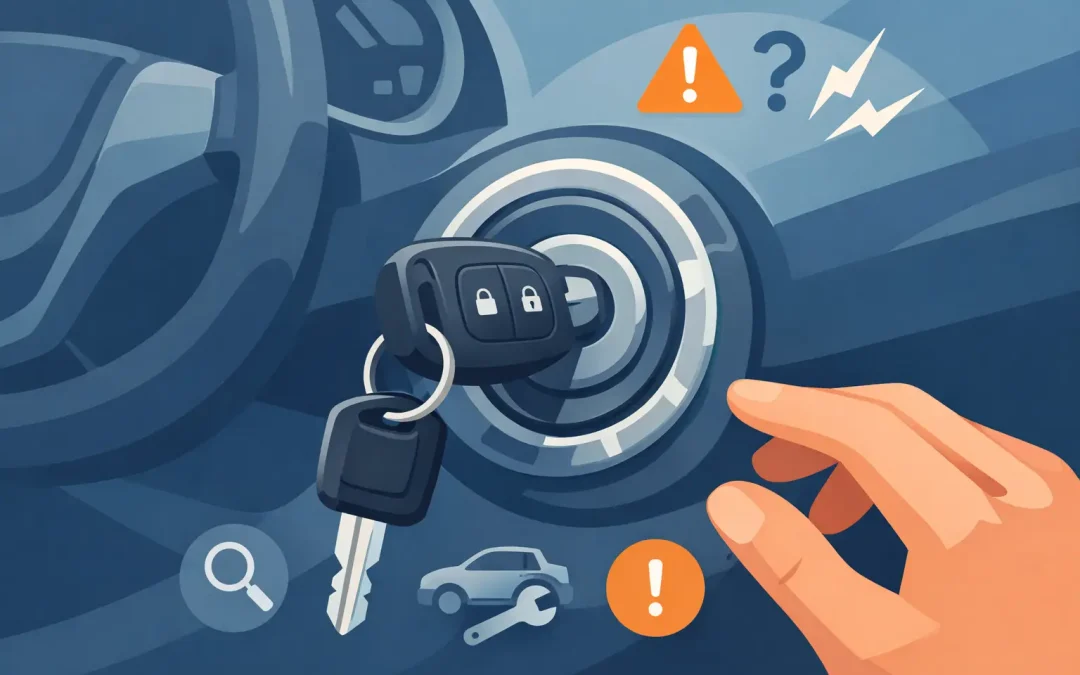
A car key stuck in ignition usually happens at the worst possible time – when you are late for work, parked on a job, or trying to get home with the kids in the back. It feels minor until the key will not turn back, will not come out, or starts to feel like it might snap if you force it.
The good news is that this problem is often caused by something simple. The bad news is that guessing wrong and using too much force can turn a small issue into a broken key, a damaged ignition cylinder, or an expensive tow. If your key is stuck, the safest approach is to check the common causes in the right order and stop before you make it worse.
Why a car key gets stuck in the ignition
Most stuck-key problems come down to one of three things: the vehicle is not fully in park, the steering lock is under tension, or the key and ignition have worn down over time. On newer vehicles, there can also be an issue with the shift interlock, the battery, or the electronic side of the ignition system.
The reason this matters is simple. A worn key can still start a vehicle but struggle to return fully to the release position. A gear selector that looks like it is in park may not be registering properly. And if the steering wheel is pressing hard against the lock, the ignition can bind just enough to trap the key.
That is why the fix depends on what the vehicle is doing right now. Is the engine off but the key will not come out? Is the key refusing to turn at all? Or will it move slightly and then jam? Those details usually point to the real cause.
Car key stuck in ignition – safe checks to try first
Start with the basics and stay gentle. If the key feels like it is catching, forcing it is where people get into trouble.
First, make sure the vehicle is fully in park. Move the shifter out of park and firmly back into park again. In some vehicles, especially older automatics or vehicles with wear in the selector, the dashboard may say one thing while the ignition release mechanism is not quite satisfied. Press the brake pedal while you do this, then try turning the key back to the full off position.
Next, check the steering wheel. If the front wheels are turned and the steering lock is loaded up against the curb or tire pressure, the ignition can bind. Hold the steering wheel and gently move it left and right while lightly turning the key. You are not trying to force the key. You are trying to take pressure off the lock.
If the engine is off but accessories are still on, the key may not be in the true lock position. Turn the key very slightly forward, then back again. Sometimes the release position is only a small movement away.
If you drive a vehicle with an automatic transmission, try depressing the brake pedal and moving the shifter again. If the brake light switch or shift interlock is acting up, this may help temporarily. On a manual transmission vehicle, make sure the car is fully settled and not holding tension from the driveline.
One more thing worth checking is the key itself. If it is bent, cracked, badly worn, or carrying a heavy keychain that has been pulling on the ignition for years, that wear can be part of the problem. A worn key may come out only if the wafers inside the ignition line up just right.
When the key is worn but the ignition is worse
A lot of drivers assume the key is the only problem. Sometimes it is. But often the ignition cylinder has been wearing down quietly for months.
Typical warning signs show up before the key gets trapped. The key may start feeling rough going in. You may have to jiggle it to start the vehicle. It may only turn on the second or third try. Some days it feels normal, other days it feels sticky. That pattern usually points to internal wear in the ignition, not just a bad day.
This is where people make a costly mistake. They keep using the same worn key because it still works most of the time. Then one day it jams completely, or worse, breaks off inside the ignition. Once that happens, the job can become more involved because now the broken piece has to be removed before the lock can even be assessed.
If your key has been getting harder to turn for a while, treat a car key stuck in ignition as a warning sign rather than a one-time annoyance.
What not to do when the key will not come out
Avoid pliers if you can. They make it easier to twist too hard, bend the key, or snap it. Avoid spraying random lubricants into the ignition as well. The wrong product can attract dirt, gum up small internal parts, or interfere with an ignition that already has wear.
Do not keep rocking the key aggressively back and forth. That may feel productive, but if the key blade is weakened, this is often the moment it breaks.
It is also wise not to keep cycling the battery or slamming the shifter in frustration. If the problem is mechanical wear inside the ignition, extra force does not fix it. It usually just narrows your repair options.
When the problem is electronic
Not every stuck ignition key is caused by a purely mechanical fault. On some vehicles, the ignition release is tied to battery voltage, the shift interlock, or an electronic steering lock system.
If the battery is completely dead, the vehicle may not release the key normally. If the shifter is not signaling park correctly, the ignition may behave as though the vehicle is still in gear. Push-button start vehicles can have a different set of issues, but even on traditional keyed ignitions, electronics can play a part.
This is where proper diagnosis matters. Replacing the key alone will not solve an interlock issue. Replacing the ignition alone will not solve a failing shifter switch. A specialist will normally check the key, the lock, and the vehicle’s release conditions before recommending a repair.
When to call a locksmith
If you have tried the safe checks and the key still will not release, it is time to stop before damage is done. This is especially true if the key is bending, the ignition feels gritty, or the vehicle has a history of difficult starts.
A vehicle locksmith can usually tell quite quickly whether the problem is a worn key, a failed ignition cylinder, a lock alignment issue, or something tied to the vehicle’s anti-theft or interlock system. In many cases, the safest route is on-site help, because moving a vehicle with a stuck key is often inconvenient and sometimes impossible.
For drivers who rely on their vehicle every day, speed matters. That is why mobile specialists are often the practical choice. Instead of arranging a tow and waiting on a dealer schedule, the issue can often be handled where the vehicle is parked. Remote Key Man, for example, focuses on mobile key and ignition work so drivers can get help at home, at work, or roadside without adding extra disruption.
Can this be fixed without replacing everything?
Often, yes. It depends on what has actually failed.
If the key is badly worn, a fresh properly cut key may solve the issue. If the ignition cylinder is sticking but not fully failed, repair or replacement of the faulty lock may be the right answer. If the vehicle has a transponder key, remote head key, or security system tied to the ignition repair, programming may also be part of the job.
The trade-off is simple. A quick temporary release is not the same as a reliable repair. If the key comes out today but the lock is already worn, the problem can return next week. A proper fix should address the root cause so you are not stuck again in a gas station, parking lot, or customer driveway.
How to lower the chance of it happening again
Keys and ignitions wear gradually, so prevention is mostly about catching the warning signs early. If your key has started feeling rough, get it checked before it becomes an emergency. If you only have one working key, having a spare made now is usually cheaper and easier than dealing with a full lost-key or failed-ignition situation later.
It also helps to keep your keychain light. Years of extra weight swinging from the ignition can add wear, especially on older vehicles and vans that see constant daily use. And if your vehicle has ever needed jiggling to start, do not ignore it. That is usually the vehicle telling you the lock or key is on borrowed time.
A stuck key is frustrating, but it is also useful information. It tells you something in the key, the ignition, or the release system is no longer working cleanly. Handle it gently, rule out the simple causes, and if it still will not budge, get it looked at before a stuck key turns into a broken one.

Recent Comments