
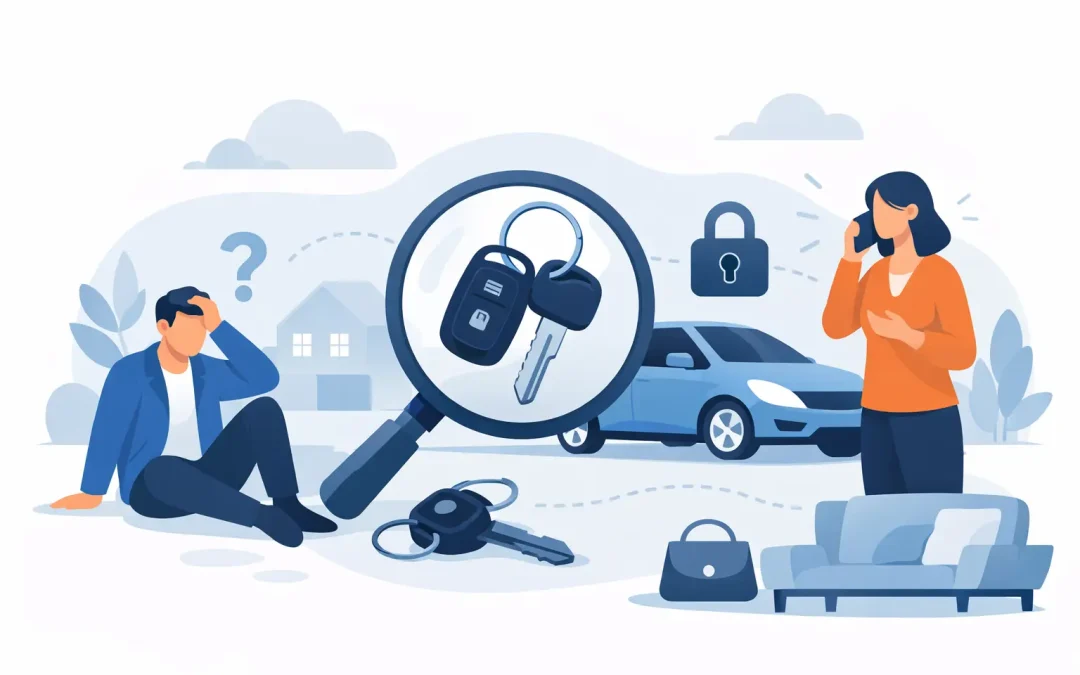
You notice it at the worst possible moment – outside work, on a grocery run, or when you are already late. Figuring out what to do after losing car keys is stressful because it is not just about the key itself. It is about access, security, time, and how quickly you can get moving again.
The good news is that losing a car key does not always mean a tow truck, a dealer visit, or days without your vehicle. What happens next depends on the type of key, the age of the vehicle, and whether you have any spare key or key code information. If you act in the right order, you can usually save time, avoid extra cost, and keep the situation from getting worse.
What to do after losing car keys first
Start by slowing down for a minute. Many lost key callouts begin with a key that is not actually gone. Check the obvious places, then check the annoying ones – jacket lining, gym bag, under the driver seat, in the trunk, by the front door at home, or still in the ignition of another vehicle. If you were carrying shopping, tools, or a child seat, retrace the last two or three stops before assuming the key is permanently lost.
At the same time, think about risk. If the key was dropped somewhere public with anything that identifies your vehicle or address, treat it as a security issue rather than just an inconvenience. A lost key in a parking lot is one thing. A lost key attached to a tag with your plate number or home address is different.
If your vehicle is unlocked, lock it if you can. If it is stranded in an unsafe place, stay with it if practical or move to a safe location nearby while arranging help. Do not force the door, break a window, or try online tricks with coat hangers and screwdrivers. Those usually turn a key problem into a lock, glass, or wiring repair as well.
Know what kind of key you have
The next step in what to do after losing car keys is understanding what has actually been lost. Not all keys are replaced the same way.
An older metal key is usually the simplest. A transponder key looks like a normal key but has a chip inside that must be programmed to the vehicle. A remote flip key combines the blade, chip, and buttons in one unit. A proximity or smart key may let you start the car with push-button ignition while the fob stays in your pocket.
This matters because cutting a physical key is only part of the job on most modern vehicles. If the replacement is not correctly programmed, the door may open but the engine still will not start. That is why some drivers are caught off guard by quotes that vary so much. The work can range from basic cutting to advanced programming and security resetting.
Gather the information a locksmith or key specialist will need
You do not need to know everything about your car, but a few details speed up the process. Have the make, model, year, and your exact location ready. If you know whether the vehicle uses a standard key, chip key, remote head key, or smart key, mention that too.
You should also be prepared to show proof that the vehicle is yours. A reputable specialist will ask for identification and ownership details before carrying out entry, key cutting, or programming. That protects you as much as it protects the business.
If you have a spare key at home, say so. In some cases, making a duplicate from an existing working key is faster and less expensive than building a key from scratch when all keys are lost. If you have no spare at all, that is still fixable, but it can involve more steps.
Should you call the dealer or a mobile automotive locksmith?
This is where cost and convenience usually come into play. A dealer can often supply a replacement, but the process may involve ordering parts, waiting for programming availability, and getting the vehicle towed in if you cannot drive it. For some newer or specialist models, that may still be the right route. But for many everyday cars and vans, it is not the quickest one.
A mobile automotive locksmith can usually come to the vehicle, gain entry without damage if needed, cut the key, and program it on site. That is often the biggest advantage – your vehicle stays where it is, and the job is handled while you wait rather than turning into a half-day or multi-day problem.
It does depend on the vehicle. Some makes and security systems are more involved than others, and some all-keys-lost jobs take longer than a standard spare key appointment. Still, mobile service is often the practical choice when the priority is getting back on the road with the least disruption.
What happens during a lost car key replacement
Most drivers want to know what the appointment actually looks like. First, the vehicle and ownership are verified. If the keys are locked inside rather than lost, the vehicle can often be opened without damage. If the key is genuinely lost, the replacement process begins from the vehicle data and lock information.
The new blade is cut to match the vehicle. If the car uses an immobilizer chip, the transponder is then programmed to the system so the engine recognizes it. If it is a remote or smart key, the locking and remote functions are programmed as well.
In some situations, old lost keys can also be removed from the vehicle memory so they no longer start the engine. That is especially worth asking about if there is any chance the missing key was stolen rather than misplaced. Not every vehicle handles this in exactly the same way, but it is an important security point.
If you lost your only key, expect a little more work
Losing the only key is always more expensive than replacing a damaged one or copying a spare. That is not because anyone is making the job complicated for the sake of it. It is because there is no working key to clone, test against, or use as a starting point.
With all keys lost, the specialist may need to decode the lock, cut a fresh blade, access immobilizer data, and program a new key from the beginning. On some vehicles, that is routine. On others, especially commercial vans or higher-security systems, it takes more specialist equipment and experience.
That is one reason it pays to get a spare key made before you need one. It is a simple job when you still have a working key and a much bigger one when you do not.
What not to do after losing car keys
Panic tends to make people spend more than they need to. One common mistake is immediately agreeing to towing before checking whether a mobile key specialist can come out instead. Another is buying a cheap online key and assuming anyone can program it. Some aftermarket keys are fine, some are poor quality, and some are completely wrong for the vehicle.
It is also a mistake to delay if security is a concern. If your key disappeared near your home, workplace, or vehicle, getting the car opened and running again is only part of the job. You may also need the missing key disabled in the system or advice on whether locks should be changed. The right answer depends on what was lost and where.
How to make the next lost-key situation cheaper
Once the immediate problem is solved, do yourself a favor and get a spare made. This is the part most people skip right up until they are stranded again. A spare key usually costs far less than an all-keys-lost emergency.
Keep that spare somewhere sensible, not in the vehicle. If you use a van for work, think about who needs access and whether one spare should be kept separately from the main set. If your remote casing is cracked, your buttons are failing, or the key is bent, replace it before it becomes a no-start issue.
If you are in the West Midlands and need on-site help, Remote Key Man handles lost keys, replacement remotes, non-destructive entry, and programming at your home or workplace. For drivers and van owners, that usually means less waiting, no dealership trip, and a lot less disruption.
Losing a car key can ruin an afternoon, but it does not have to ruin the week. The smartest move is simple: secure the vehicle, get the right help, and once you are mobile again, sort the spare key before this turns into a repeat problem.

Recent Comments