
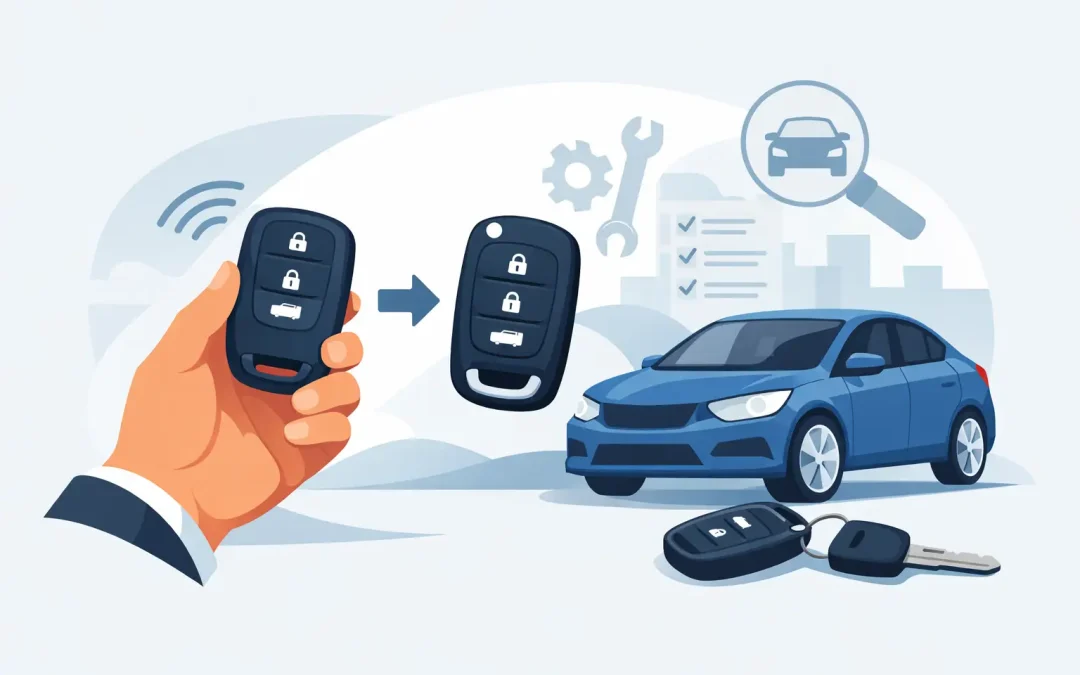
Your remote stops working at the gas station, the buttons have gone soft, or the only key you had is suddenly missing. That is usually when people start searching for a car remote replacement guide – not because they are curious, but because they need the car sorted quickly and without paying more than they have to.
The good news is that replacing a car remote is usually straightforward when you know what type of problem you are dealing with. The bad news is that not every remote issue has the same fix. Sometimes it is just a dead battery. Sometimes the remote shell is damaged but the electronics still work. And sometimes the vehicle needs a fully programmed replacement key and remote, especially if all keys are lost.
What this car remote replacement guide covers
A modern car remote is rarely just a remote. In many vehicles, the fob works alongside a transponder chip that communicates with the immobilizer. That means replacing it is not always as simple as buying a cheap fob online and swapping the battery.
If your remote locks and unlocks the doors but will not start the vehicle, the issue may be with the transponder or programming rather than the buttons. If the vehicle starts but the remote functions have failed, the fault may be in the fob itself, the battery, or sometimes the vehicle receiver. Getting this right matters because the fix for each one is different, and guessing can waste time and money.
First, identify the actual problem
Before you order anything, take a minute to look at the symptoms. If the buttons stopped working gradually, the battery may simply be flat. If the case is cracked, the rubber buttons have broken through, or the blade has become loose, the remote may need a new shell or a complete replacement.
If the remote was lost, then the next question is whether you still have a working spare. That changes the job completely. Replacing a second key when one working key is present is usually simpler and less expensive than replacing every key from scratch.
Water damage is another common one. A fob that has gone through the wash or been left in heavy rain may fail without warning. Drying it out does not always save the internal board. In those cases, testing and replacement are often the quickest route.
Your main replacement options
Most drivers have three realistic options: the dealership, an online purchase with self-help programming, or a specialist automotive locksmith.
The dealership can be the right route for some newer models, especially if the manufacturer has tight security systems or restricted programming access. The trade-off is usually time and cost. You may need to arrange recovery, wait for parts, and travel to the dealer if the vehicle cannot be handled remotely.
Buying a remote online can look cheaper at first, but it often turns into a false economy. The wrong frequency, wrong chip type, poor-quality casing, or incompatible board can leave you with a fob that looks right but does not work. Even when the remote is technically correct, many vehicles still require specialist programming equipment.
A dedicated automotive locksmith is often the most practical middle ground. In many cases, they can supply the correct remote, cut the key if needed, and program it while you wait. For drivers, that usually means less downtime and fewer moving parts to manage.
When a battery change is enough
Not every dead remote needs replacing. If the range has become shorter, the buttons work only sometimes, or the remote suddenly failed after months or years of use, a battery change is worth trying first.
That said, battery replacement is only helpful if the rest of the remote is healthy. If the buttons have collapsed, the circuit board is damaged, or the remote has lost programming, a fresh battery will not solve it. Some people also damage the fob while trying to pry it open, which turns a small job into a replacement.
If you are not confident opening the case without damaging the board, it is sensible to have it checked properly.
Replacing the shell versus replacing the full remote
A worn-out shell is not the same thing as a failed remote. If the board inside still works and the transponder is intact, moving the internals into a new shell can be a cost-effective fix. This works well when the casing is split, the key blade is loose, or the button pads have worn away.
A full replacement is usually needed when the electronics have failed, the board is damaged, the chip is missing, or the original remote has been lost. This is where proper matching matters. Shape alone is not enough. The remote must suit the vehicle system, and in many cases it must be programmed to the car.
Do all replacement remotes need programming?
No, but many do.
Older vehicles sometimes allow simple manual syncing for remote locking functions. Many newer cars and vans do not. If the remote includes a transponder chip for starting the engine, programming is often essential. With smart keys and proximity systems, specialist equipment is usually part of the job.
This is where people get caught out. They buy a replacement fob, follow a video, and find that the doors still do not respond or the engine will not start. The remote may be correct in appearance but wrong in specification, or the vehicle may require tools that are not available to the average owner.
What affects the cost
There is no single flat price because vehicle security systems vary a lot. A basic older remote key is generally less expensive to replace than a late-model smart key with keyless entry and push-button start.
Cost is usually shaped by five things: the make and model, whether all keys are lost, whether a key blade must be cut, the type of transponder or smart system involved, and how quickly you need the job done. Vans and some commercial vehicles can also be more involved, particularly where higher security lock systems are fitted.
The cheapest route upfront is not always the cheapest overall. A low-cost remote that fails after a few weeks, or one that cannot be programmed at all, often ends up costing more than getting the correct part and service from the start.
Why having a spare matters more than most drivers think
If you still have one working key, this is the best time to get a spare remote made. Waiting until the last key is lost usually makes the job slower, more expensive, and more stressful.
With an existing working key, duplication is often simpler because the vehicle can still be accessed, identified, and programmed without starting from zero. Lose that final key and you may be dealing with full key generation, immobilizer programming, and entry to a locked vehicle before the replacement process even begins.
For busy drivers and van owners, the spare is not a luxury. It is basic insurance against lost time.
Choosing the right service
A good car remote replacement service should do more than hand over a fob. They should confirm compatibility, explain whether the issue is the battery, shell, board, or programming, and complete the job without unnecessary back-and-forth.
Mobile service is a major advantage when the vehicle cannot be driven or you simply do not have time to visit a shop. For many customers, being able to get the work done at home or at work is what turns a stressful problem into a manageable one.
Trust matters too. Keys are security items, not ordinary accessories. You want someone who is properly insured, vetted, and experienced with modern vehicle systems, especially if all keys are lost or the vehicle uses advanced security.
A few common mistakes to avoid
The biggest mistake is assuming all remotes that look the same are interchangeable. They are not. Another is throwing away a damaged key before checking whether the internal chip or board can still be reused.
People also wait too long. A weak, cracked, or unreliable remote rarely gets better on its own. It usually fails at the worst possible moment – before work, on a school run, or when the van needs to be moving.
If you are in that position already, the best next step is simple: get the remote properly identified before spending money on parts that may not solve the problem. A good specialist can usually tell very quickly whether you need a battery, a casing, a duplicate, or a full programmed replacement.
If your remote is failing but not completely gone yet, that is your window to sort it with less cost and less hassle. Use it before the problem chooses the timing for you.

Recent Comments