
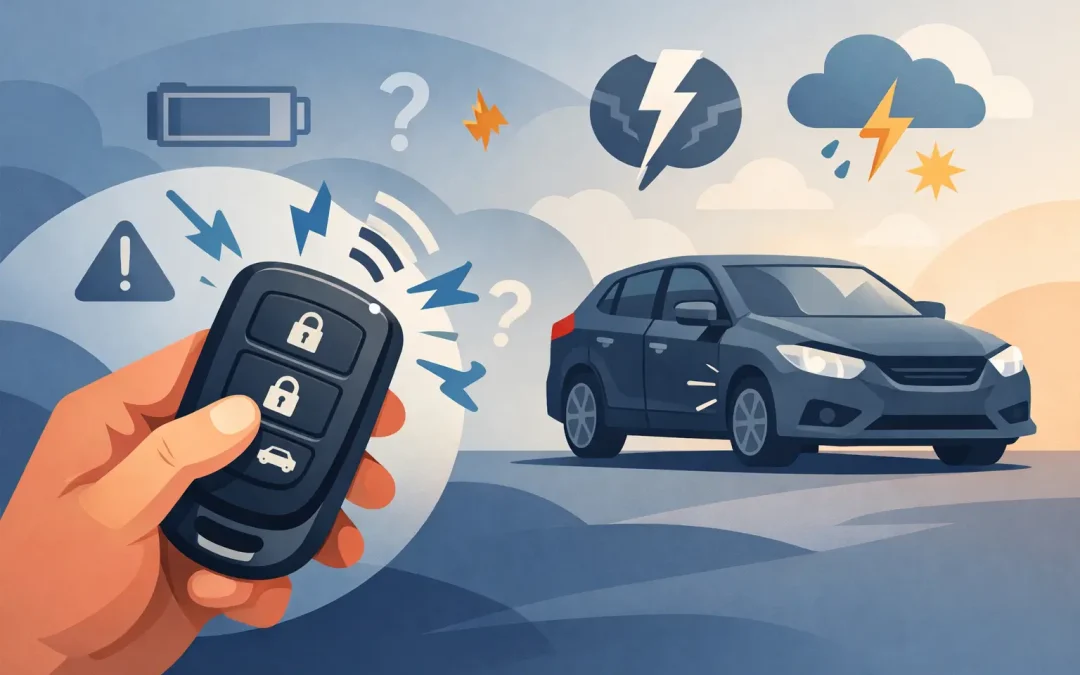
Your remote worked when you parked, but now you are standing beside the car pressing the button with nothing happening. If you are asking, why does my car remote stop working, the good news is that the cause is often straightforward. The less welcome news is that a remote issue can sometimes be a sign of a damaged key, a programming fault, or a vehicle battery problem that needs specialist attention.
Before assuming you need an expensive replacement from a dealership, work through the symptoms. The way your car responds – or does not respond – gives useful clues.
Why does my car remote stop working suddenly?
Most remote key problems fall into one of a few categories: a weak battery, physical damage, worn buttons, loss of programming, radio interference, or a fault within the vehicle itself. Modern car keys contain more than a simple remote control. Many have a transponder chip that communicates with the immobilizer, and some contain proximity electronics for keyless entry and push-button starting.
That means the remote locking function and the ability to start the car are not always the same issue. Your key may still start the vehicle while the buttons no longer lock or unlock it. Alternatively, the buttons may work but the car may show a key warning or refuse to start. Knowing which functions have failed helps narrow down the fault quickly.
The remote battery is weak or flat
A coin-cell battery is the most common reason a car remote becomes unreliable. You may notice that the range gets shorter first. Perhaps the remote only works when you stand close to the driver’s door, or it works intermittently before stopping altogether.
Replacing the battery is a sensible first check, but it needs to be done carefully. Use the correct battery type, fit it the right way around, and avoid touching the new battery faces more than necessary. If the remote has been opened roughly, the case, battery contacts, or circuit board can be damaged.
A new battery does not always solve the problem. If the battery terminals are bent, corroded, or loose, power may not reach the remote properly. A specialist can inspect and repair the key rather than replacing it unnecessarily.
The remote has been dropped, crushed, or exposed to water
Keys take a lot of punishment. They get dropped in parking lots, trapped under bags, washed in pockets, and crushed in van cup holders. Even if the outer case looks fine, a hard impact can crack solder joints on the circuit board or dislodge the small components beneath the buttons.
Water damage is especially unpredictable. A remote may appear to work after getting wet, then fail days later as corrosion develops inside. Do not keep pressing a wet remote or place it on a radiator. Remove the battery if you can do so without forcing the case, dry the exterior, and have it checked. Heat can warp the case and cause more damage to delicate electronics.
The buttons or key case are worn out
If one button works but another does not, the issue may be mechanical rather than electronic. The rubber button pad can wear through, the tiny switch below it can break, or a loose case can stop the button from making proper contact.
This is common with heavily used work vans and family cars. A replacement shell may be enough when the electronics are healthy, but changing a case is not a fix for a failed circuit board or transponder chip. The key needs to be assessed first so you do not transfer a fault into a new shell.
Check whether the car is the problem, not the remote
It is easy to blame the key when the vehicle is not receiving the signal. If you have a spare remote, try it. If the spare works normally, the original key is likely at fault. If neither remote works, the issue may be with the car.
A weak vehicle battery can affect central locking and keyless-entry systems. You may also see dim interior lights, slow cranking, warning lights, or other electrical problems. Check whether the car unlocks with the mechanical emergency key hidden inside many remote fobs. If it does, but neither remote button works, the central locking system, fuse, receiver, or vehicle battery may need investigation.
A blown fuse, faulty door-lock actuator, or receiver problem can also mimic a remote failure. For example, if the remote makes the indicators flash but one door stays locked, that points more toward a door lock or actuator issue than a bad key.
The key may have lost programming
A remote can occasionally lose synchronization with the vehicle, particularly after a flat vehicle battery, an electrical repair, or a fault with the key itself. Some older vehicles have a basic resynchronization procedure, often involving the ignition and remote buttons. However, the correct process varies widely by make, model, and year.
Avoid random online programming instructions. Repeatedly cycling the ignition or attempting the wrong sequence can waste time, and some vehicles require diagnostic equipment to program remotes and transponder chips correctly. On newer cars, a working remote may need secure coding through specialist equipment rather than a manual reset.
If the car will not start and a key or immobilizer warning appears on the dashboard, do not assume a battery change will fix it. The transponder chip may not be recognized, or the vehicle may have an immobilizer fault. This requires proper diagnosis.
Radio interference can cause a temporary failure
Remote keys use radio signals, so interference is possible around certain buildings, electrical equipment, or busy urban areas. If your remote suddenly fails in one location but works again elsewhere, interference may be the explanation.
Move the vehicle or walk a short distance away before trying again. Hold the remote close to the driver’s door or the designated backup starting point listed in the vehicle manual. Keyless cars often have a marked area near the steering column, center console, or start button where the vehicle can read a weak key signal.
If the problem happens everywhere, every day, interference is unlikely to be the main cause.
When you should stop trying to force a fix
Do not force open a remote case with a screwdriver, bend the key blade, or keep trying to start a car that is showing an immobilizer fault. A damaged key can turn a simple remote repair into a lost-key situation, especially if it is your only working key.
You should seek help when a new battery has made no difference, the key has been wet or physically damaged, the car will not start, both remotes have stopped working, or you have no spare. A mobile automotive locksmith can test the remote, check the transponder function, cut a replacement blade if needed, and program a new remote at your location.
For many drivers, that is more practical than arranging transport to a dealership and waiting for a key order. A specialist such as Remote Key Man can deal with common remote failures, replacement keys, spare keys, and vehicle entry without damaging the vehicle.
A spare key prevents a stressful day
The best time to arrange a spare remote is while your existing key still works. A working key makes copying and programming much simpler, and it leaves you with a backup if the original is lost, damaged, or locked inside the car.
Keep the spare somewhere safe away from the vehicle, not in the glove box or under a wheel arch. For van owners and tradespeople, a spare can prevent a missed job or a full day off the road. For anyone else, it can turn a frustrating remote failure into a minor inconvenience rather than an emergency.
If your remote has become unreliable, deal with it before it fails completely. A key that only works on the third press is usually giving you a warning, not asking for more patience.

Recent Comments