
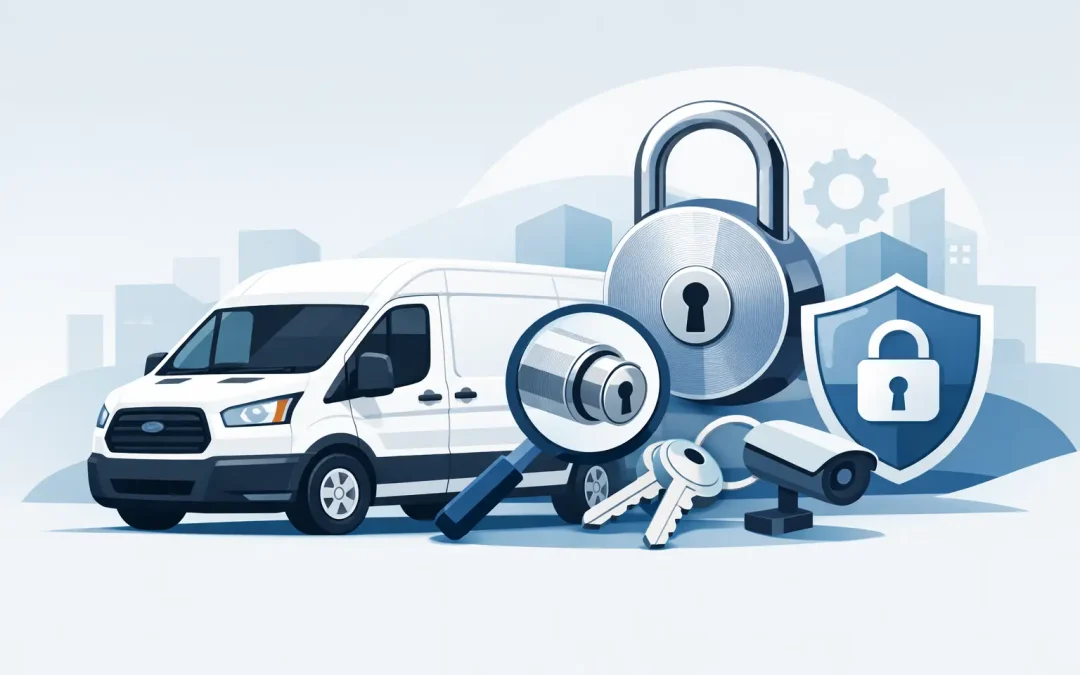
A van break-in can cost far more than the value of the tools taken. It can mean missed jobs, delayed payments, insurance claims, and a vehicle left off the road while locks or keys are sorted out. This Ford van security lock guide is designed to help working van owners choose sensible protection without making daily access difficult.
Ford Transit, Transit Custom, Connect, and Courier vans are popular for a reason: they are capable, practical, and widely used by tradespeople. That popularity also means thieves know where to look and how factory-fitted doors and locks usually operate. Adding the right security measures makes your van a less attractive target and gives you more control if a key or lock problem occurs.
Start With the Areas That Need Protection
Most Ford vans need attention at the rear doors and side loading door first. These are the largest access points and the doors most often used during a working day. A good security setup should protect them without slowing you down every time you need to collect materials or unload equipment.
The cab deserves equal consideration. Tools are often kept in the load area, but keys, documents, electronic devices, and personal belongings are frequently left in the front. Never treat the factory central locking system as the only line of defense. It is useful, but it is not always enough for a van carrying valuable equipment.
Security should also match how and where you work. A van parked overnight on a driveway faces a different risk from one left at a job site, train station, or industrial estate. If your vehicle is regularly unattended for long periods, stronger external protection and better key control are worth the added cost.
Common Ford Van Security Lock Options
There is no single best lock for every Ford van. The right choice depends on the model, the cargo carried, how often the doors are opened, and whether the van is owner-operated or shared by a team.
Hook Locks
A hook lock is an additional mechanical lock fitted to a van door. When locked, a hook-shaped bolt engages into a keep on the body of the vehicle. Because it operates independently from the factory locking system, it can offer useful extra protection against forced door attacks.
Hook locks are often a strong choice for rear and side loading doors on a Ford Transit or Transit Custom. They are suited to owners carrying higher-value tools who do not mind using a separate key when securing the van. The trade-off is simple: every additional lock adds another step to your routine. That is usually worthwhile overnight, but some drivers prefer a quicker option for frequent daytime stops.
Deadlocks
Van deadlocks are another independent mechanical option. They add a separate locking point that is operated with a key and is not connected to the vehicle’s central locking. This can make them a practical choice for vans parked overnight or left carrying equipment.
A deadlock should be fitted where it will strengthen access without interfering with normal door operation. Correct installation matters as much as the lock itself. A poorly positioned lock can create unnecessary wear, make the door awkward to close, or leave the vehicle looking like an easy target.
Slam Locks
A slam lock automatically locks the door when it closes. For delivery drivers, couriers, and tradespeople who repeatedly step away from the van, this can prevent the common mistake of leaving a door unsecured during a quick stop.
The advantage is speed and consistency. The downside is that you must always have the key with you. Leaving keys in the cab, on the seat, or in an unsecured pocket can turn a security upgrade into a lockout situation. Before choosing a slam lock, think honestly about your work routine and whether automatic locking will help or frustrate you.
External Shielding and Protection Plates
Physical shielding can help protect vulnerable door areas and lock cylinders from attack. These products are often used alongside hook locks or deadlocks rather than as a replacement for them.
Protection plates are especially worth discussing if your Ford van has visible signs of attempted entry, a damaged lock surround, or a door that has previously been repaired. They can reinforce an area that has become weaker over time, while also making it harder for an attacker to get direct access to a lock mechanism.
Do Not Overlook the Factory Lock and Keys
Extra locks are valuable, but the original door locks, ignition, remote, and keys still need to be in good condition. A worn key blade, damaged remote case, sticking door lock, or faulty ignition can leave you stranded or encourage unsafe shortcuts, such as hiding a spare key inside the vehicle.
If your Ford key is becoming difficult to turn, the remote works only intermittently, or the lock has been damaged, get it checked before it fails completely. Modern Ford keys often contain a transponder chip that communicates with the vehicle’s immobilizer. A key may look simple from the outside, but copying the blade alone may not be enough to start the van.
A properly programmed spare key is one of the most practical security measures available. It reduces the risk of an emergency callout if the main key is lost, snapped, or locked inside. Keep the spare somewhere secure away from the vehicle, not in the glove box, under the seat, or taped beneath the van.
For owners in the West Midlands, a mobile automotive locksmith can cut and program a replacement Ford key at your home or workplace, often while you wait. Remote Key Man can also help with non-destructive entry and faulty ignition or door lock issues, so a key problem does not have to become a lost working day.
Choosing the Right Setup for Your Work
A self-employed electrician carrying expensive tools may prioritize independent rear and side door locks, plus visible external protection. A courier making dozens of stops may benefit more from a slam lock and a strict key-carrying routine. A family using a Ford Transit Connect for mixed work and personal use may want a simpler setup that adds security without making the van inconvenient for everyone.
Before fitting anything, consider these practical questions: Where is the van parked overnight? Which door is most frequently used? Do several people have access to it? What would a stolen tool kit cost in missed work, not just replacement value? And can every driver use the new lock correctly under pressure?
The answers help prevent overbuying or fitting a system that gets ignored. Security works best when it becomes part of the normal end-of-day routine.
Installation and Daily Habits Matter
Choose locks designed for your specific Ford van model and have them fitted by an experienced professional. The door skin, internal mechanisms, trim, and locking positions vary between vehicles. A correct installation should be secure, clean, and should not damage factory wiring, central locking components, or weather seals.
Once the locks are installed, use them consistently. A high-security lock does nothing if it is left open after the final job. Build a simple routine: remove valuables from view, lock the vehicle, engage additional locks where fitted, and take the key with you.
Avoid advertising what is inside. Tool brand stickers, packaging, and equipment visible through windows can draw attention. If tools must stay in the van, secure them inside a lockable storage box or internal cabinet as another layer of protection. The aim is not to make the vehicle impossible to attack. It is to make theft take longer, create more noise, and look less worthwhile.
What to Do After a Break-In Attempt
If you find damage to a Ford van lock, door, or key cylinder, do not force the key or keep using a sticking mechanism. Photograph the damage for insurance purposes, check that all doors still close and lock properly, and arrange professional inspection as soon as possible.
A damaged lock can fail later when you are away from home or halfway through a workday. It may also leave the vehicle less secure even if the central locking appears to work. Replacing or repairing the affected lock promptly is usually cheaper and less stressful than waiting for a complete failure.
The best Ford van security setup is the one you will use every day: dependable door protection, working keys, a secure spare, and habits that keep your tools out of sight. A small investment before there is a problem can protect far more than the contents of your van – it can protect tomorrow’s work.

Recent Comments