
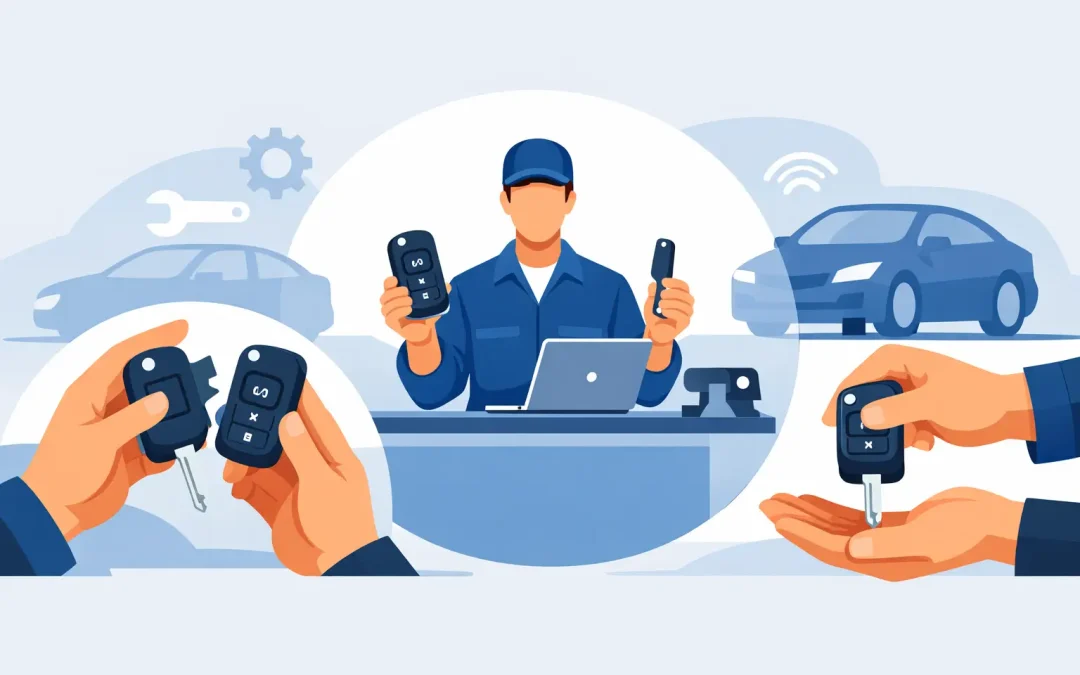
Losing your only car key rarely happens at a convenient time. It happens when you are heading to work, loading the kids in the car, or trying to finish a job in your van. This car key replacement process guide explains what actually happens next, what information you will need, and why the right locksmith can often save you time, stress, and a trip to the dealership.
What the car key replacement process guide starts with
The first step is not cutting a key. It is identifying exactly what your vehicle uses.
Modern vehicle keys are rarely just pieces of metal. Some are basic manual keys, some have transponder chips, some include remote locking buttons, and some are smart proximity keys that let you start the vehicle without inserting anything. The replacement process depends on that setup, along with the make, model, year, and whether all keys are lost or you still have one working key.
If you still have a working key, the job is usually more straightforward. A spare can often be cut and programmed faster, and in many cases at lower cost. If all keys are lost, the locksmith usually needs to decode the lock, cut a new key to the vehicle, and then program the immobilizer so the vehicle recognizes the replacement.
That is why the first phone call matters. Good information at the start helps avoid delays once the technician arrives.
What you should have ready before calling
A professional locksmith will normally ask for the vehicle registration, make, model, and year. They may also ask where the vehicle is, whether it is accessible, and whether you have any key at all.
You should also expect to show proof that the vehicle is yours. That is not a formality. It is part of responsible, insured key replacement work. If someone is making a key to a vehicle, they need to know they are doing it for the rightful owner or authorized driver.
If the key was stolen rather than simply lost, say so early. That can change the advice you are given. In some cases, the safer option is not just making a new key, but also removing old keys from the vehicle memory so the missing one no longer starts the car.
How replacement works when you have lost all keys
When every key is missing, people often assume the vehicle must be towed to a dealership. Sometimes that is an option, but it is not the only one.
A mobile automotive locksmith can often complete the work on site. The process usually begins with gaining the technical information needed to cut the new key. Depending on the vehicle, that might involve decoding the door lock, ignition lock, or using specialist key data and programming equipment. The new blade is then cut to match the original specification.
After that comes programming. On most modern vehicles, cutting the key is only half the job. The immobilizer chip inside the key has to be introduced to the vehicle’s system so it will start and run properly. If the key also has remote locking functions, those may need to be programmed separately.
This is where experience matters. Some vehicles are straightforward. Others have higher security systems, unusual programming procedures, or common failure points in the ignition, remote, or onboard electronics. A specialist who deals with vehicle keys every day is usually better placed to handle those complications on the spot.
Replacing a spare key is usually the smarter move
If you still have one working key, replacing or duplicating it before you lose it is usually the cheaper and less disruptive route.
With an existing key, the locksmith can often copy the blade and program a second key without the extra work involved in an all-keys-lost situation. That means less downtime and fewer risks. It also gives you breathing room if the original key gets damaged later, the battery fails at the wrong moment, or the remote casing starts to break apart.
For van owners, tradespeople, and anyone who depends on their vehicle every day, having one key is not really a backup plan. It is a gamble. A spare key made while the vehicle is still fully accessible is usually the practical choice.
The car key replacement process guide for remote and smart keys
Remote and smart keys add convenience, but they also add complexity.
If your remote buttons have stopped working, the issue may be the battery, the casing, the internal circuit board, or the programming. A proper replacement process should identify the real fault before a full key replacement is recommended. Sometimes the key can be repaired or re-shelled. Sometimes a new remote is the better long-term fix.
Smart keys and proximity fobs often require advanced programming tools and a solid understanding of vehicle security systems. This is one area where the cheapest option is not always the best option. A low-cost replacement that is poorly programmed or built with unreliable components can become a repeat problem.
It also depends on how the vehicle is used. If it is the family car, convenience matters. If it is a work van, reliability matters even more. A key that works inconsistently is not much use when you are already late.
What affects the price
There is no single price for key replacement because there is no single type of key.
The main factors are the vehicle make and model, the year, whether all keys are lost, whether programming is required, and whether the job involves a basic transponder key, remote key, or smart key system. Some vehicles also need more time due to security access procedures or because the locks or ignition have been damaged.
Location and urgency can also affect cost. An emergency callout is different from a planned spare key appointment. Even so, many drivers find that a mobile locksmith offers better value than dealership replacement, especially when towing, time off work, and travel are taken into account.
The cheapest route upfront is not always the lowest overall cost. If the job is done badly, or if the wrong key type is supplied, you may end up paying twice.
Why mobile service makes a difference
Convenience is not just about comfort. It is about getting you moving again with as little disruption as possible.
A mobile key specialist comes to the vehicle with the cutting and programming equipment needed to do the work on site. That matters when the car will not start, when the vehicle is stuck outside your home or workplace, or when arranging towing would cost more time and money than the key itself.
For many people, the biggest benefit is speed. Instead of managing transport to a dealer, waiting on parts, and returning for coding, the work can often be completed while you wait. That is especially useful when the vehicle is not optional but essential to your day.
In areas like Oldbury and the wider West Midlands, local response also matters. Working with a nearby specialist often means better availability and more practical help in urgent situations. Remote Key Man is built around that kind of service – direct, mobile, and focused on getting drivers back on the road safely.
What to watch for when choosing a locksmith
Not every locksmith handles automotive keys to the same standard. Some can cut basic keys but not program modern transponder or smart systems. Others may offer a low quote without checking the exact vehicle details first, which can lead to wasted time once they arrive.
Look for a specialist who is insured, vetted, and clear about what the job involves. They should be comfortable explaining whether they can cut the key, program it, test the remote functions, and deal with lost-key situations without damaging the vehicle. If your issue involves lockouts or ignition problems as well as replacement keys, that is worth confirming before booking.
Clear communication is usually a good sign. You want someone who sounds like they have done this many times before, not someone guessing their way through your vehicle’s security system.
After the new key is made
A proper job does not end when the key starts the engine.
The replacement should be tested for all expected functions, including starting the vehicle, turning in the locks if applicable, and operating the remote buttons or smart entry features. If old lost keys need to be erased from the system, that should be discussed and completed where the vehicle allows it.
This is also the right time to think ahead. If you have just paid for an all-keys-lost replacement, asking for a second working key often makes sense. It is usually easier to handle while the equipment is already connected and the vehicle data is already available.
A car key problem feels urgent because it is urgent. But the process itself is usually straightforward when it is handled by the right specialist with the right equipment. If you can take one useful step before the next key emergency, make it this: do not wait until your last key is gone.

Recent Comments