
You realize your keys are sitting on the driver’s seat the second the door clicks shut. That moment usually brings panic first, then bad ideas second. If you are searching for how to unlock car without damage, the safest answer is simple: use the least invasive option first, and know when to stop before a cheap mistake turns into an expensive repair.
Modern vehicles are harder to open than many drivers expect. Between deadlocking systems, tighter weather seals, side-impact airbags, electronic immobilizers, and more delicate trim, older tricks can do real damage fast. A bent frame, scratched paint, torn seal, broken handle, or damaged lock mechanism will cost far more than proper non-destructive entry.
How to unlock car without damage: start with the obvious
Before you touch the car, slow down and check every door, including the rear doors and hatch. It sounds basic, but many lockouts happen with only one door fully secured. If your vehicle has keyless entry, test whether another door responds differently, especially if the battery in the remote is weak.
If you have a spare key at home, at work, or with a family member, compare the wait time against the risk of forcing entry. For many people, the best move is a spare key drop-off. It is not the fastest solution in every case, but it is often the safest and cheapest.
If a child, pet, or vulnerable person is locked inside, treat it as urgent. Call emergency services right away if there is any risk from heat, cold, distress, or a medical issue. In those situations, speed matters more than convenience.
When DIY can work and when it usually goes wrong
Drivers often see online videos showing rods, wedges, shoelaces, coat hangers, and improvised tools. Some of these methods can work on specific older vehicles. The problem is that most people do not know whether their car is a good candidate until after they have already bent something.
Cars with upright manual lock posts are very different from newer models with shielded internals, electronic locks, or deadlocking systems. If your vehicle is newer, premium, or fitted with tighter security features, DIY entry is more likely to fail than succeed. It can also trigger an alarm, damage the weather stripping, or interfere with the window frame.
There is also a difference between opening a car and opening it cleanly. A method that gets the door open but leaves the glass misaligned or the seal leaking rainwater is not a good result.
The least risky DIY options
If you want to try something yourself, stay with methods that do not involve prying metal, forcing the keyway, or striking the glass. A manufacturer app, remote access service, or factory-connected spare remote is the safest self-help option if your vehicle supports it.
Some roadside assistance providers can also arrange entry. That makes sense if you already have cover and the response time works for you. The key point is this: if the method depends on improvised metal tools, force, or guesswork, the risk rises quickly.
DIY methods to avoid
Do not use a coat hanger unless you fully understand the vehicle’s lock layout and access path. On many cars, it will scratch trim, tear seals, and miss the locking point entirely. Slim jims are also widely misunderstood. Used incorrectly, they can damage linkages, wiring, and internal components inside the door.
Wedges are another common problem. A proper air wedge in trained hands is one thing. A screwdriver, plastic shim, or household wedge is another. Too much pressure at the wrong point can bend the frame or chip paint. Once that happens, the lockout is no longer your only problem.
Never force the key into the door lock if it is stiff, worn, or clearly not turning normally. You may be dealing with a failed lock, a damaged blade, or a mismatch between mechanical access and the immobilizer system. Snapping a key in the lock turns a simple entry job into a lock repair.
Why professional non-destructive entry matters
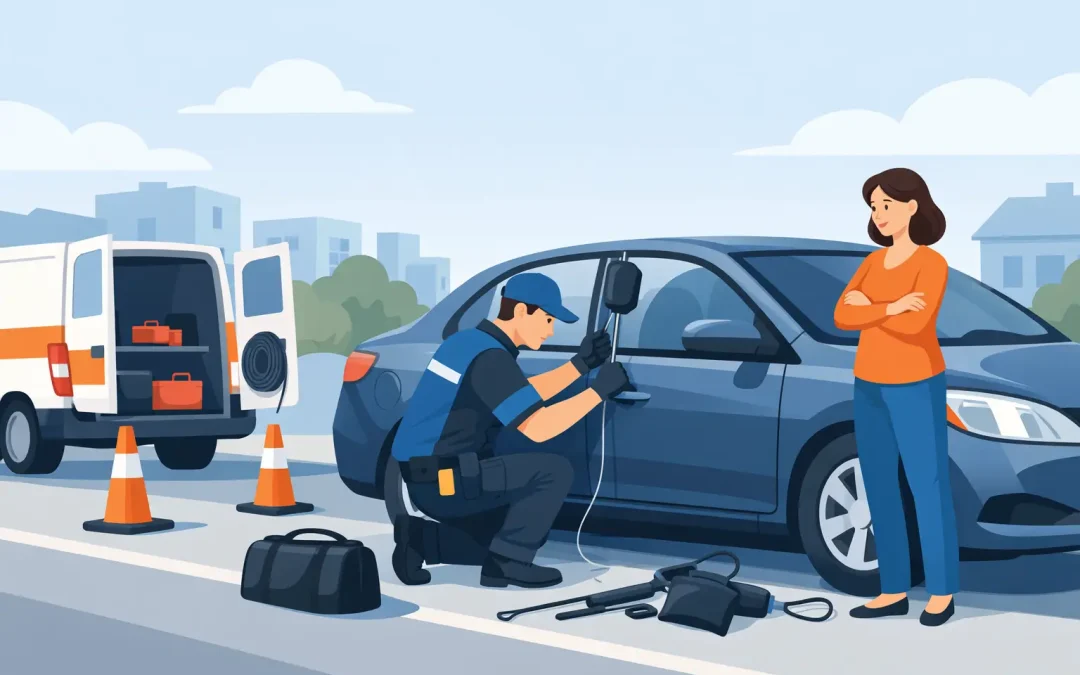
A trained automotive locksmith approaches lockouts differently from someone trying random tricks from a video. The goal is not just access. The goal is access without harming the vehicle, its locking system, its trim, or its security features.
Professional non-destructive entry uses the right tools, the right pressure points, and the right method for the specific make and model. That matters because vehicles vary widely. A van used for work every day, for example, may have different lock protection and access points than a small family sedan.
An experienced specialist will also spot when the issue is not a simple lockout. Sometimes the real fault is a failed remote, a dead key fob battery, a damaged ignition, a broken blade, or an internal lock problem. Opening the vehicle is only the first step if the key itself is no longer usable.
How a locksmith unlocks a car without damage
The exact technique depends on the vehicle, but the process is usually straightforward. First, the technician confirms ownership and checks the vehicle’s locking type. Then they choose the lowest-risk entry method for that model.
In many cases, that means controlled access using specialist entry tools designed to create minimal movement and avoid contact with delicate parts. On other vehicles, the better route may be decoding, lock manipulation, or another make-specific method. The point is precision, not force.
This is also why mobile service makes such a difference. If the lockout turns out to involve a failed remote or lost key, the same visit may allow for key cutting, remote replacement, or transponder programming while you wait. That saves you from arranging towing or losing half the day at a dealership.
If your keys are locked in the trunk
A trunk lockout can be more awkward than a standard cabin lockout, especially on vehicles with deadlocking or separate trunk release logic. In some cars, opening the door does not automatically give you access to the trunk. Fold-down rear seats may help, but not always.
This is where guessing can waste time. You might get into the cabin and still be no closer to the keys. A locksmith who understands the vehicle’s locking behavior can usually tell quickly what route makes the most sense.
If the problem is really a bad key or remote
Many people think they are locked out when the real issue is that the fob has failed. If the buttons do nothing, the battery may be dead, the remote may have lost sync, or the key may have suffered internal damage from drops or moisture. That changes the job.
Likewise, if you have lost your only key, entry is only part of the solution. You may need a replacement key cut and programmed to the vehicle. On newer cars and vans, programming is often the part that catches people out. A cheap online key shell does not solve an immobilizer problem.
That is one reason local mobile specialists are often the practical choice. They can deal with access and replacement in one visit, which is far easier than opening the car and then discovering it still cannot be driven.
How to reduce the chance of another lockout
The most cost-effective fix is usually the one done before the emergency. If you only have one working key, getting a spare made now is almost always cheaper than waiting until that key is lost, damaged, or locked inside the vehicle.
It also helps to replace worn remotes early. Buttons that only work occasionally are warning signs, not minor annoyances. The same goes for bent key blades, cracked cases, or sticky door locks. Small faults have a habit of becoming urgent problems at the worst time.
For work vans and shared family vehicles, a spare key plan matters even more. One missing key can stop a job, delay school pickup, or leave a vehicle unusable in a customer parking lot. Having a tested spare removes a lot of avoidable stress.
When to call for help right away
If your vehicle is newer, your lockout is urgent, your keys are lost rather than visible inside, or you have already tried and failed to get in, it usually makes sense to stop there. The longer a DIY attempt goes on, the more likely it is that damage follows.
A professional can often save time as well as money by getting the vehicle open cleanly and dealing with any key issue on the spot. For drivers and van owners who rely on their vehicle every day, that speed matters. Companies such as Remote Key Man focus on exactly this kind of non-destructive entry and on-site key support, which is often the difference between a short delay and a full day lost.
If you are ever stuck deciding what to try next, use a simple rule: if the method feels forceful, improvised, or uncertain, it is probably the wrong one. Your car is expensive. Treat the lockout like a precision job, not a test of luck.

Recent Comments