
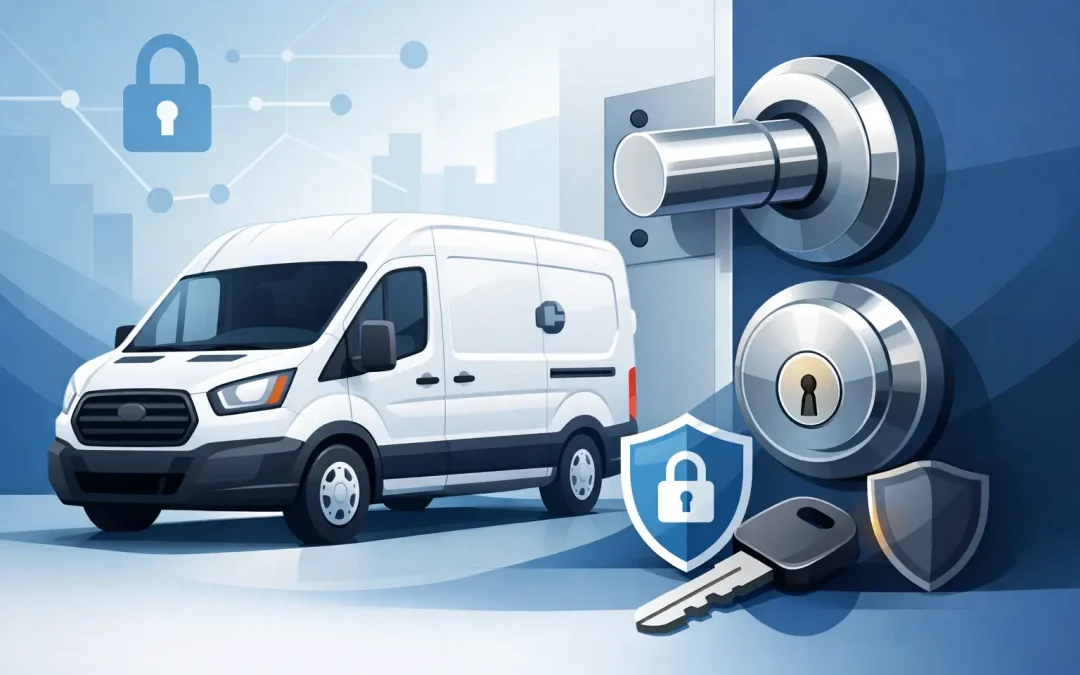
A broken rear door, missing tools, and a day of canceled jobs can cost far more than the value of what was taken. Ford Transit high security locks give van owners an extra layer of protection where factory central locking alone may not be enough. For tradespeople, delivery drivers, and anyone carrying equipment, the right setup is about keeping the van working and reducing the chance of an easy theft.
Why Ford Transit Vans Need Extra Security
The Ford Transit is one of the most widely used work vans on the road. That popularity is good for parts availability and resale value, but it also makes the vehicle familiar to opportunistic thieves. A standard vehicle lock and remote locking system are designed for everyday access. They are not always designed to resist repeated, targeted attacks on a van carrying valuable stock or tools.
High-security locks add a physical barrier to the load area doors. Depending on the system, they can make forced entry slower, noisier, and less worthwhile for a thief. No lock can promise that a vehicle will never be attacked, but security measures are most effective when they make your van a less attractive target than the one parked beside it.
This matters particularly when the van is left outside a home, on a driveway, at a job site, or in a shared parking area overnight. It also matters during the working day. A quick stop for materials or a short break can be enough time for an unsecured side or rear door to be targeted.
Ford Transit High Security Locks: Main Options
The best lock depends on how you use your van, which doors need protection, and how often you need access. A good installer will assess the van rather than fitting the same product to every vehicle.
Hook Locks
A hook lock is an additional mechanical lock fitted independently from the factory locking system. When locked with its dedicated key, a hook-shaped bolt engages into a reinforced keep on the opposing door frame. This provides strong resistance against the type of pulling and levering force often used against cargo doors.
Hook locks are a popular choice for Transit side loading doors and rear doors because they are simple, visible, and dependable. They do require you to lock them manually each time you leave the vehicle, so they suit drivers who are willing to build that extra step into their routine. If several people use the van, make sure everyone understands which key operates the added locks and when they should be used.
Slamlocks
A slamlock automatically secures the door when it closes. For couriers, delivery drivers, and tradespeople making frequent stops, that can be a major advantage. You do not have to remember to manually lock the cargo door after every delivery or every trip back to the cab.
The trade-off is convenience versus access. A slamlock can leave you locked out of the load area if you shut the door with the key inside, so key discipline matters. Keeping a properly programmed spare vehicle key and a separate, secure plan for the slamlock key can prevent a small mistake from stopping the working day.
Deadlocks
A deadlock is another manually operated mechanical locking option. It uses a solid bolt that locks into a receiver fitted to the body of the van. It is generally suited to vehicles parked for longer periods, such as overnight or while unattended at a site.
Deadlocks can be a sensible, cost-conscious option for owners who do not need automatic locking. They are less convenient for constant drop-offs than slamlocks, but they offer a clear additional layer of protection for the doors you use least often.
Shielding and Door Protection
High-security door locks work best alongside protection for vulnerable external areas. Anti-peel brackets, handle shields, and reinforced plates can help protect points that may otherwise be attacked to gain access to the locking mechanism or create a gap in the door.
These additions are not always necessary on every Transit. The model year, door layout, existing damage, parking habits, and the value of your contents all affect the right recommendation. A van used for low-value deliveries may need a different approach from a fully equipped electrician’s or builder’s van.
Choosing the Right Security Setup
Start with the risk, not the product name. Consider where the van is parked, what is stored inside, how long it is unattended, and who drives it. A sole trader with expensive tools left in the van overnight may prioritize manually locked hook locks and protective shielding. A multi-drop driver may benefit more from slamlocks because an unlocked door between stops is the bigger day-to-day risk.
Door configuration also matters. A Transit with a side load door and twin rear doors may need protection in more than one place. Protecting only one door can leave another easier route into the cargo area. That said, fitting every possible security product is not automatically the best value. A properly fitted system focused on the most exposed access points is often a better decision than spending money on features that do not suit the way the vehicle operates.
Think about keys before installation as well. Added locks usually use dedicated high-security keys, which should be controlled carefully. Avoid leaving spare keys in the glove box, under a seat, or in an unsecured tool bag. If a team shares a van, keep a record of who has each key and arrange replacements promptly when a key is lost.
Professional Fitting Makes a Difference
A high-quality lock can only perform as intended when it is correctly fitted. Van doors need to close cleanly, seals need to remain effective, and the lock needs to align correctly with its receiver. Poor installation can create rattles, interfere with door operation, damage trim, or leave the security upgrade weaker than it should be.
Professional fitting also helps avoid unnecessary damage. The work should be planned around the Transit model, door construction, and existing hardware, with care taken to protect the vehicle during installation. Once complete, every door should be checked repeatedly for smooth closing, secure engagement, and straightforward operation with the supplied key.
Mobile locksmith support is particularly useful when taking a van off the road is difficult. Remote Key Man can assess suitable Ford van security options and carry out specialist key and lock work at a convenient location, helping reduce disruption to your business day.
Do Not Overlook the Vehicle Key System
Added cargo-door locks protect the load area, but the vehicle key system still needs attention. A damaged ignition key, faulty remote, weak key shell, or missing spare can leave a secure van unusable at exactly the wrong time. Modern Transit keys often contain a transponder chip that must be correctly programmed for the vehicle to start.
If you have only one working key, arrange a spare before there is a problem. Replacing keys after all keys are lost can take more time and usually costs more because the vehicle may need access, key cutting, and programming work before it can be driven again. A spare key kept safely away from the van is a practical part of any security plan.
Similarly, if the remote locking is inconsistent, do not assume an added lock solves everything. Have the key, remote, battery, and vehicle locking system checked. Security works best when the physical locks, factory locks, alarm, keys, and driver habits all support one another.
Everyday Habits That Support Better Van Security
Locks are only one part of the answer. Remove high-value tools when possible, especially overnight. If equipment must stay in the van, keep it out of sight and avoid leaving packaging, labels, or paperwork on display that advertises what is inside.
Park in a well-lit location where there is natural activity or camera coverage when available. Close and check every cargo door rather than relying on the sound of central locking from the cab. For manual hook locks or deadlocks, physically use them each time the van is left unattended. The strongest lock offers little protection if it is not engaged.
A secure Transit should still be easy for you to use every day. Choose locks that match your working routine, have them fitted properly, and keep your keys in safe hands. That combination helps protect not only your tools and stock, but also the time your business cannot afford to lose.

Recent Comments