
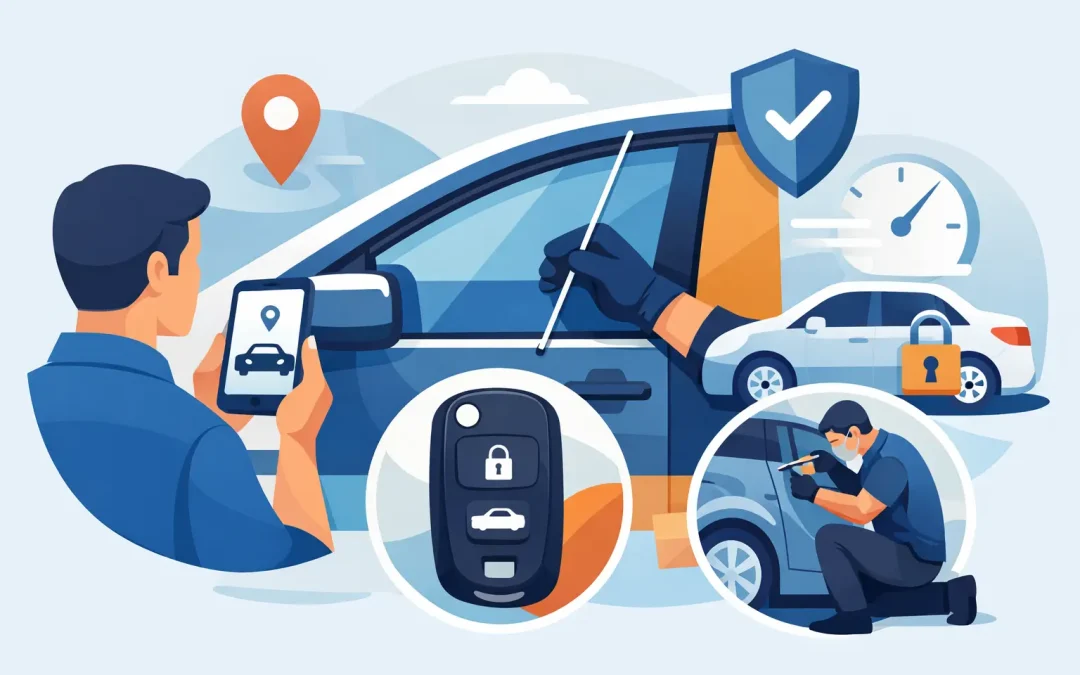
A vehicle lockout rarely happens at a convenient time. You may be outside your home before work, at a store with children in the car, or beside a van containing the tools you need for the day. This vehicle lockout guide explains what to do first, what not to do, and when a trained automotive locksmith is the safest answer.
The priority is simple: protect people first, then protect the vehicle. A rushed attempt to force a door, pry a window, or use an online trick can turn a straightforward entry job into a damaged lock, broken glass, or expensive repair.
Start by checking the situation safely
Before focusing on the keys, look at who and what is inside the vehicle. If a child, vulnerable person, or pet is locked in a car, especially in hot or cold weather, treat it as an emergency. Call emergency services immediately. Do not spend valuable time trying improvised methods while conditions inside the vehicle could become dangerous.
If everyone is safe outside, take a breath and check every door, the trunk or tailgate, and any separately opening rear doors. It sounds obvious, but many lockouts are resolved when one door has not fully latched or a tailgate has been left accessible. Check carefully without pulling handles aggressively or repeatedly pressing a damaged remote.
Next, confirm where the key may be. Look through the windows and around the vehicle, then check bags, pockets, the ground near the driver’s door, and any place you may have set belongings down. If you can see the key inside, resist the temptation to force entry. Knowing the key’s location helps a locksmith, but it does not make a coat hanger or wedge a safe solution.
What not to do during a vehicle lockout
Modern cars and vans are not designed for improvised entry. Door frames, weather seals, side airbags, electronic locks, and window mechanisms can all be damaged by methods that look easy in a short video.
Avoid inserting screwdrivers, wire hooks, rulers, or similar tools into the door. These can bend the frame, tear seals, scratch paint, interfere with lock linkages, or damage wiring. Even if the door opens, you may be left with wind noise, water leaks, a faulty lock, or a repair bill that costs far more than professional entry.
Do not smash a window unless there is an immediate threat to life and emergency services have advised you to act. Broken vehicle glass creates obvious risks and can be costly to replace. It may also leave the vehicle insecure until a repair can be arranged.
It is also wise not to keep cycling the buttons on a remote that is wet, cracked, or behaving unpredictably. A failing remote may have a weak battery, damaged internal contacts, or a programming issue. Repeated use will not necessarily solve the problem and can make it harder to identify the original fault.
Vehicle lockout guide: choose the right next step
The best next step depends on the type of key system and the reason you are locked out. Older vehicles with a traditional metal key may have a simple mechanical problem. Newer cars often combine a blade key, remote fob, transponder chip, proximity system, and electronic immobilizer. Entry is only one part of getting back on the road.
If the keys are visible inside
A non-destructive entry specialist can usually gain access without harming the vehicle. This work requires the correct picks, air wedges, protective techniques, and knowledge of how a particular make and model is built. The aim is to open the vehicle cleanly, not merely get the door open at any cost.
Once inside, check whether the key still works. If the remote battery has failed but the key has a hidden emergency blade, the vehicle may still be entered mechanically. However, some vehicles also need a functioning transponder or programmed fob to start, so a flat remote battery and a no-start condition are not always the same issue.
If the key is lost
Lost keys call for more than entry. A replacement key may need cutting to the vehicle’s locks and programming to its immobilizer before the engine will start. Depending on the vehicle, the lost key may also be removed from the system so it can no longer be used to start the car or van.
This is where a mobile automotive locksmith can save significant disruption. Instead of arranging recovery and waiting for a dealership appointment, the work can often be completed where the vehicle is parked. For drivers and tradespeople, that can mean far less time away from work.
If the key is damaged or the remote has stopped working
A cracked fob, worn button pad, snapped key blade, or water-damaged remote can create a lockout even when you still have the key in your hand. Do not assume a replacement shell will fix every problem. If the electronics or transponder chip are damaged, the key may need repair, replacement, or programming.
Bring together any working spare keys and all key pieces you have. Even a broken blade or damaged remote can provide useful information when identifying the correct replacement. If the vehicle starts intermittently, avoid repeatedly forcing the ignition. A worn ignition lock can worsen quickly and may leave you stranded in a less convenient place.
Why non-destructive entry matters
A proper lockout service is not simply about speed. It is about returning access to your vehicle while keeping its locks, glass, paintwork, seals, and security systems intact. That matters whether you drive a family car, a work van, or a vehicle with high-security locks.
Some vans, including certain Ford models, use more advanced lock designs that need specialist knowledge and equipment. Attempting entry with general-purpose tools can damage the lock cylinder or leave the vehicle less secure afterward. A qualified automotive locksmith assesses the vehicle first and uses an entry method suited to its lock and security system.
You should also expect clear identification and professional conduct from anyone attending a lockout. A legitimate specialist will need to confirm that you are entitled to access the vehicle. This protects you, the vehicle owner, and the security of the service.
What to have ready when you call for help
Having the right details ready can speed up the response and help ensure the locksmith arrives prepared. You do not need technical knowledge. The essentials are the vehicle make, model, year if known, registration number, your exact location, and a short description of the problem.
Mention whether the keys are locked inside, lost, broken, or present but not working. Also say if the vehicle is parked in a tight space, underground garage, workplace lot, or location with restricted access. For a van, explain if tools or stock are inside and whether you need a replacement key as well as entry.
Keep proof of ownership or your connection to the vehicle nearby if possible. This could be registration paperwork, insurance information, photo identification, or work authorization for a company vehicle. It is normal for a professional to ask for this before proceeding.
Prevent the next lockout before it costs more
The cheapest time to deal with a vehicle key problem is before your only working key is lost or damaged. A spare key gives you options. It can prevent an emergency callout, reduce downtime, and avoid the higher cost of creating a key from scratch when no original is available.
Do not leave the spare in the vehicle, including in a magnetic box underneath it. That creates a security risk and does not help if the vehicle is locked. Keep it somewhere secure and accessible, or leave it with a trusted person who can reach you when needed.
Pay attention to early warning signs. A remote that needs several presses, a key that sticks in the ignition, a fob with loose buttons, or a blade that is visibly worn should be checked before it fails completely. Small repairs or a duplicate key are usually easier to arrange than a full lost-key situation.
For drivers across Oldbury and the West Midlands, Remote Key Man provides mobile, non-destructive vehicle entry and replacement key support at home, work, or roadside. The practical goal is to get you back into your vehicle safely, with the right solution for what caused the lockout.
A lockout is stressful, but it does not have to become a damaged door, broken window, or missed day of work. Keep safe, avoid force, and arrange professional help that protects both your access and your vehicle.

Recent Comments