
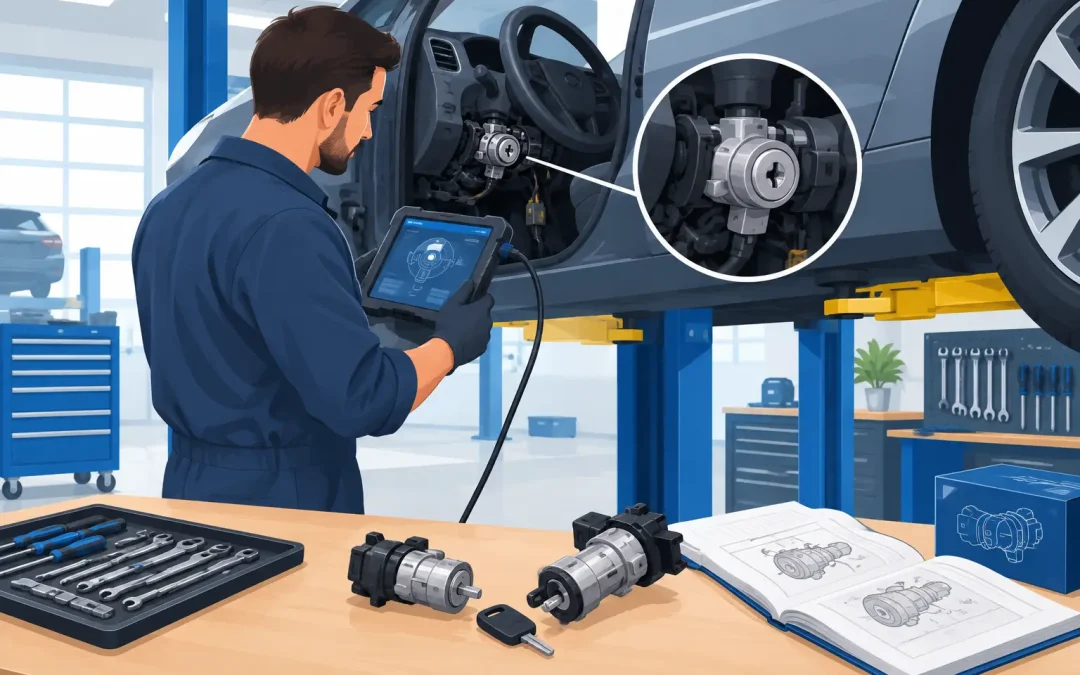
A key that suddenly needs wiggling, turning twice, or being held in just the right position is more than an annoyance before work. It can be the first sign that when should ignition barrel change is no longer a question for later. A worn ignition barrel can leave you unable to start the vehicle, unable to remove the key, or stranded somewhere inconvenient.
For drivers and van owners, the sensible time to act is before the key stops turning altogether. Ignition faults rarely fix themselves, and forcing the key can turn a straightforward lock repair into a more involved replacement job.
When should an ignition barrel be changed?
An ignition barrel should be inspected or changed when it no longer turns smoothly and reliably with the correct key. Occasional stiffness after a very cold morning is one thing. Repeated resistance, sticking, key movement, or a key that will not return to its normal position are different. Those symptoms point to wear inside the lock, damage to the key, or a fault in the ignition assembly.
The right repair depends on the vehicle. On some cars, the barrel can be rebuilt or replaced while retaining the existing key arrangement. On others, particularly vehicles with immobilizer systems, the replacement must be carefully matched, cut, and programmed so the vehicle recognizes the key correctly. This is why an ignition issue is best assessed by a vehicle locksmith rather than treated as a general DIY job.
A prompt inspection also matters for working vans. If your van is part of your business, a failed ignition lock does not just delay a journey. It can cost appointments, deliveries, and a full day of work.
Warning signs that should not be ignored
The clearest warning sign is a key that is becoming difficult to insert, remove, or turn. Do not assume more force is the answer. Keys and ignition barrels are designed to work together with very little effort. Resistance means something is worn, dirty, misaligned, or damaged.
Watch for these common signs:
- The key only turns after repeated attempts or needs to be moved around in the barrel.
- The key gets stuck in the ignition or will not come out when the vehicle is switched off.
- The key turns but the dashboard lights or starter do not respond consistently.
- The key turns too freely, feels loose, or does not spring back properly after starting.
- You have a visibly bent, cracked, heavily worn, or damaged key blade.
A loose ignition barrel can be especially concerning. If the key turns without properly operating the ignition positions, the internal components may be worn or broken. Continuing to drive with the problem can leave the vehicle stuck in an unsafe or inconvenient place.
Do not confuse the barrel with an ignition switch fault
The ignition barrel is the mechanical part that the key enters and turns. The ignition switch is the electrical component behind or beside it that sends power to the vehicle systems. They work together, but they do not fail in exactly the same way.
If the key will not turn, will not insert properly, or feels rough and loose, the barrel or key is often the likely issue. If the key turns normally but there are no dash lights, intermittent electrical power, or no starter response, the ignition switch, wiring, battery, starter, or another electrical fault may be involved.
That distinction matters because replacing the barrel will not repair an electrical problem, and replacing electrical parts will not cure a worn mechanical lock. A proper diagnosis prevents spending money on the wrong repair.
What causes an ignition barrel to wear out?
Most ignition barrels wear gradually. Every time a key is inserted and turned, the small internal components move. After years of use, especially on high-mileage vehicles, those parts can wear enough that the correct key no longer operates them cleanly.
A worn key often speeds up the process. Key blades become rounded over time, and remote keys can crack where the blade meets the fob. A heavy key ring can also put constant pressure on the key while driving, particularly on older vehicles where the key hangs directly from the ignition. Reducing excess weight on the key ring is a small step that may help protect the lock.
Damage is another cause. An attempted theft, a forced key, accidental impact, or a key that has been twisted in the barrel can all damage the internal mechanism. On vans and commercial vehicles, ignition and door locks may also see heavier daily use than a family car.
What to do when the key starts sticking
Start by trying your spare key, if you have one. If the spare turns smoothly while the main key does not, the main key may be worn or damaged. Having a new key cut from the correct pattern can solve the issue before the ignition barrel suffers further wear.
If both keys stick or fail to turn, avoid spraying household oil, grease, or penetrating fluid into the ignition. These products can attract dirt, contaminate the lock, and make the fault worse over time. Do not force or hammer the key, either. A snapped key in the barrel adds another problem and can make a roadside situation more stressful.
If the steering wheel has locked, gently move the wheel left and right while applying light turning pressure to the key. Steering locks can bind when the wheels are parked against a curb or at an angle. If it still will not release, stop before force damages the key or barrel.
Can you keep the same key after an ignition barrel replacement?
Sometimes, yes. The answer depends on the vehicle and the condition of the existing keys. A skilled automotive locksmith may be able to repair or replace the ignition barrel so it works with your existing key, avoiding the inconvenience of carrying separate keys for the doors and ignition.
In other cases, a new barrel comes with a different mechanical key. Modern vehicles add another layer because the transponder chip in the key must communicate with the immobilizer. The physical blade may turn the lock, but the engine may not start unless the key is programmed correctly.
This is also why buying a cheap ignition barrel online can be a false economy. The part may not match the vehicle, the quality may be poor, and fitting it can still require key cutting, transponder programming, or specialist work to keep the vehicle secure. The cheapest part is not always the lowest-cost repair once downtime and extra labor are considered.
Why early repair is usually the better option
An ignition barrel often gives notice before it fails completely. Acting while the key still turns gives you more choices. The work can usually be planned at home or work rather than dealt with as an urgent recovery situation in a parking lot.
For many vehicle owners, a mobile automotive locksmith can assess the fault on site, cut replacement keys, program transponders where needed, and replace a faulty ignition lock without the disruption of a dealership visit. Remote Key Man provides this type of practical support for drivers and van owners across Oldbury and the wider West Midlands, with the aim of getting you back to a working vehicle without unnecessary damage.
If the ignition has started to feel different, trust that change. Keep using a spare key if it works properly, remove heavy items from the key ring, and arrange an inspection before a minor sticking point becomes the morning your vehicle will not start.

Recent Comments